
Havasu Falls - Supai, Arizona
Havasupai Hike Guide - Our Family Adventure to Havasu Falls
9 min read | Supai, Arizona
“If you do not love yourself, it’s very difficult to allow yourself to be loved.” - Bridgette Bardot
“Our greatest glory is not in never falling, but in rising every time we fall.” - Confucius
“We make a living by what we get, but we make a life by what we give.” - Winston Churchill
The Adventure at a Glance
Total Trekking: 26+ Miles
The Drop: 1,000+ feet down a vertical canyon wall
The Permit: Secured exactly 12 months in advance
Pack Style: Heavy gear outsourced to the village mule train
The Waters: 5 distinct travertine waterfalls fed by a 70°F constant underground river
The Tribe: Ancient home of the Havasupai ("people of the blue-green waters") for over 800 years
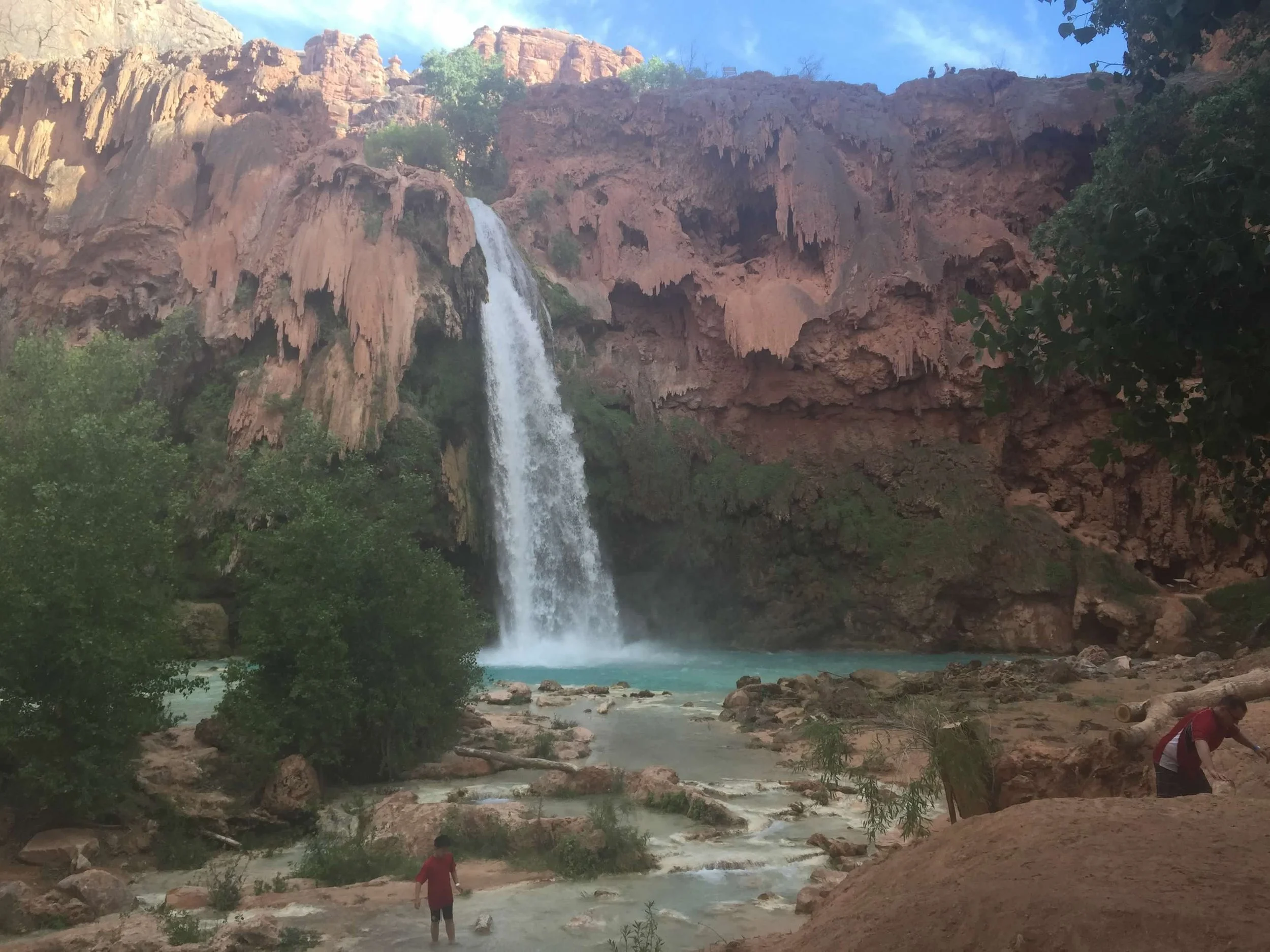
Chasing Blue-Green Water
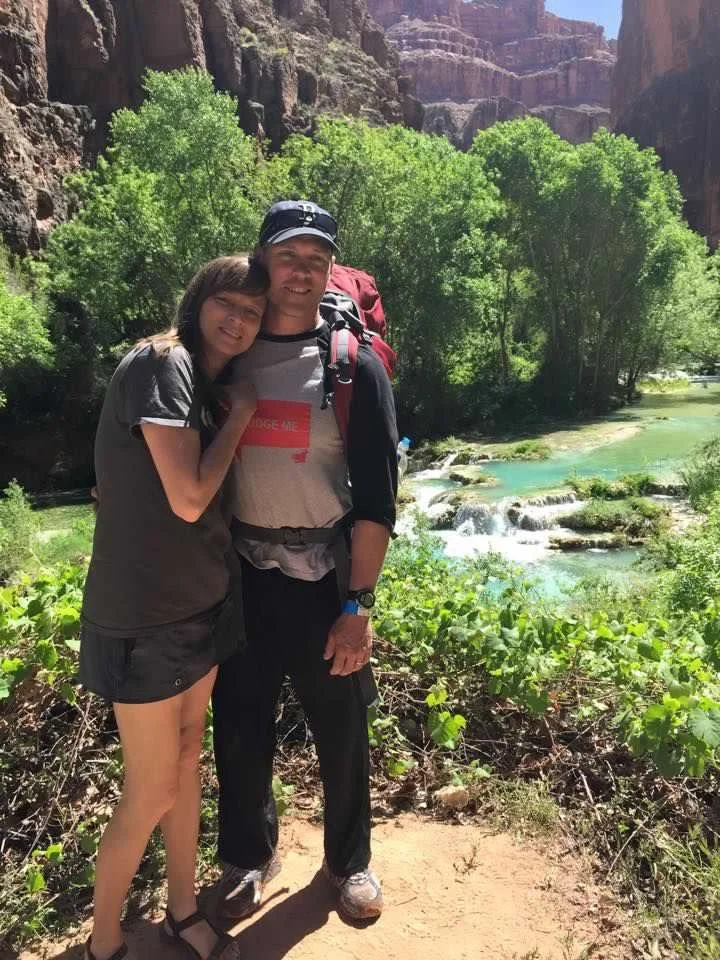
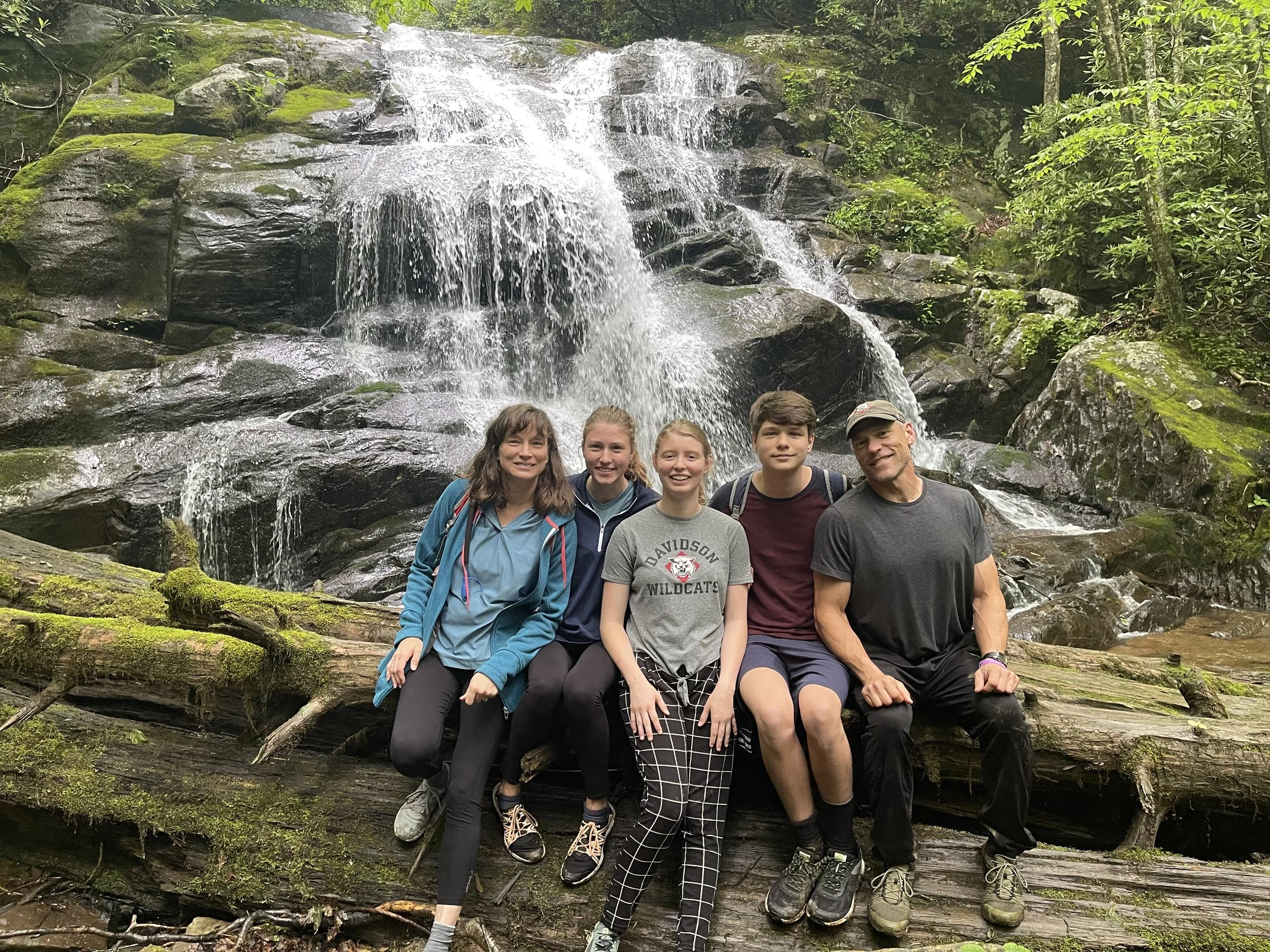
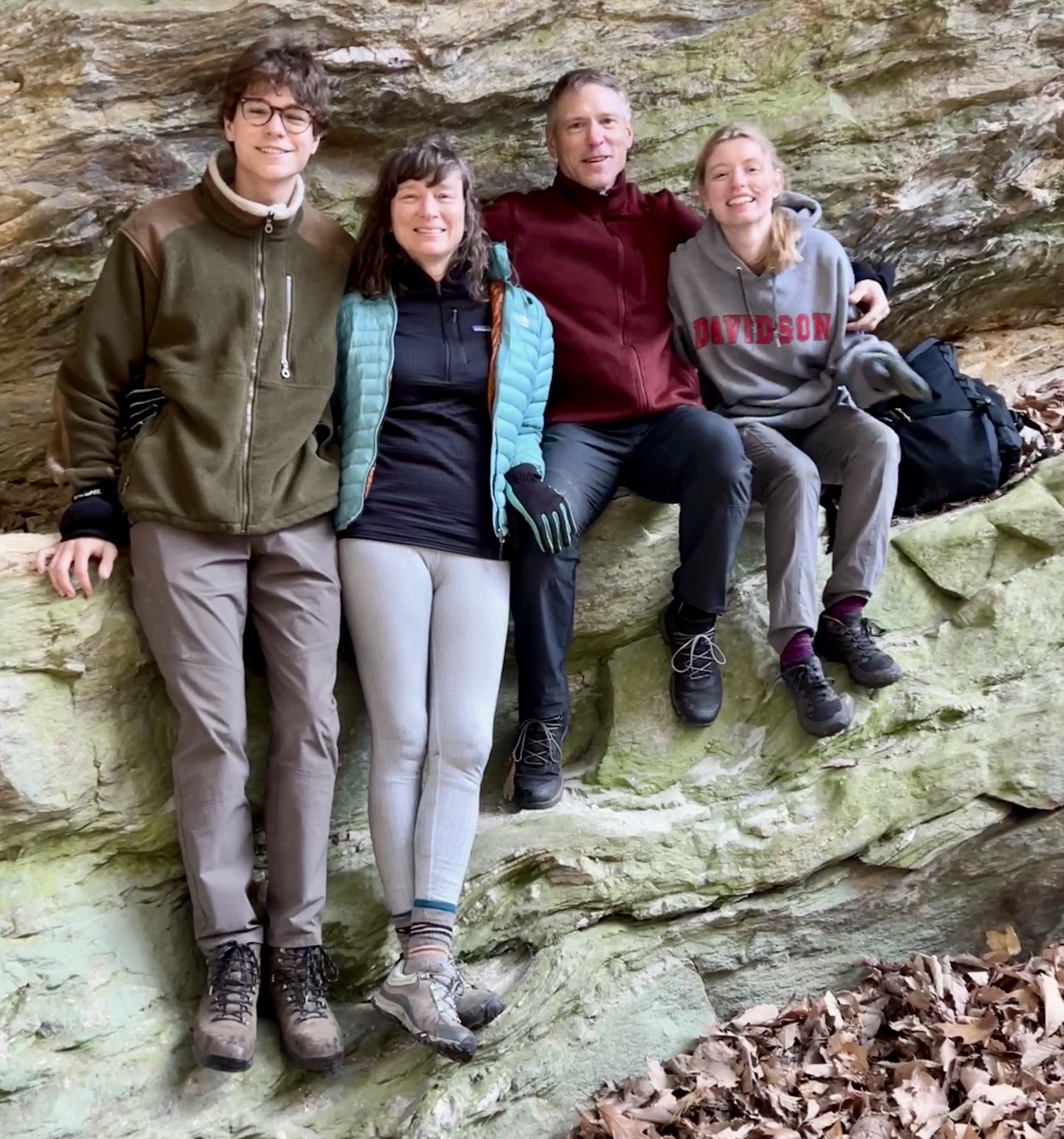
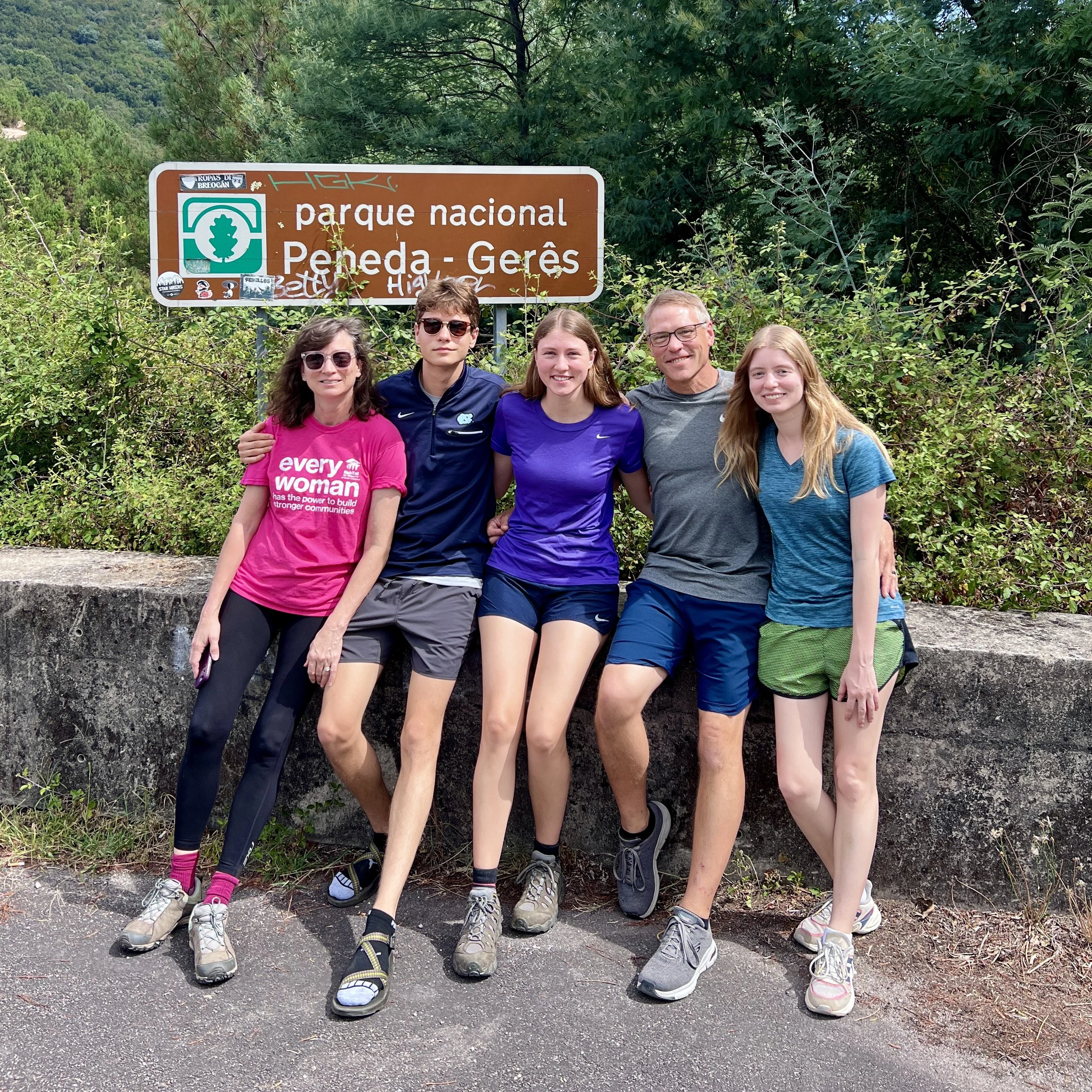
Imagine dropping over the edge of a dusty, sun-baked canyon rim, knowing that ten miles ahead—buried deep within the earth—lies a hidden paradise of roaring, neon-turquoise waterfalls. Most people only ever see photos of Havasu Falls, but Ginger, Maria, Amelia, Alex, and I — wanted the real thing. We wanted the spray in our faces and the red dirt on our boots.
We are true completionists. Once we set our sights on a trail, we finish it, no matter how difficult or strenuous. Thanks to Ginger securing our reservation permits a full year in advance, we set off into one of the most isolated places in America.
The Descent to the Canyon Floor
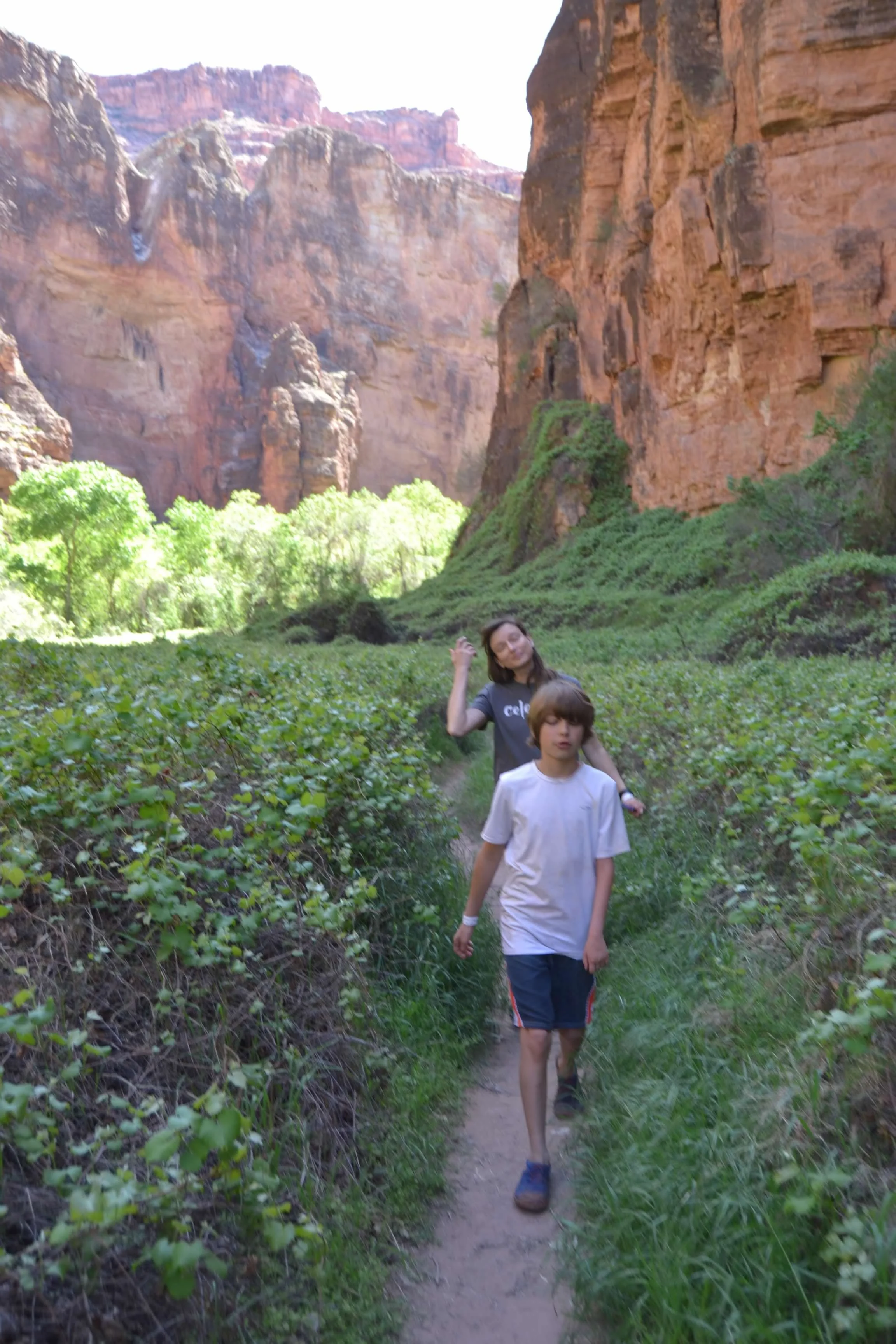
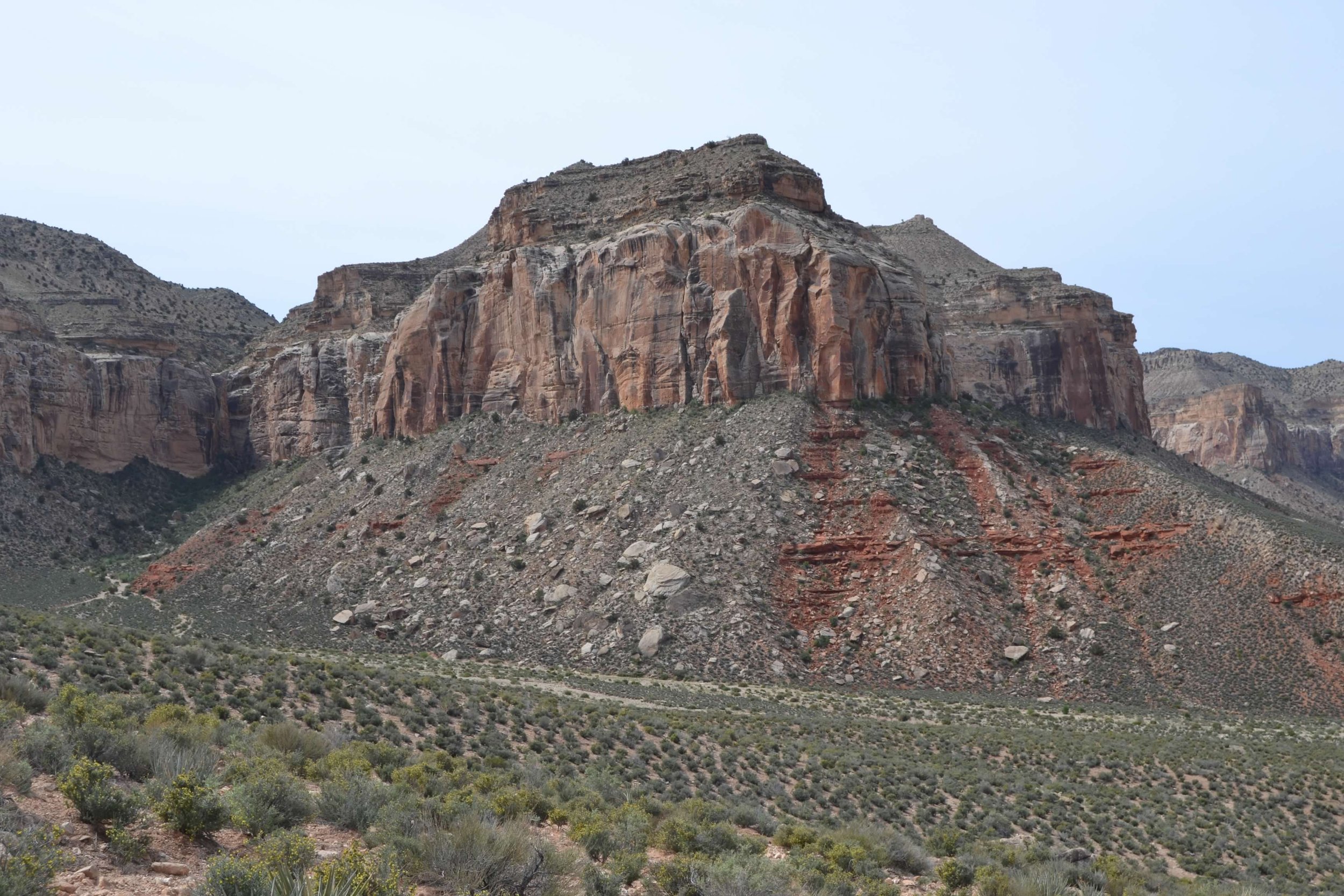
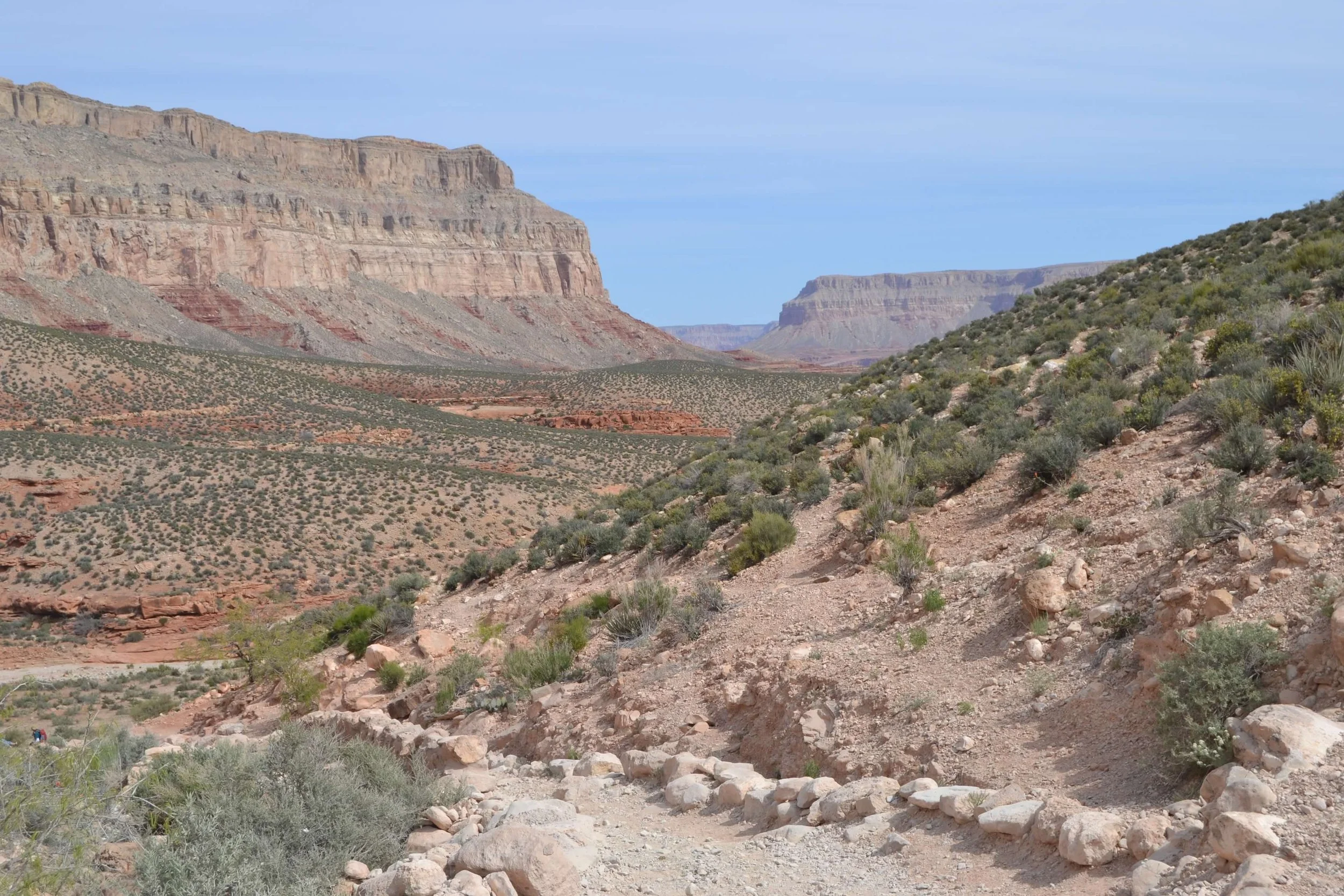
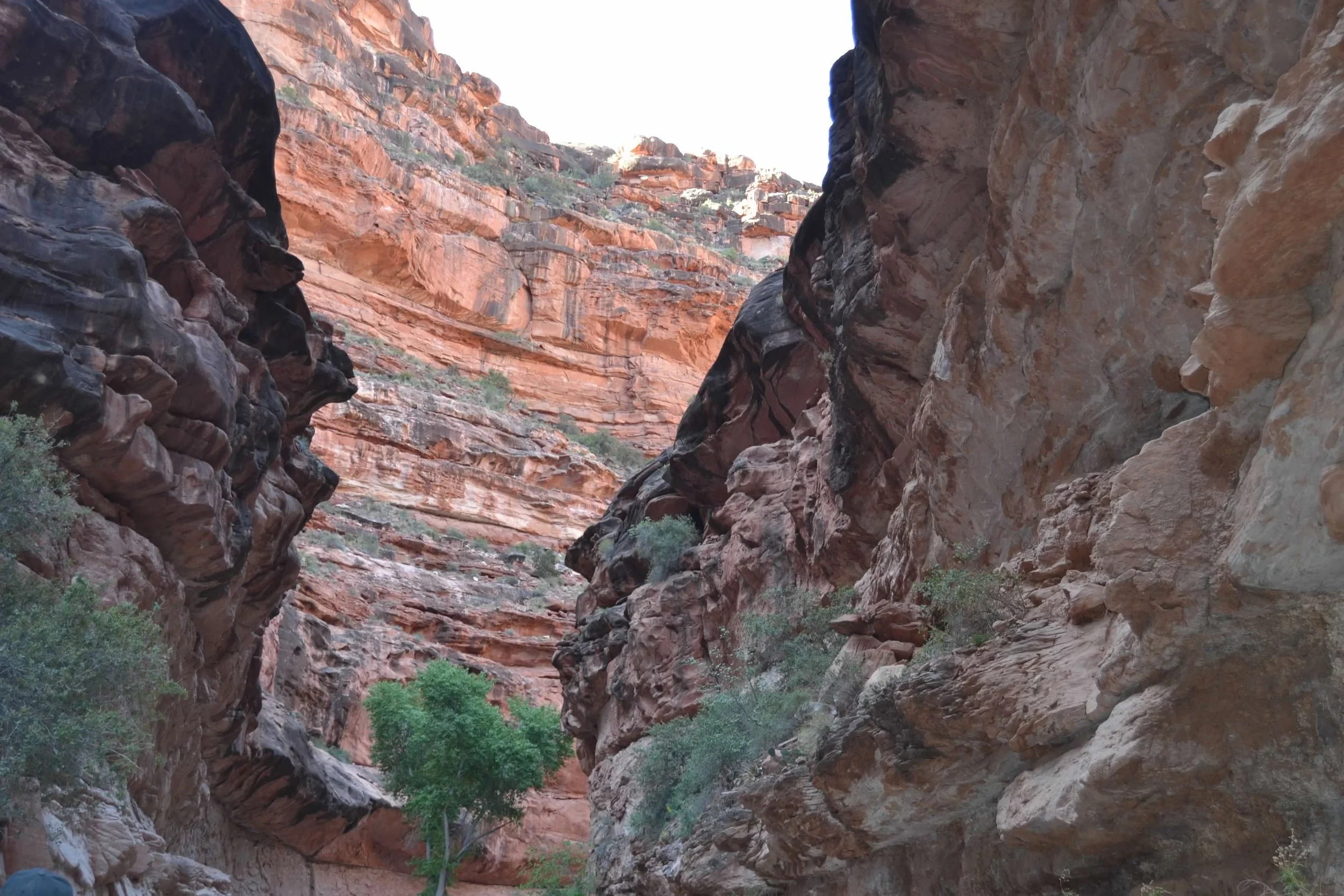
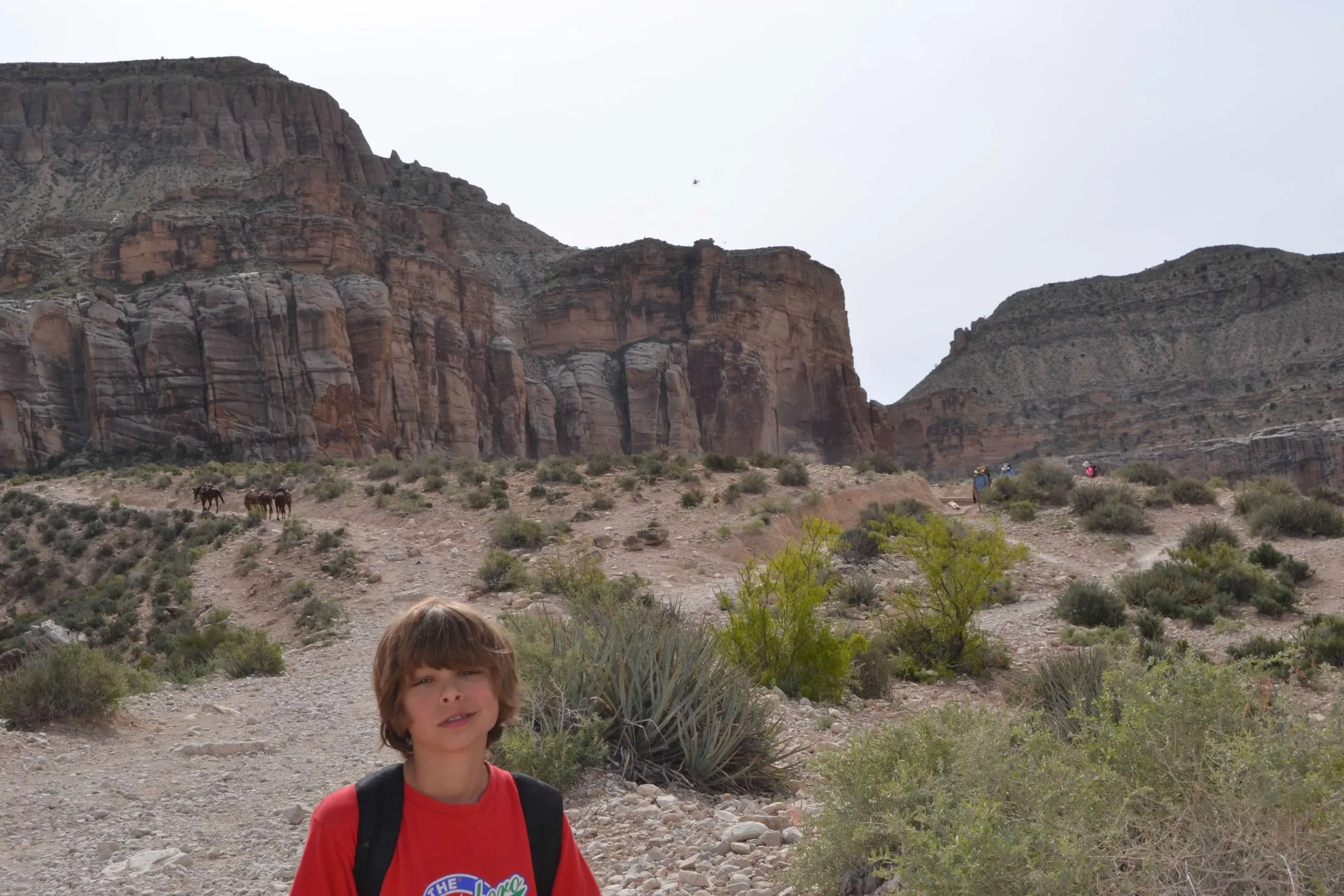
The journey began with a steep, one-mile drop down the grueling switchbacks of Hualapai Hilltop. Once your knees survive that first punishing mile, the trail levels out into a flat, rocky canyon floor for the next seven miles.
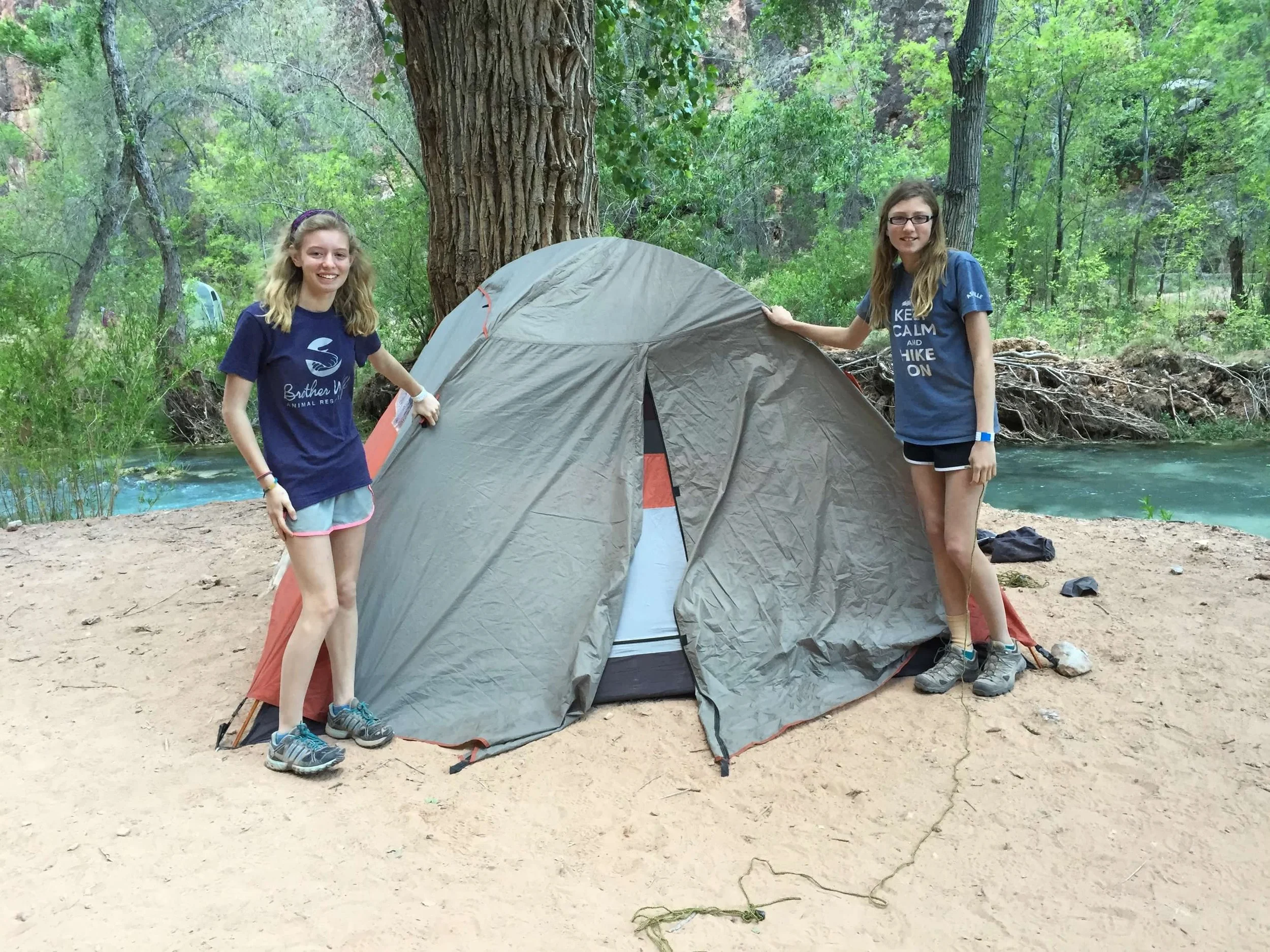
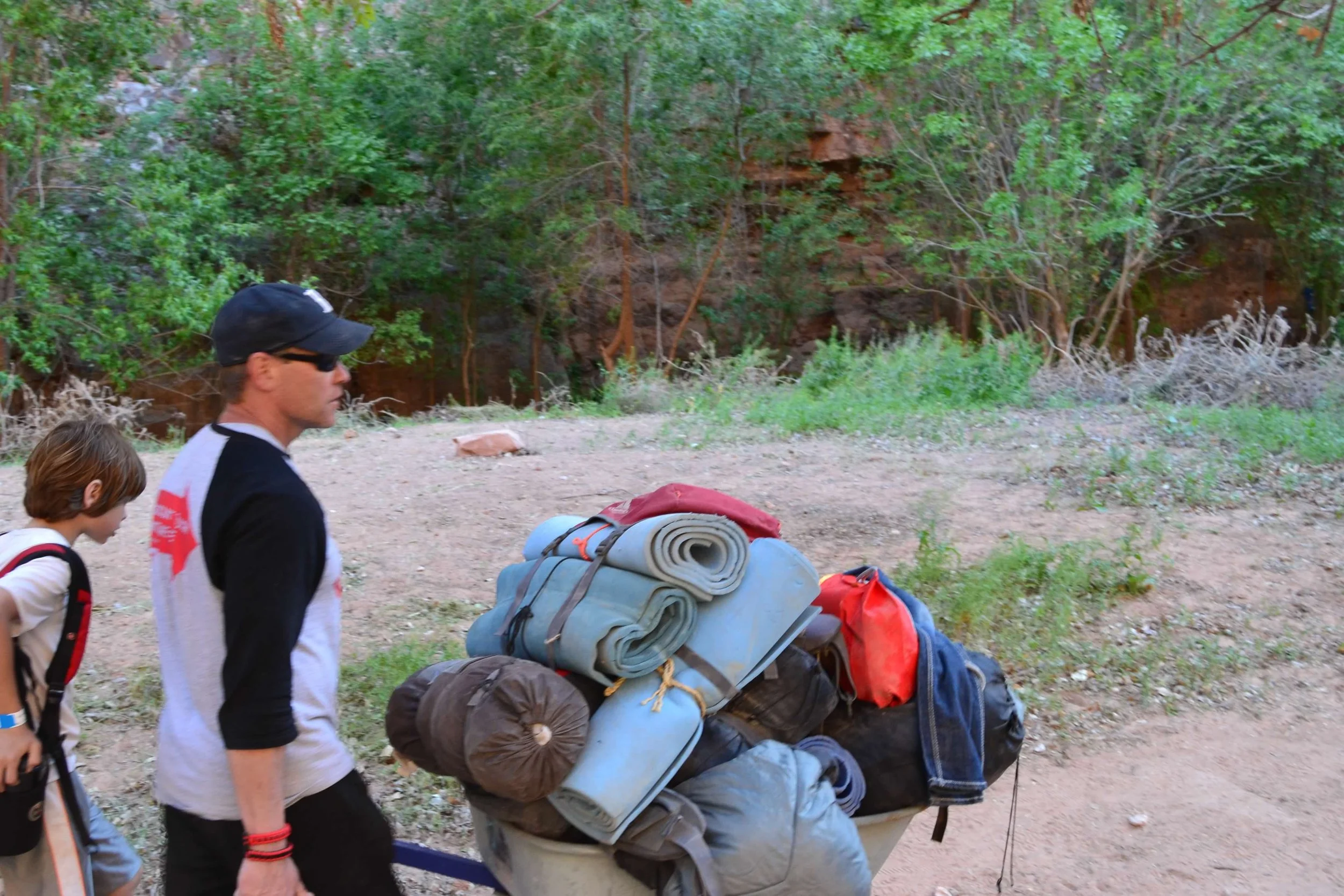
To save our energy for the miles ahead, we paid for a pack mule to carry our heavy gear—our four-person tent, sleeping mats, lantern, and camp stove—down and back up. This left us free to move fast and enjoy the dramatic, towering limestone walls. Alex immediately found his rhythm, treating the canyon as a personal playground by spotting parkour opportunities along the rock formations. The girls occasionally joined in, scrambling up boulders and leaping across gaps.
Around mile seven, the desert suddenly vanished. The arid canyon air grew noticeably more humid, and the vegetation transformed into a vibrant, lush green. We knew Havasu Creek was close.
Arriving in Supai Village
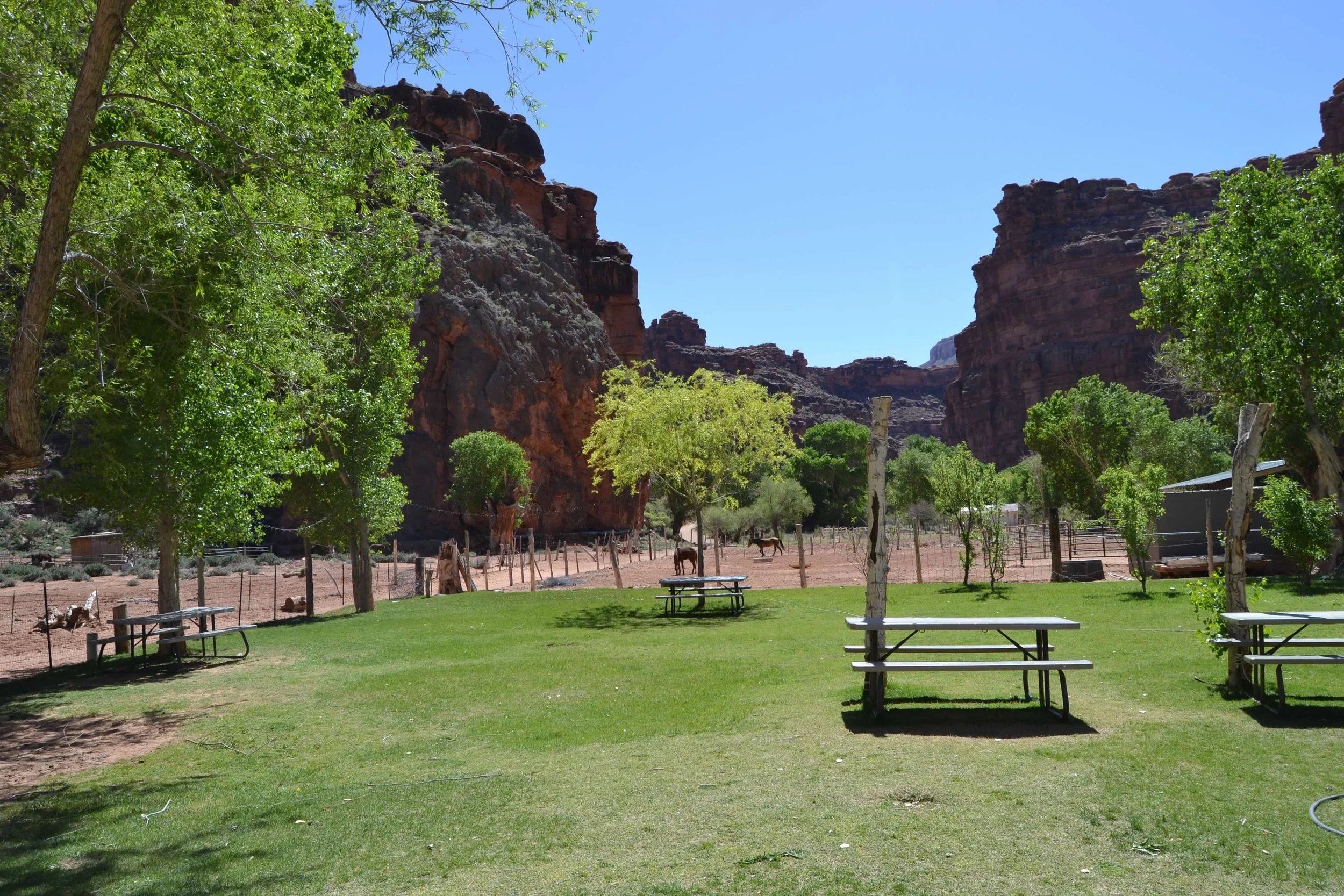
At mile eight, we walked into the village of Supai. The Havasupai tribe has lived in this canyon for at least 800 years, and it remains the capital of the Havasupai Indian Reservation. There are no roads here. You must hike in, ride a mule, or take a helicopter. It is even the last place in the US where mail is still carried exclusively by mules.
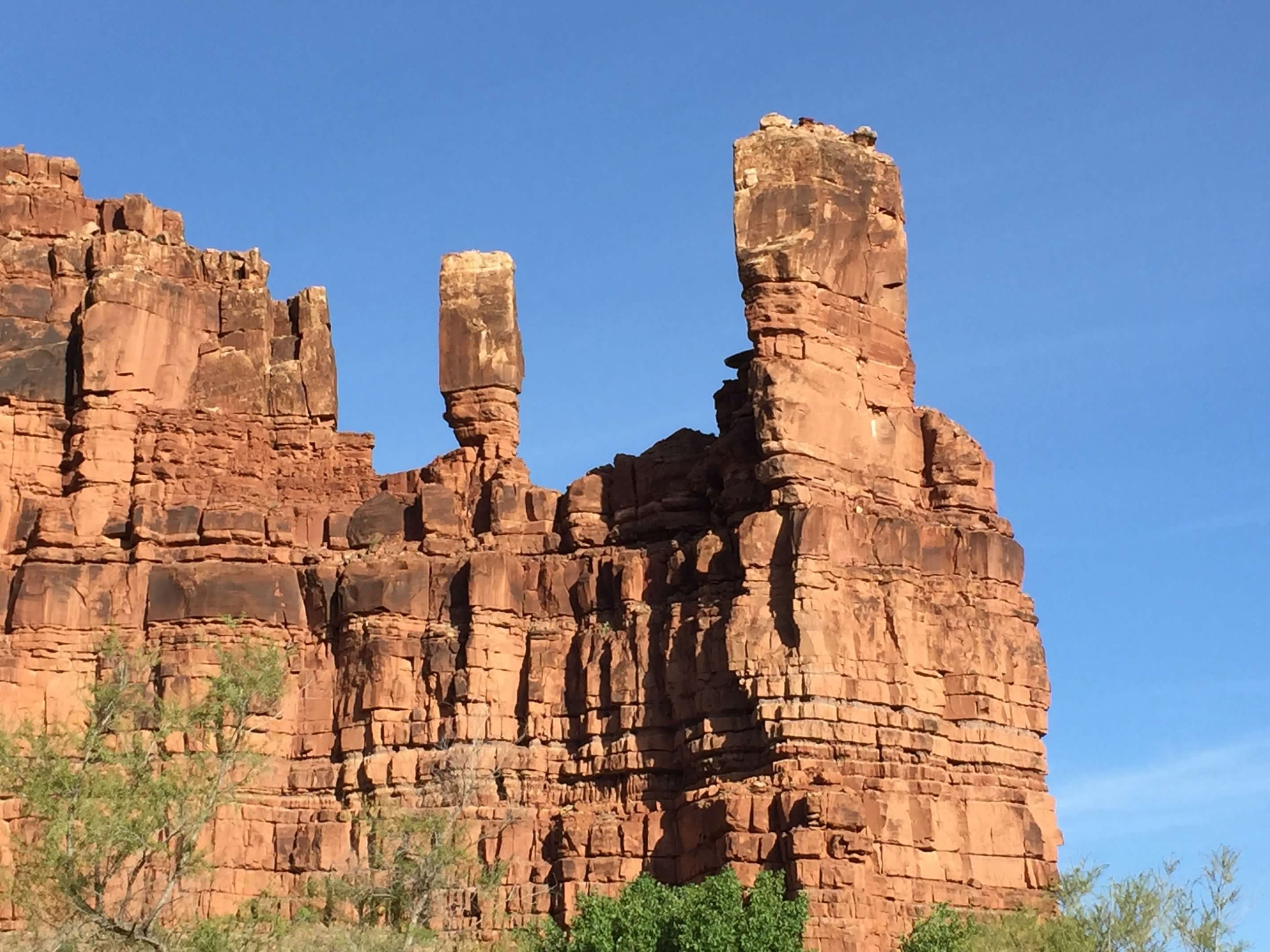
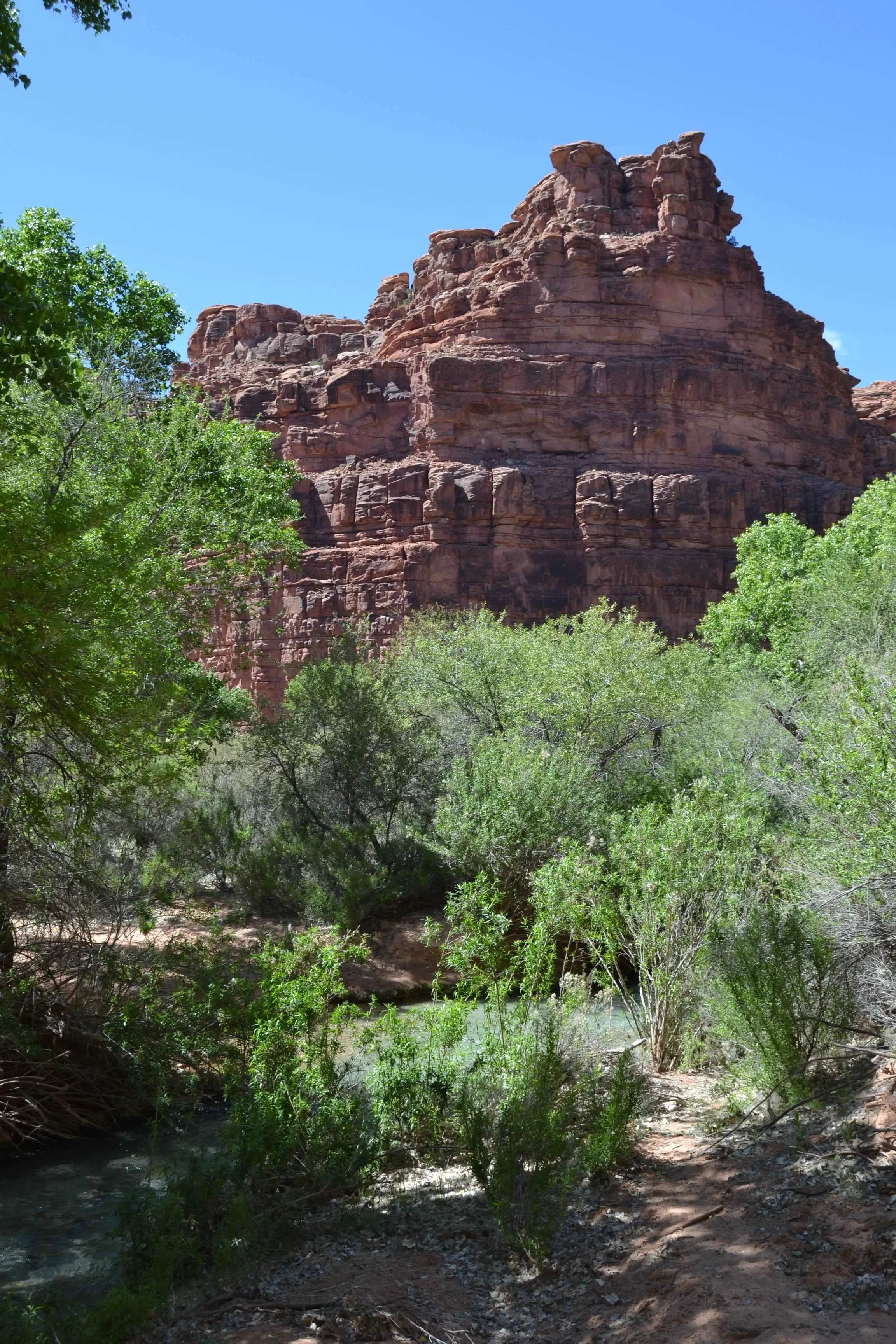
As we walked through town, we passed the two famous red rock pillars that guard the village. Local legend states that if these pillars ever fall, the canyon walls will close in and destroy the people. After checking in at the visitor center, we tackled the remaining two miles to the campground.
The Magic of the Waterfalls
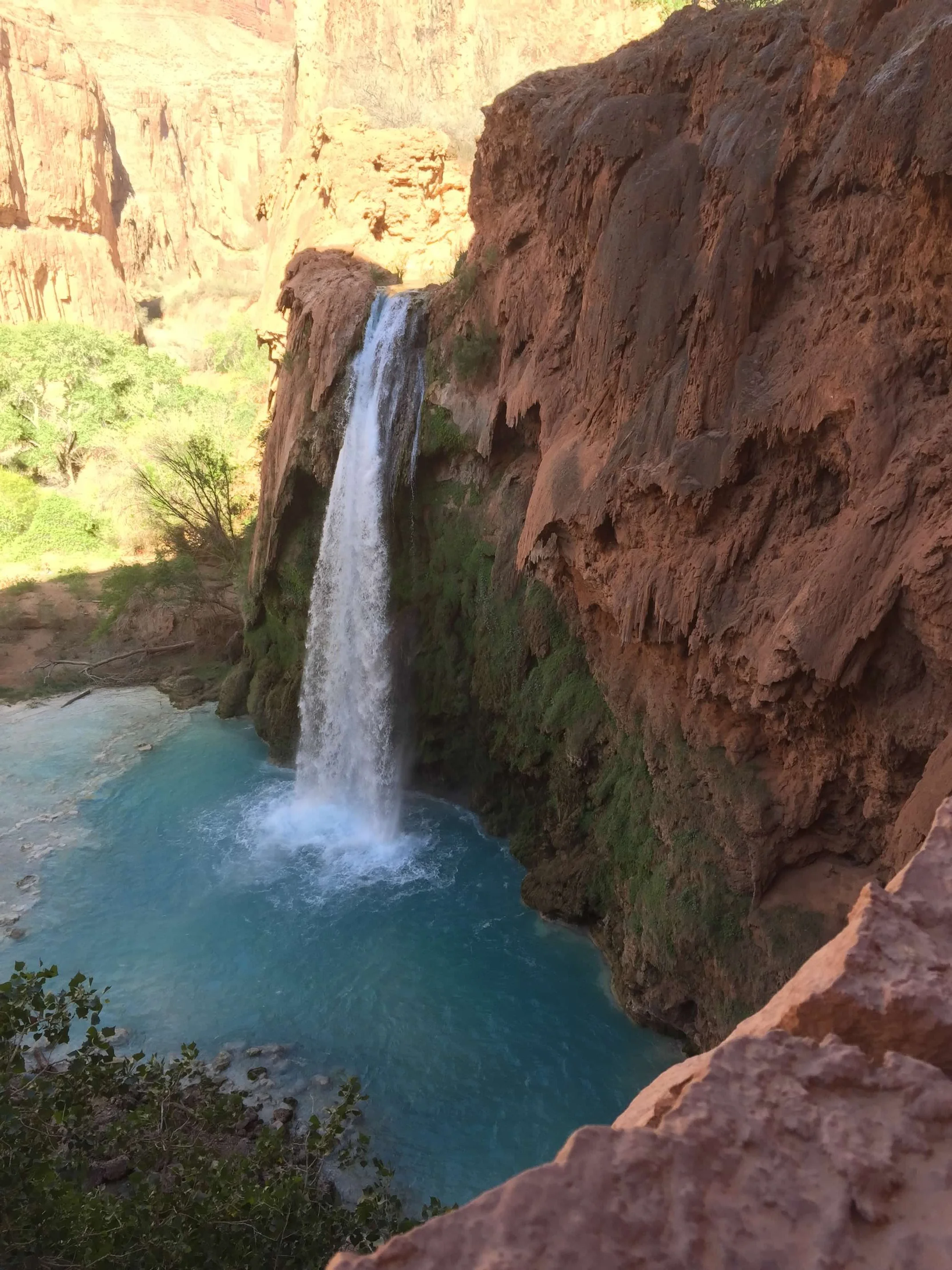
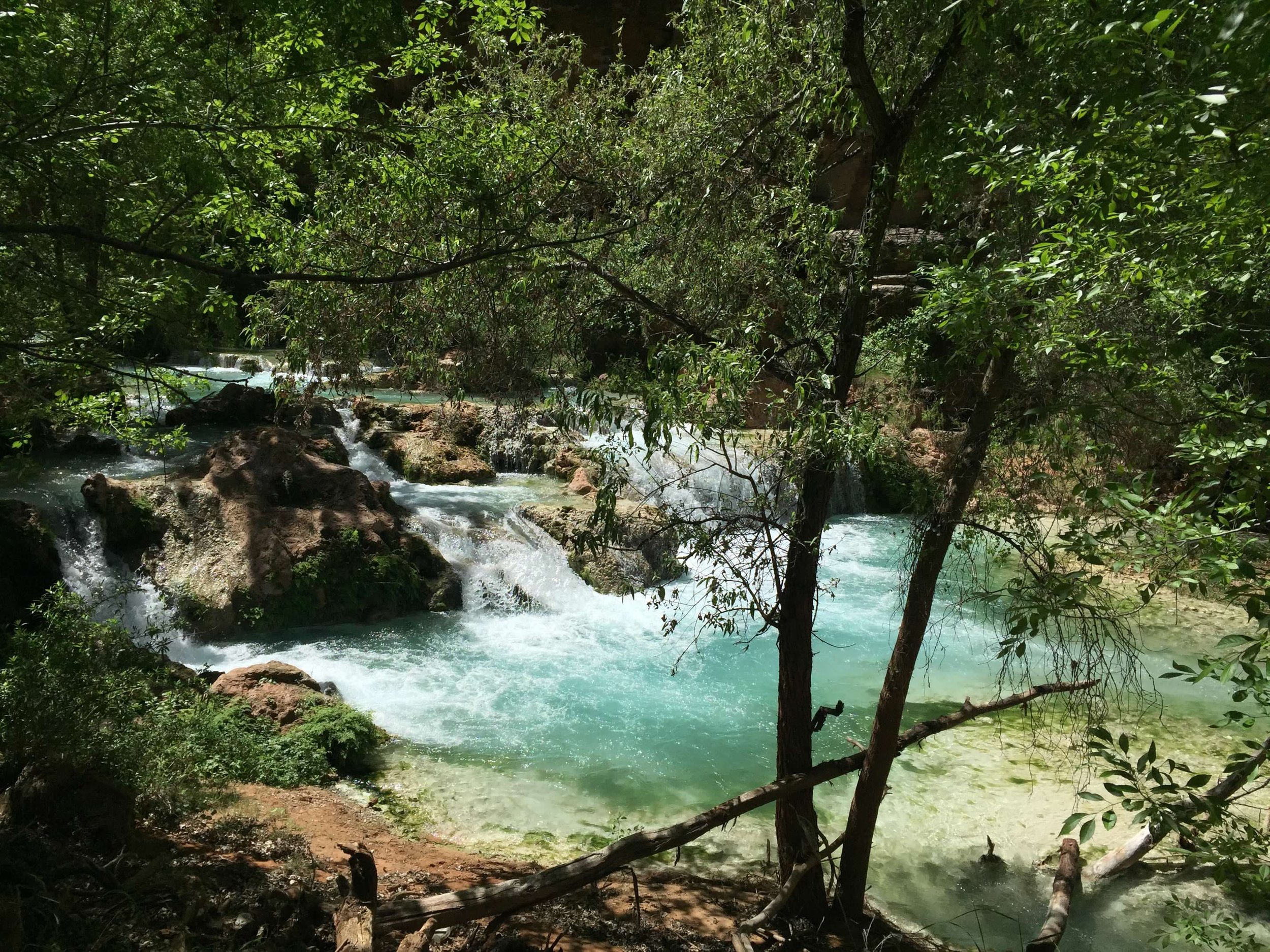
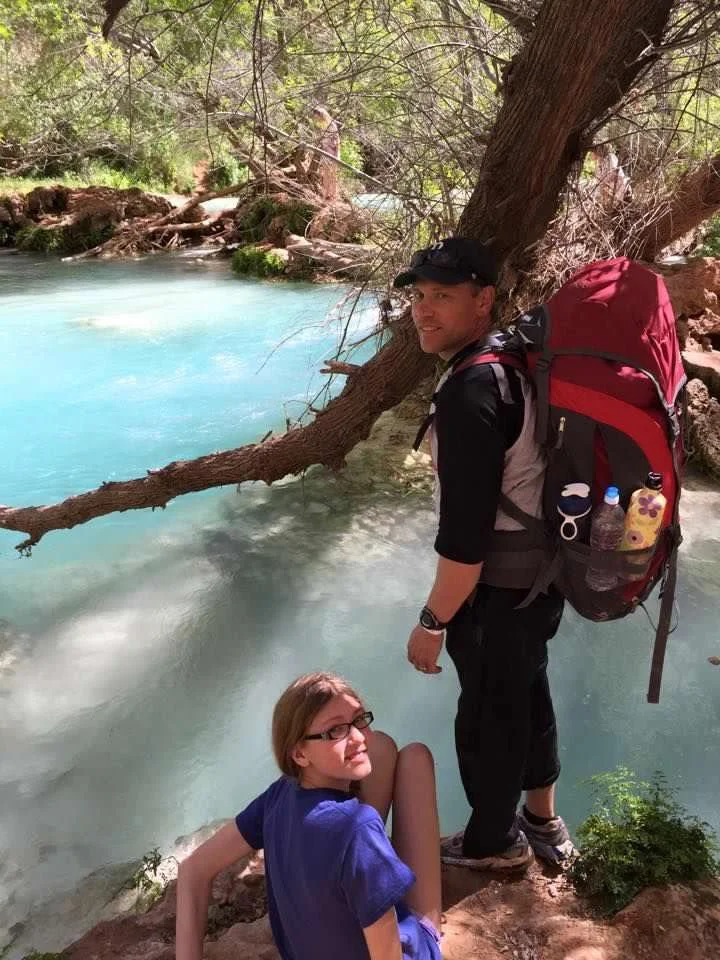
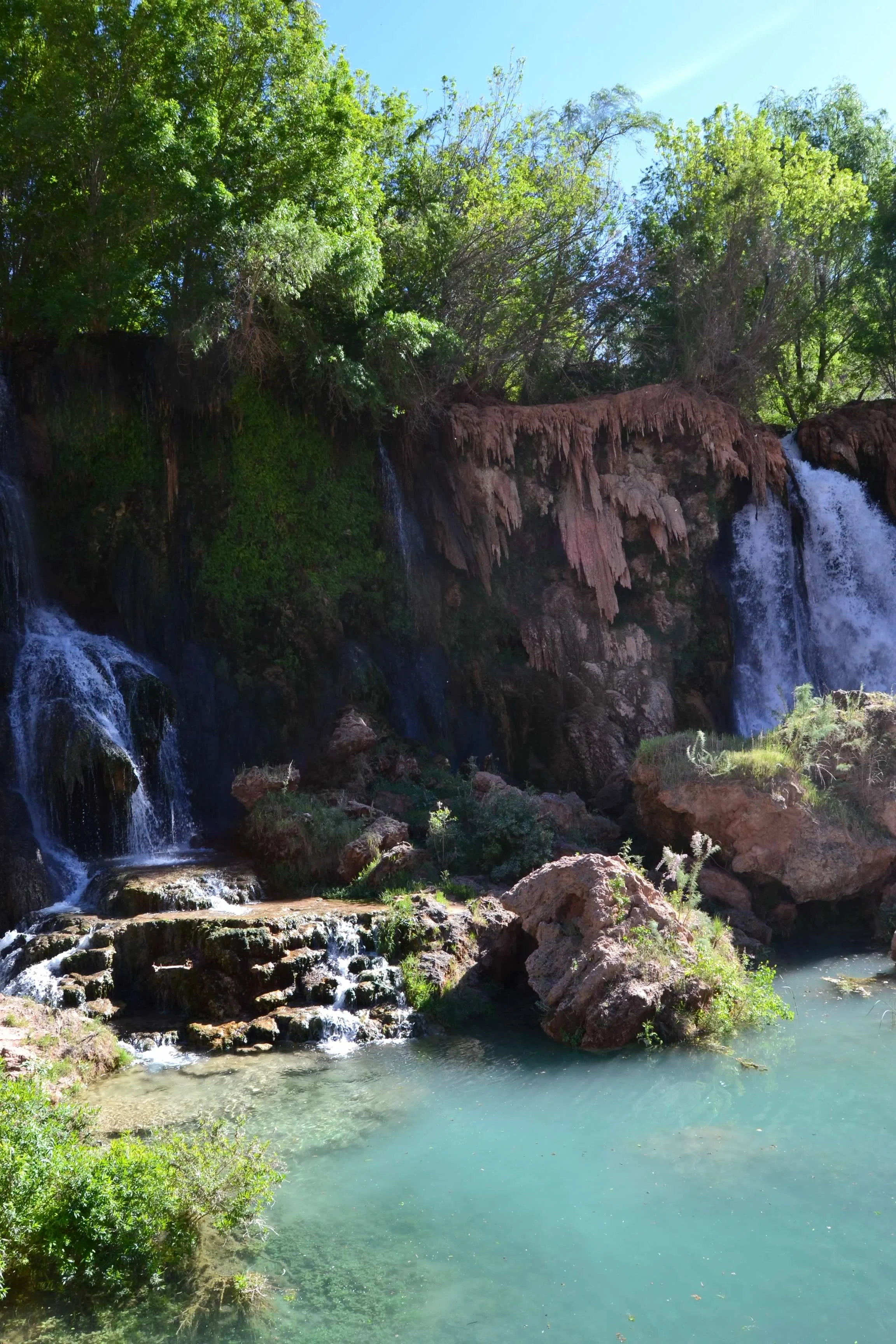
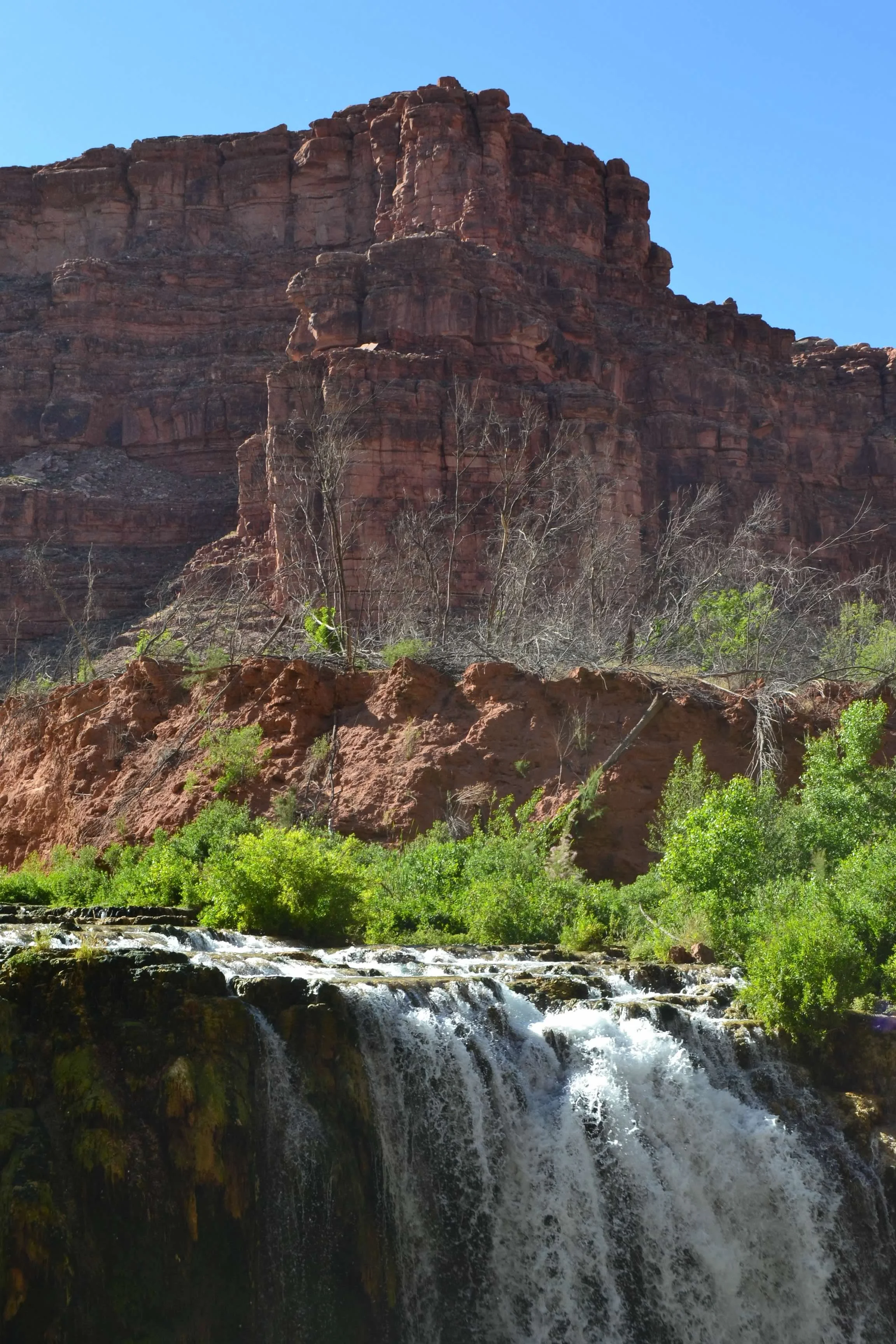
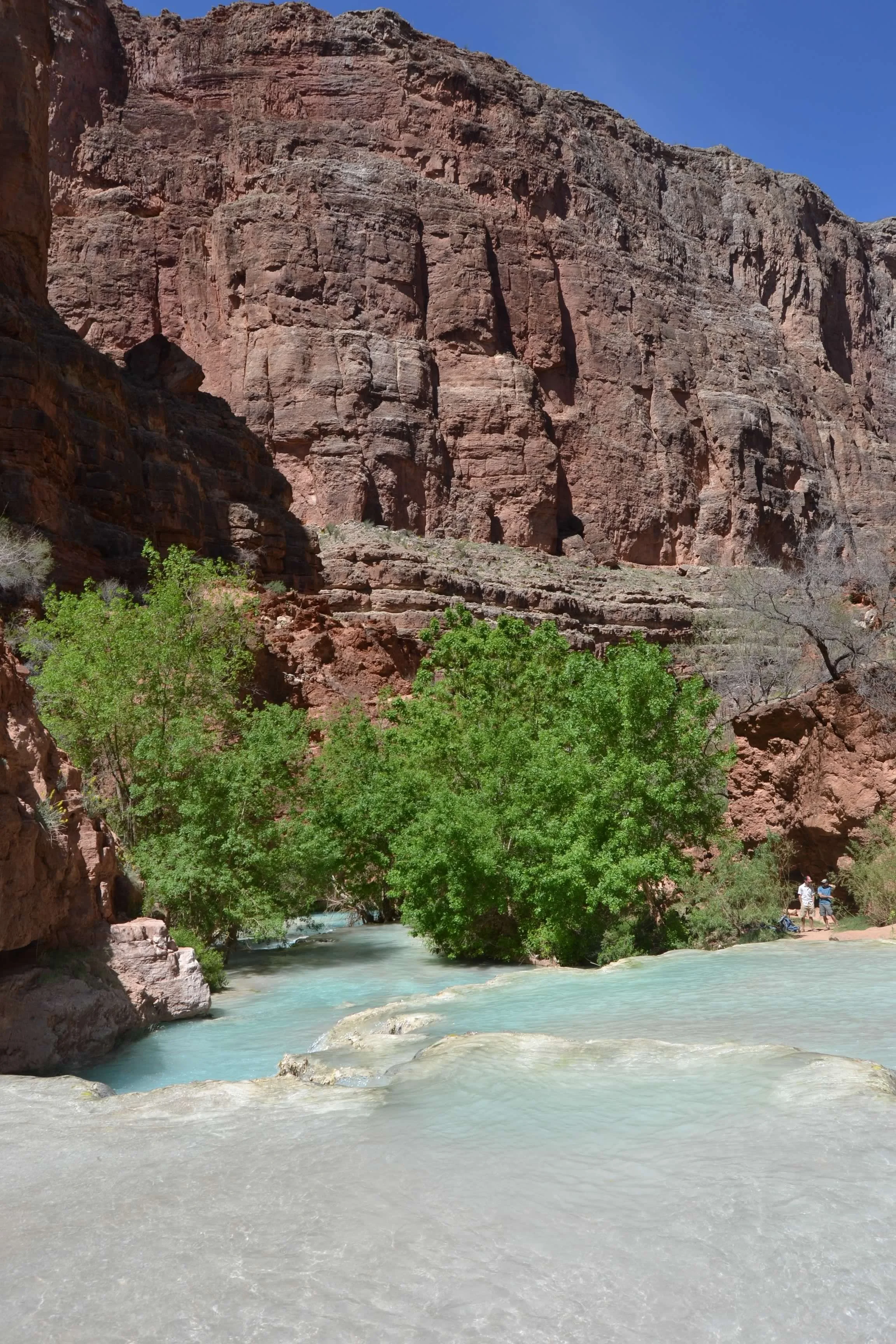
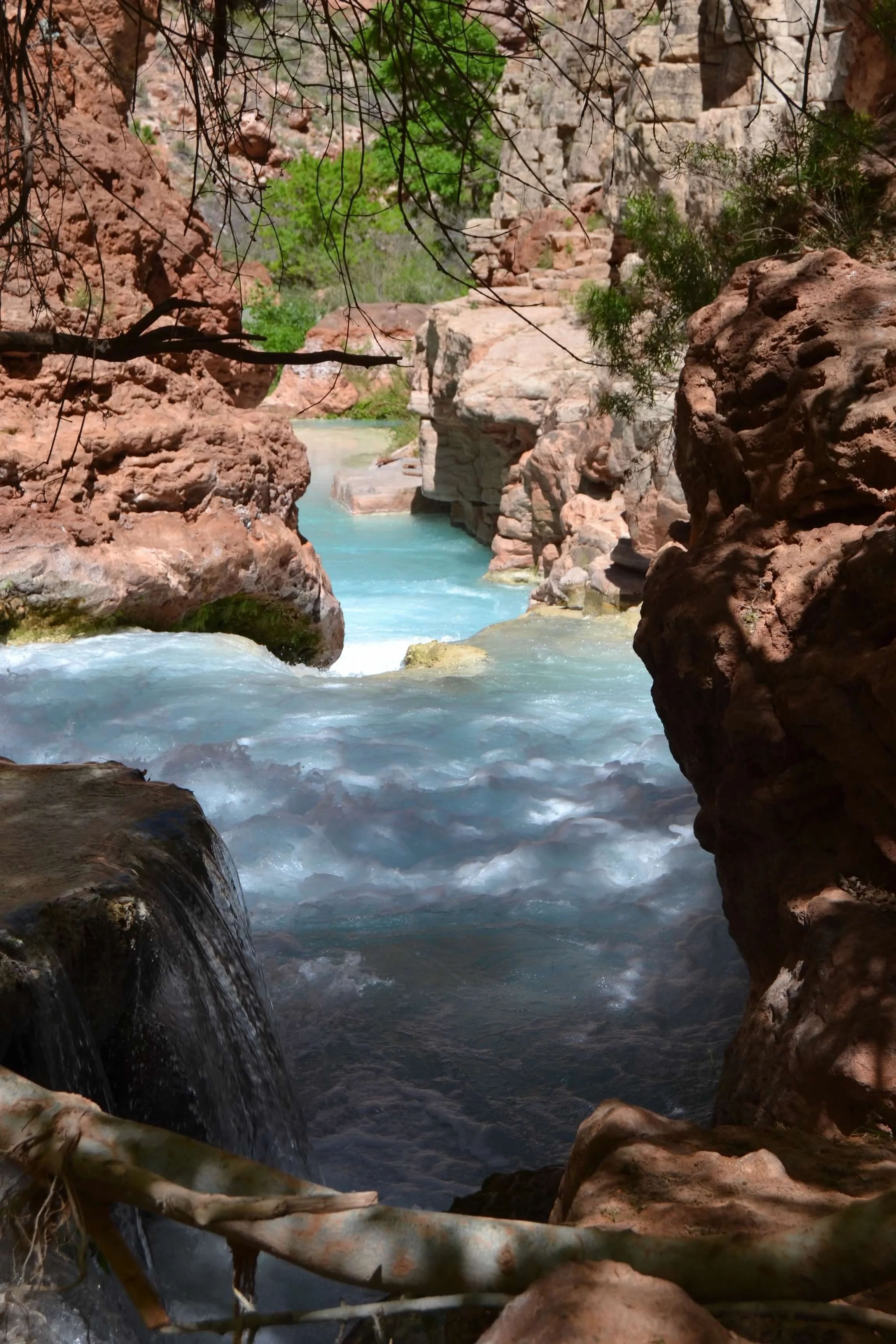
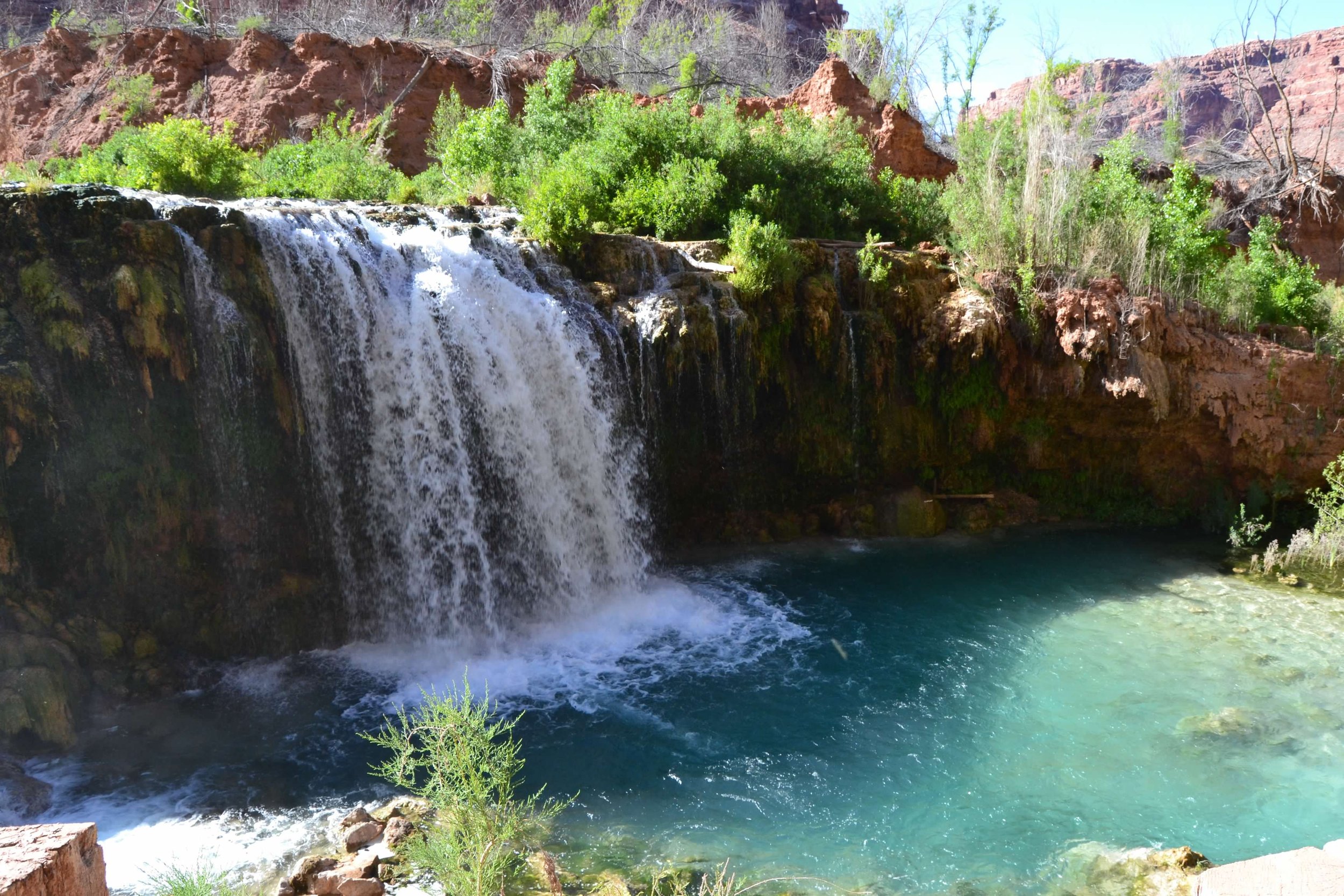
Soon, we saw the breathtaking blue-green color of the water. The striking turquoise hue comes from high concentrations of calcium carbonate, which forms the limestone travertine lining the creek. This environment is constantly evolving. Any branch or rock that falls into the stream quickly mineralizes, altering the water flow. The falls literally never look the same from one year to the next.
On our way to camp, we encountered the first three falls:
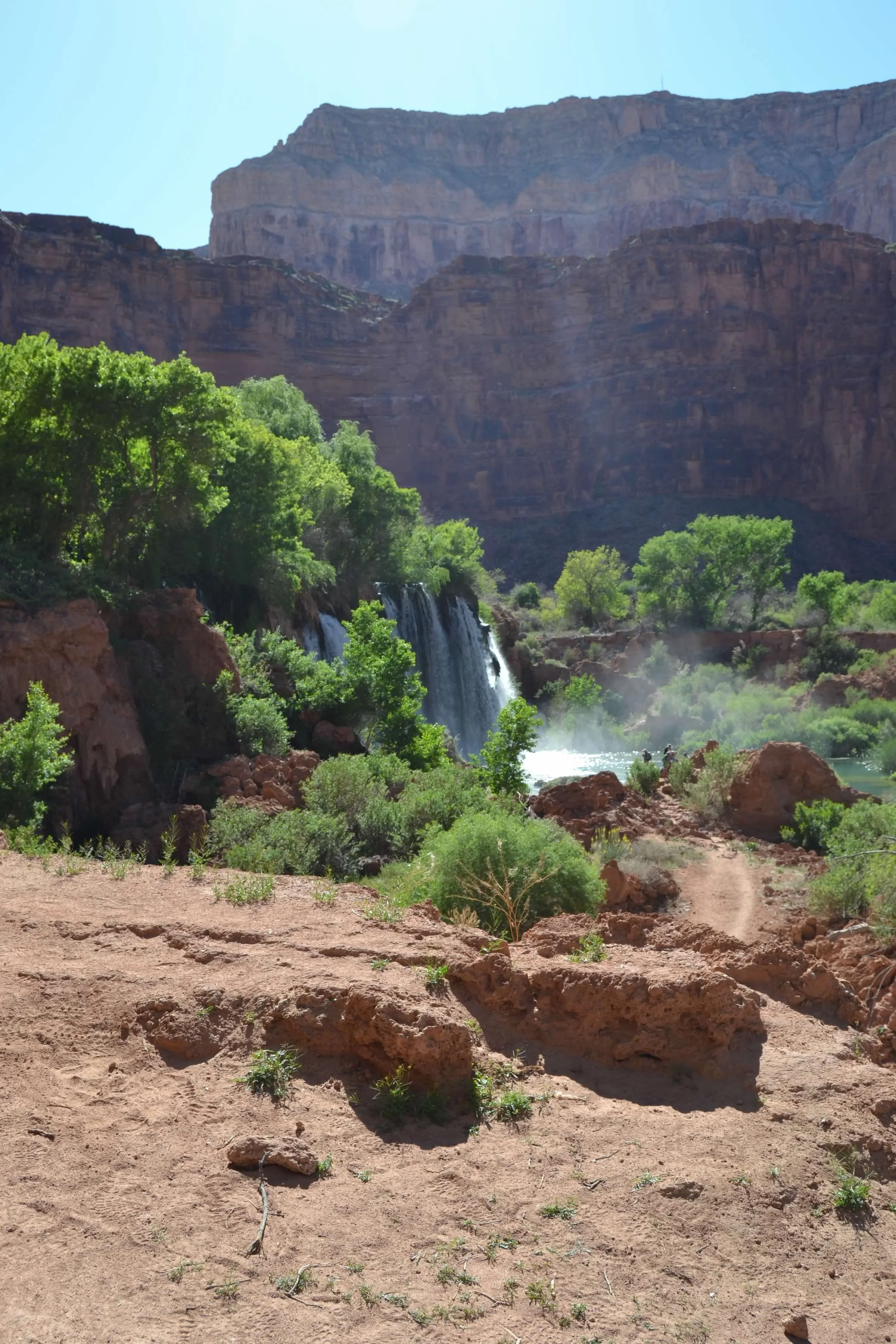
New Navajo Falls stands over 50 feet high. This beautiful drop was created by a massive flash flood in 2008. It is tucked away and easy to miss if you aren't looking closely.
Rock Falls was also born during the 2008 flood. This waterfall drops about 30 feet.
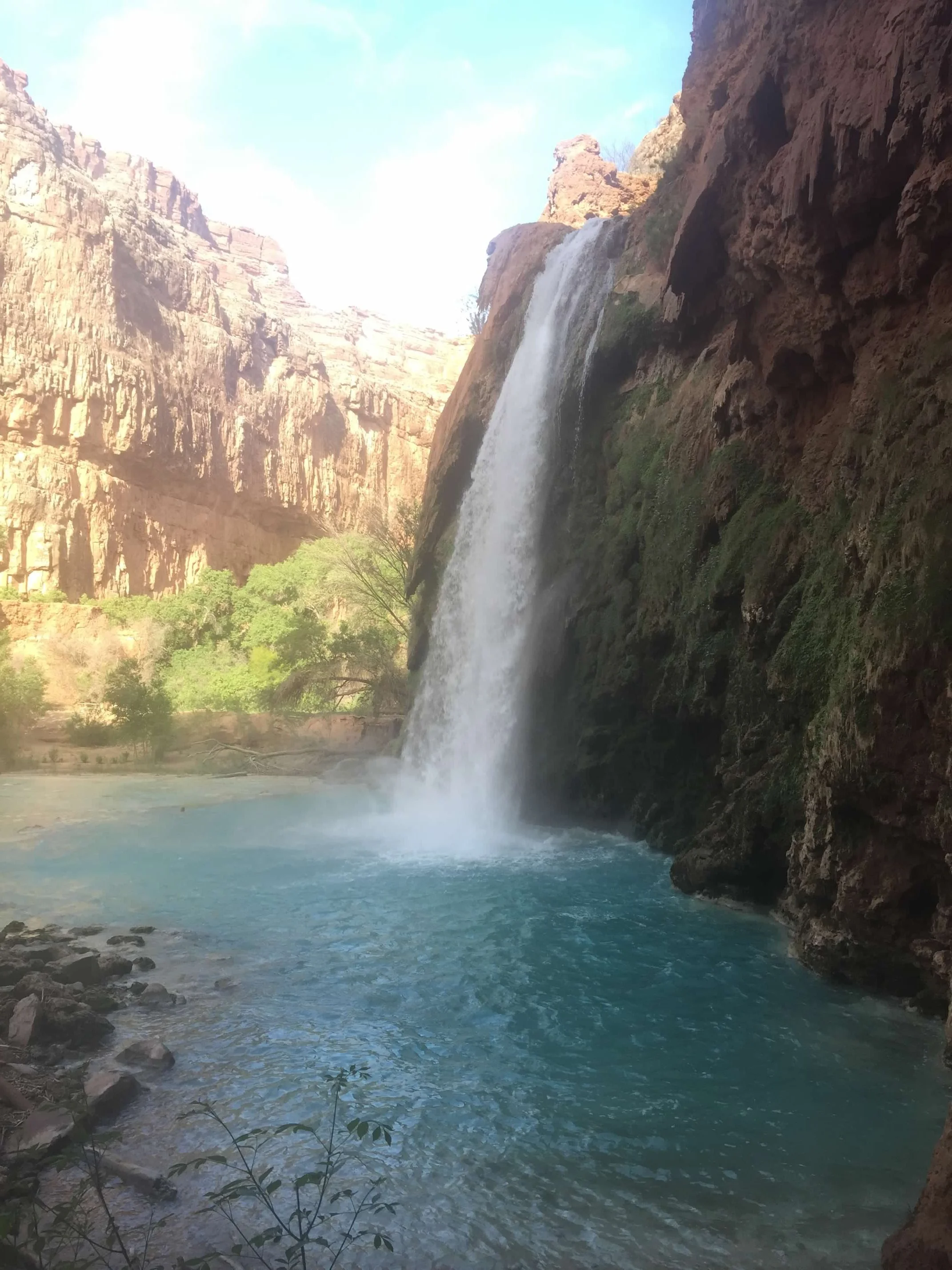
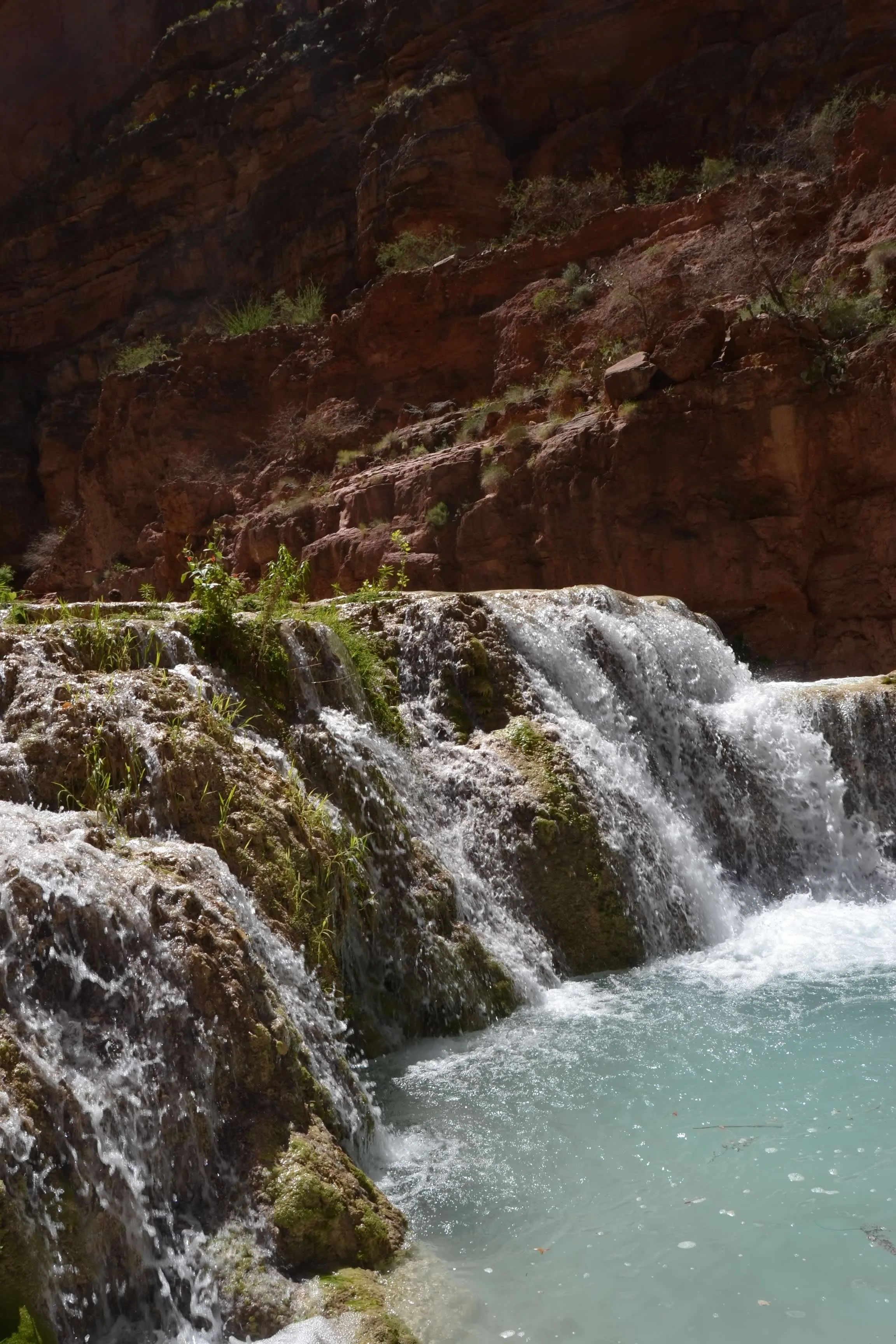
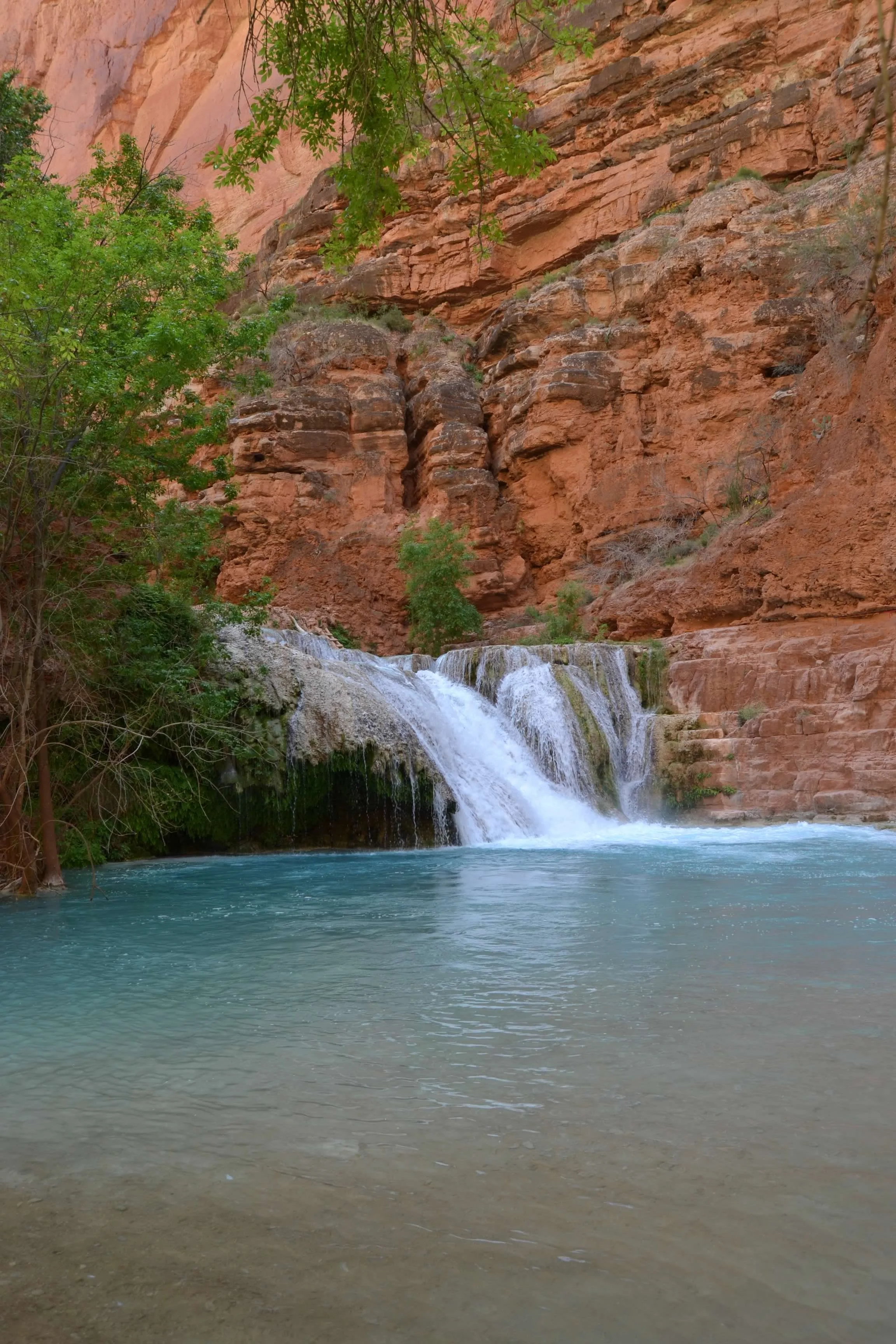
Havasu Falls was next, and the moment we saw it, we knew we were close to camp. This is the iconic postcard view, plunging over a 100-foot vertical cliff into a wide pool. The falls are fed by an underground river, keeping the water a perfect 70 degrees year-round.
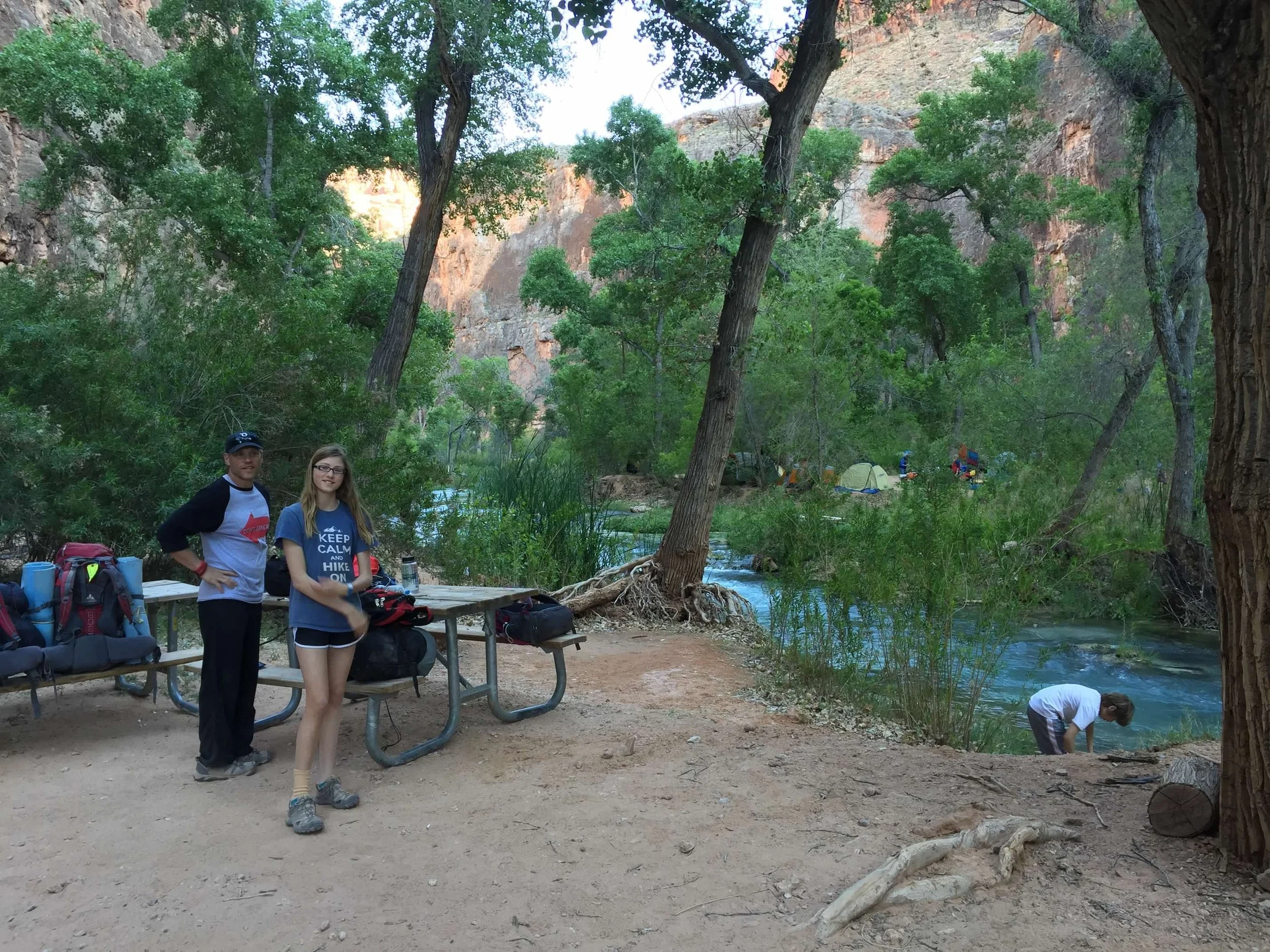
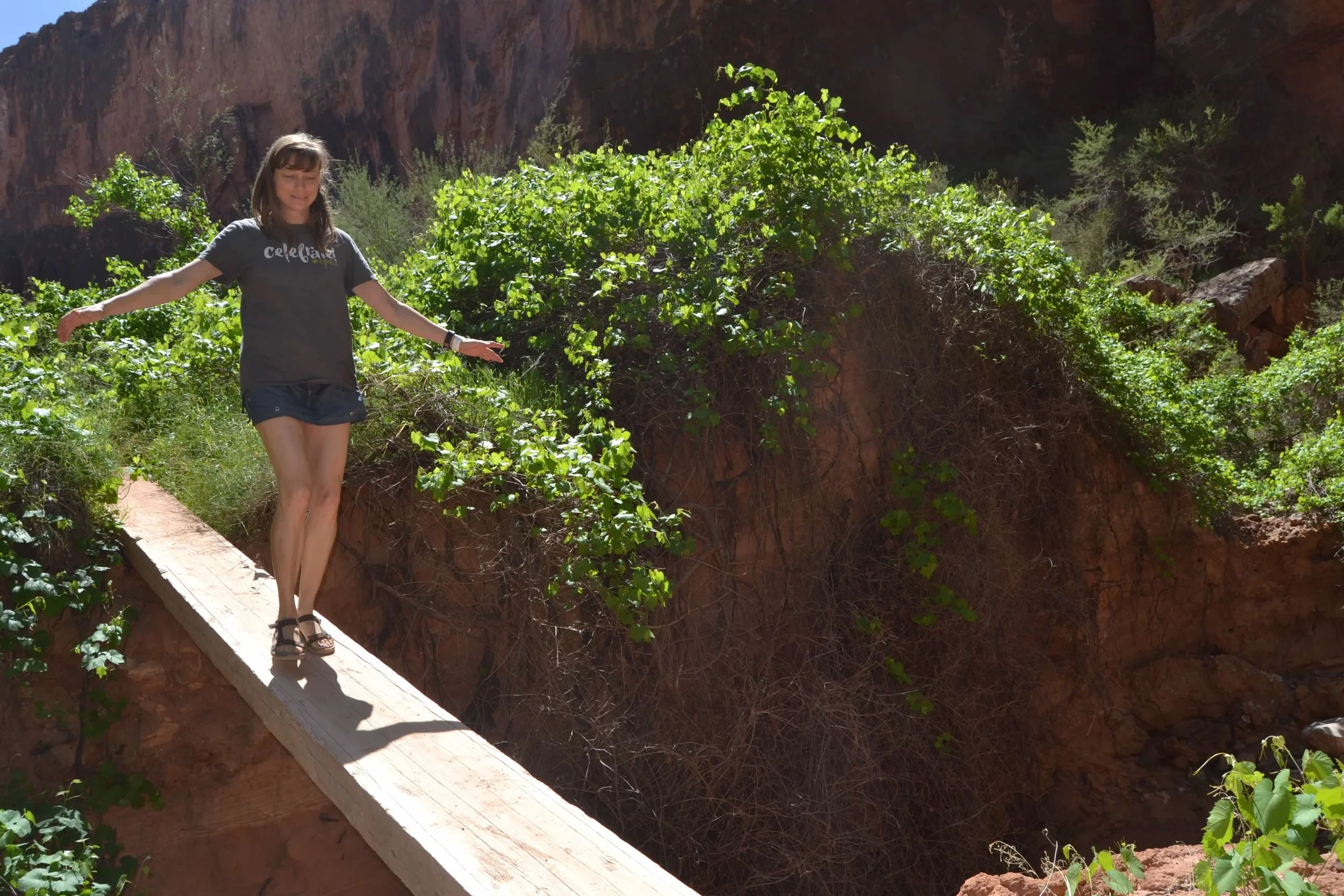
We crossed a narrow, bouncy footbridge to reach our campsite. We pitched our tent on a sandy beach right next to the rushing water and fired up the camp stove for a dinner of freeze-dried food under the glow of our lantern.
Facing the Mooney Falls Descent
The next morning, we woke up early to explore deeper into the canyon. Our first stop was Mooney Falls. At 210 feet, it is taller than Niagara Falls, though photos fail to capture its true, dizzying scale.
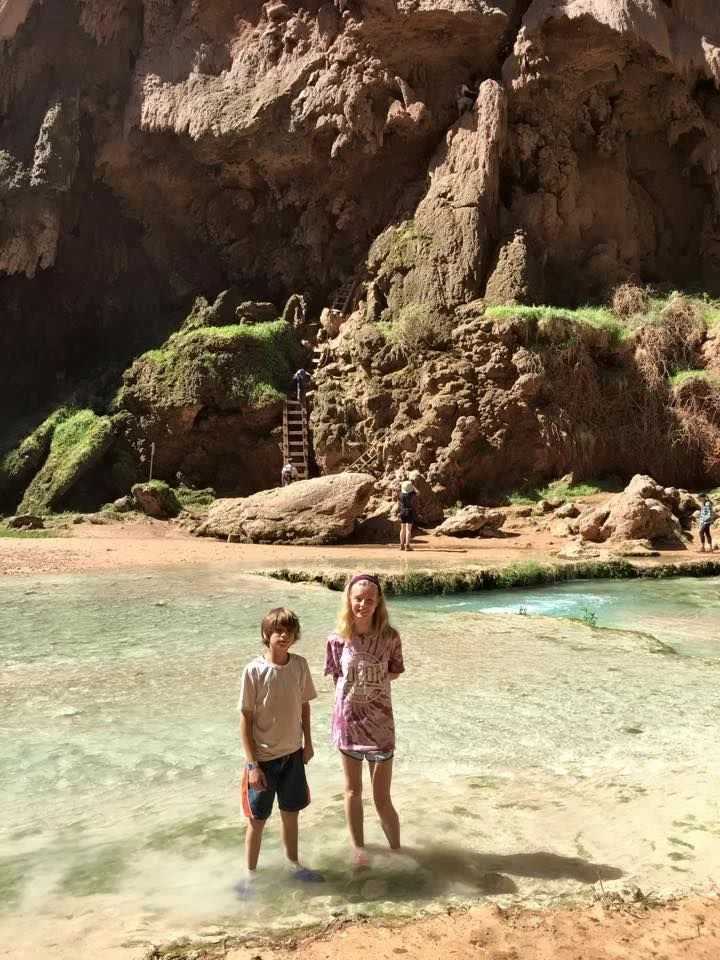
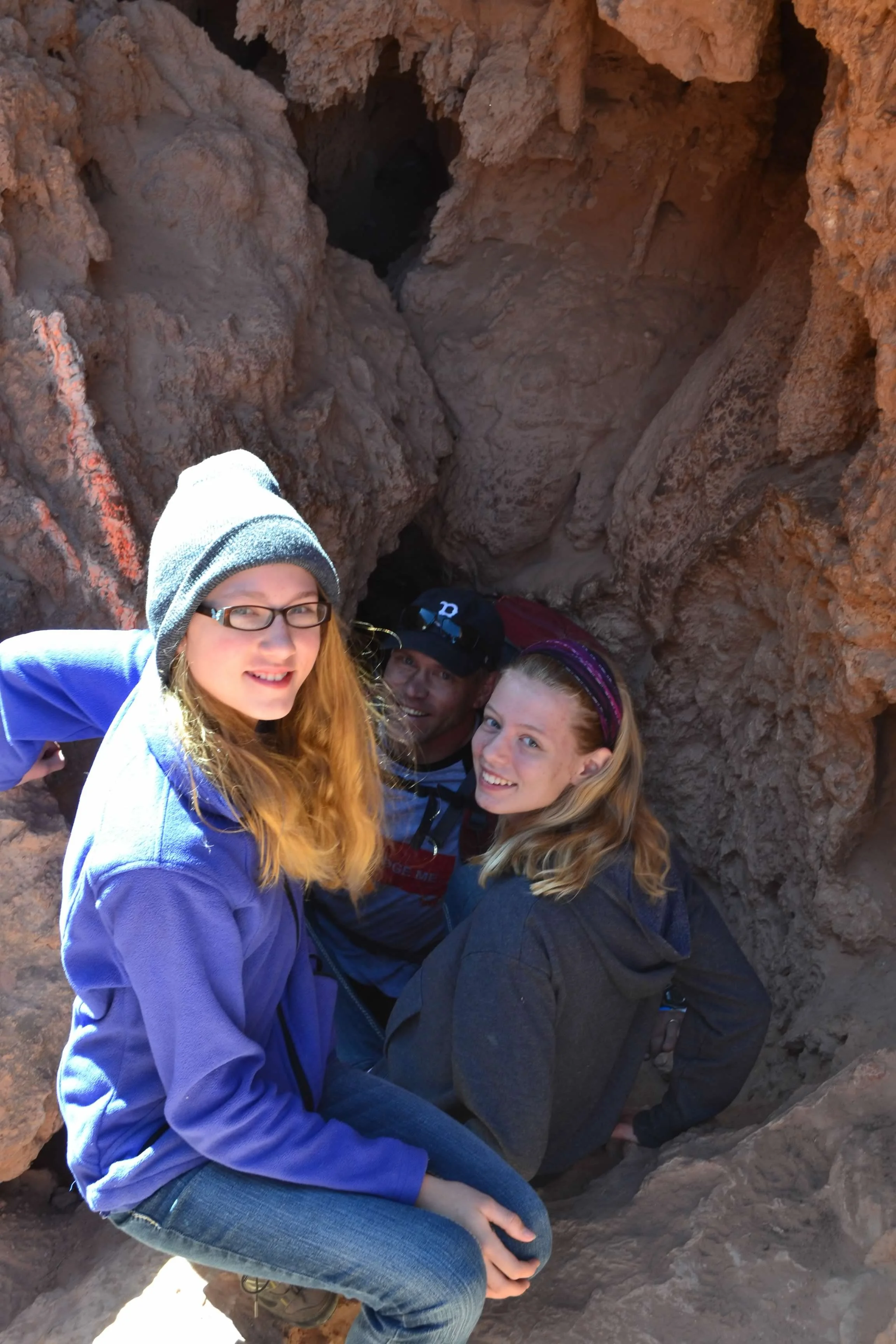
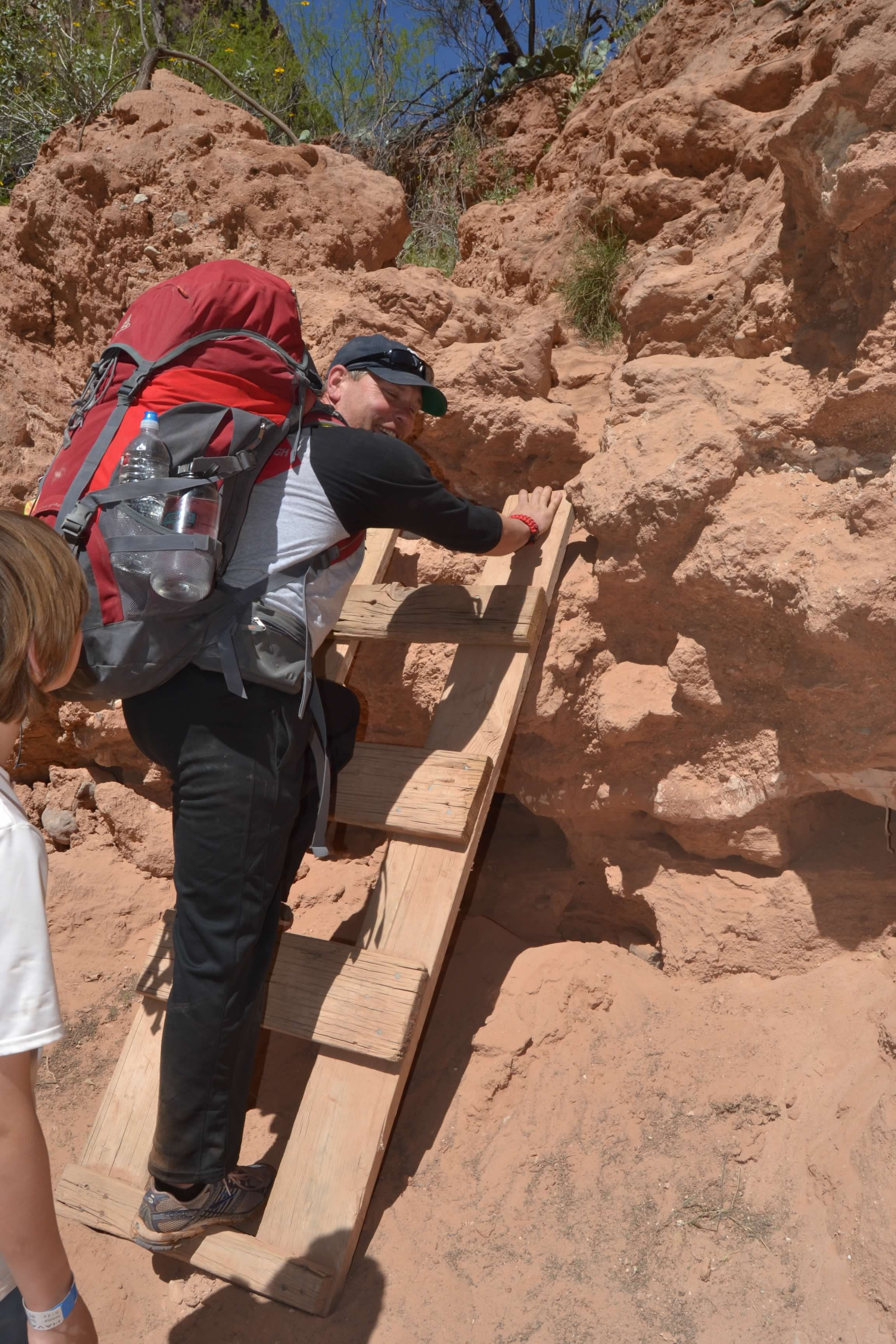
To reach the pool below, we had to brave the infamous descent. It is a rugged, vertical climb down the canyon wall. Halfway down, the trail enters a narrow, slick cave tunnel just wide enough for one person. Emerging from the darkness, we navigated a semi-vertical rock climb using exposed chains, wet handholds, and slippery ladders.
After making it to the bottom safely, we rewarded ourselves with a swim in the crystal-blue pool.
Pushing On to Beaver Falls
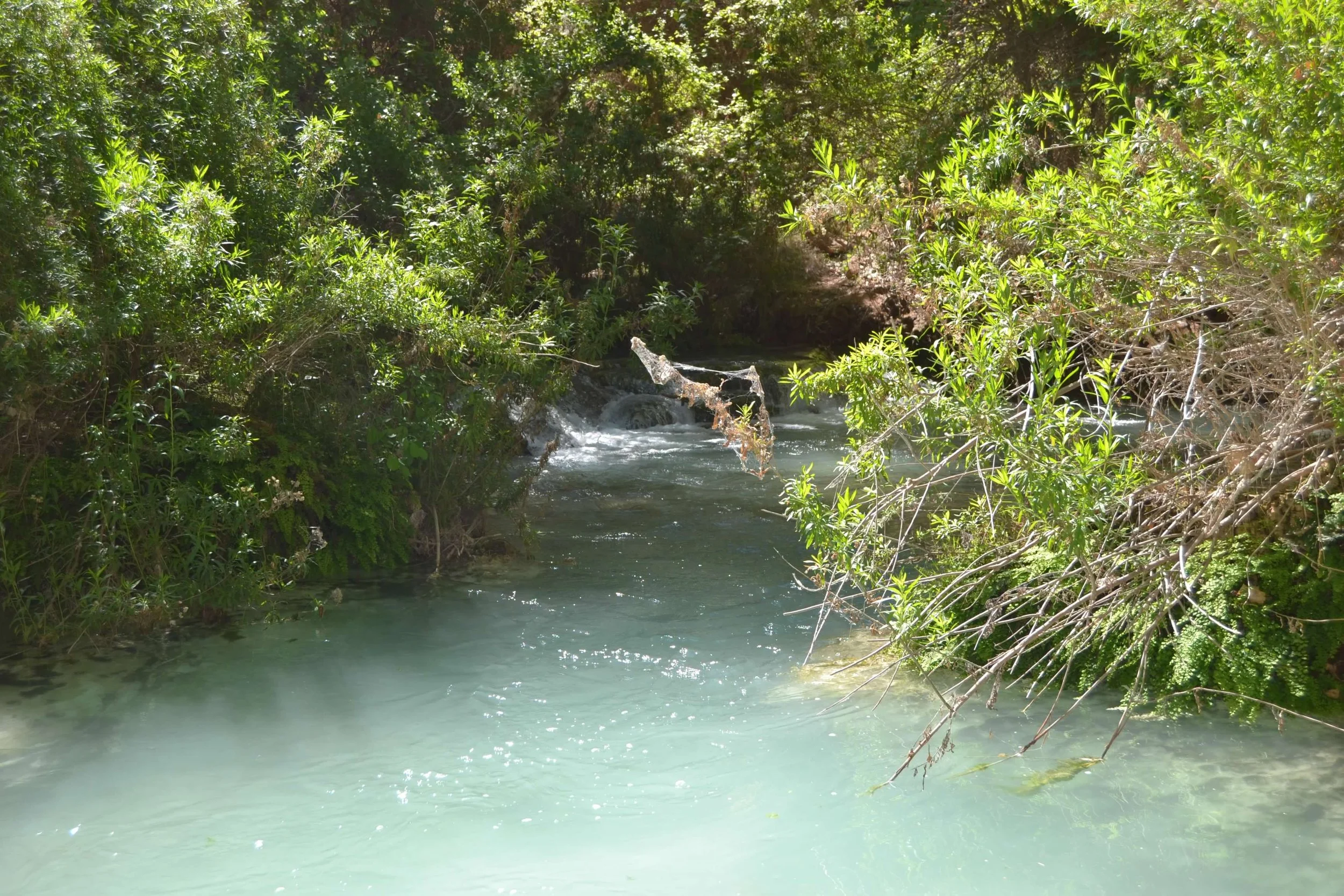
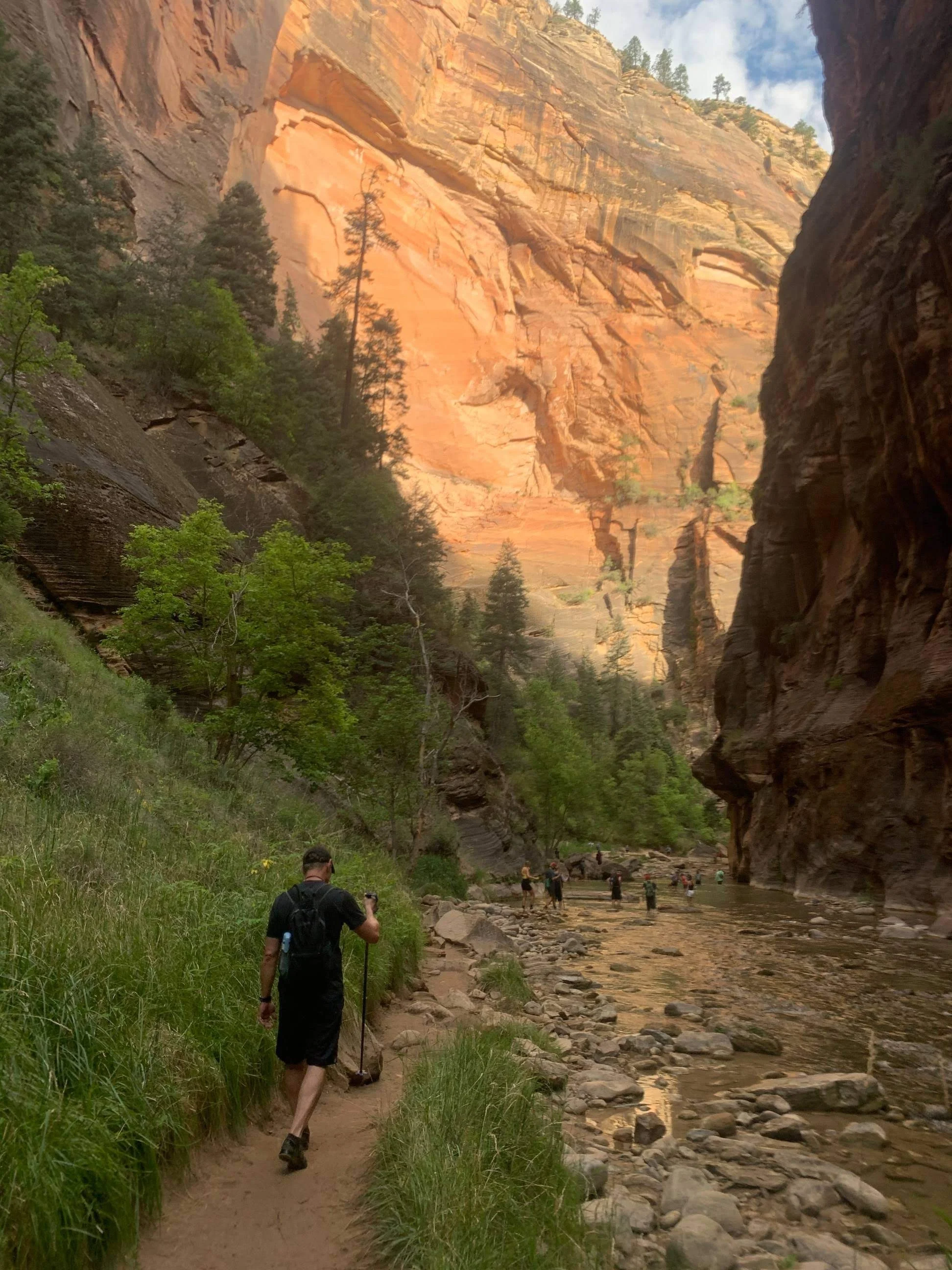
From Mooney, we hiked three more miles downstream toward Beaver Falls. The trail was an adventure in itself, packed with log bridges, ladders, and stepping stones. At one point, we waded across a wide, shallow section of the creek that stretched over 100 feet across.
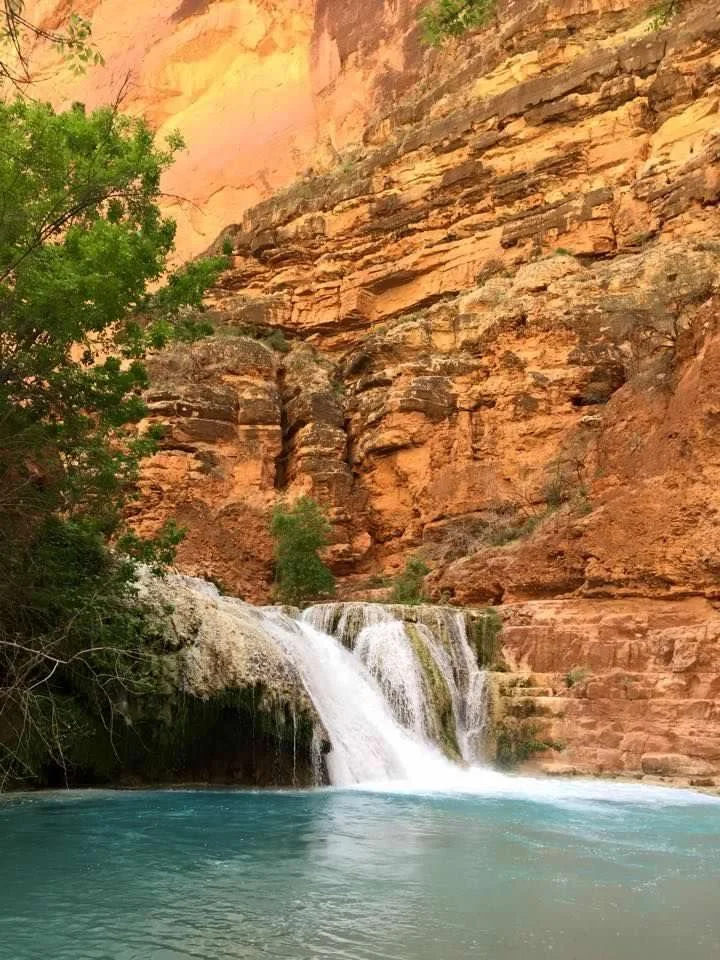
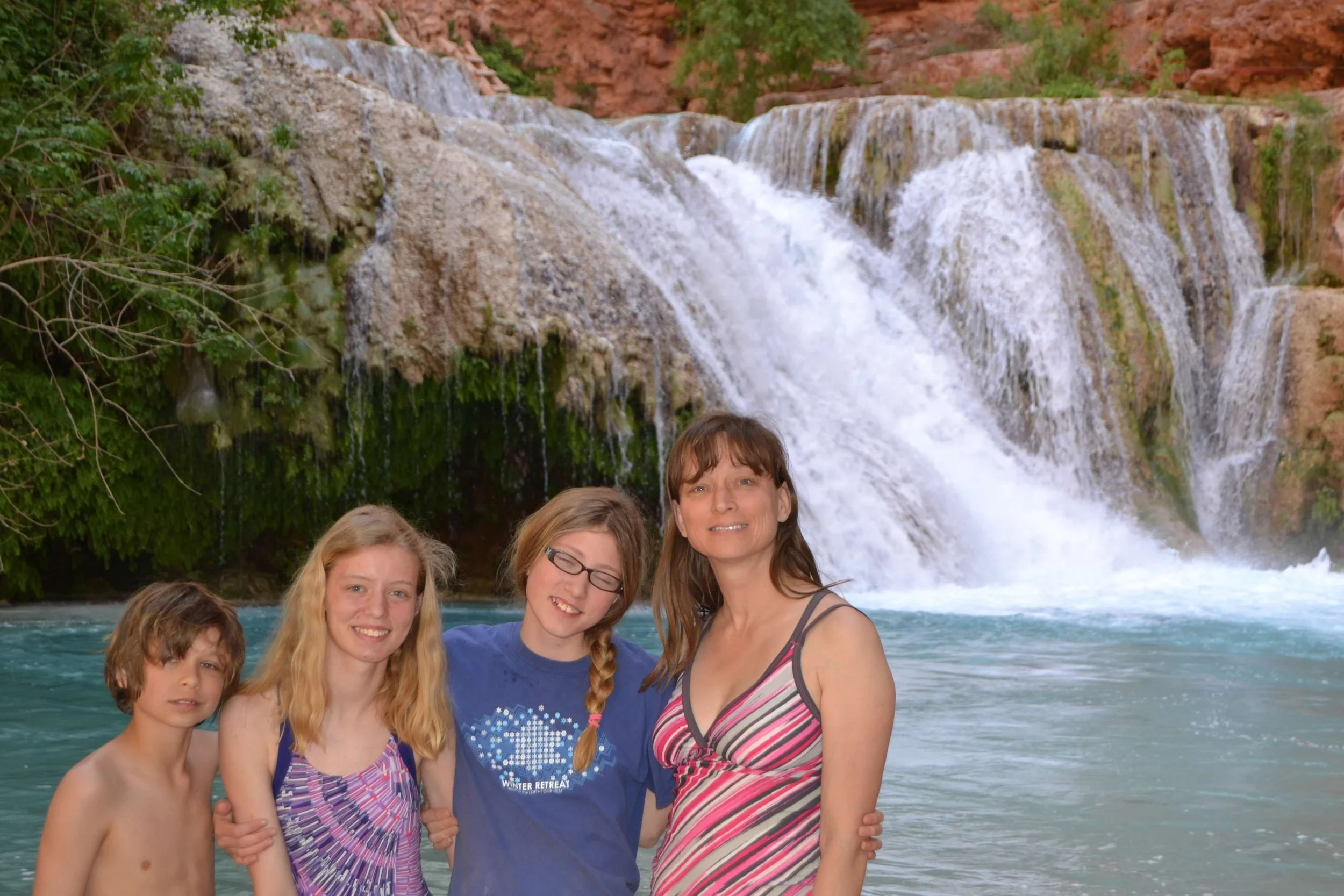
Beaver Falls is a stunning series of terraced travertine pools. We ate lunch, swam in the natural pools, and took a rest. We could have extended the hike another four miles to the confluence of the Colorado River, but we decided to save that for another day and turned around to head back to camp.
The Long Hike Home
On our third morning, we packed up every scrap of trash. The golden rule here is "pack in, pack out."
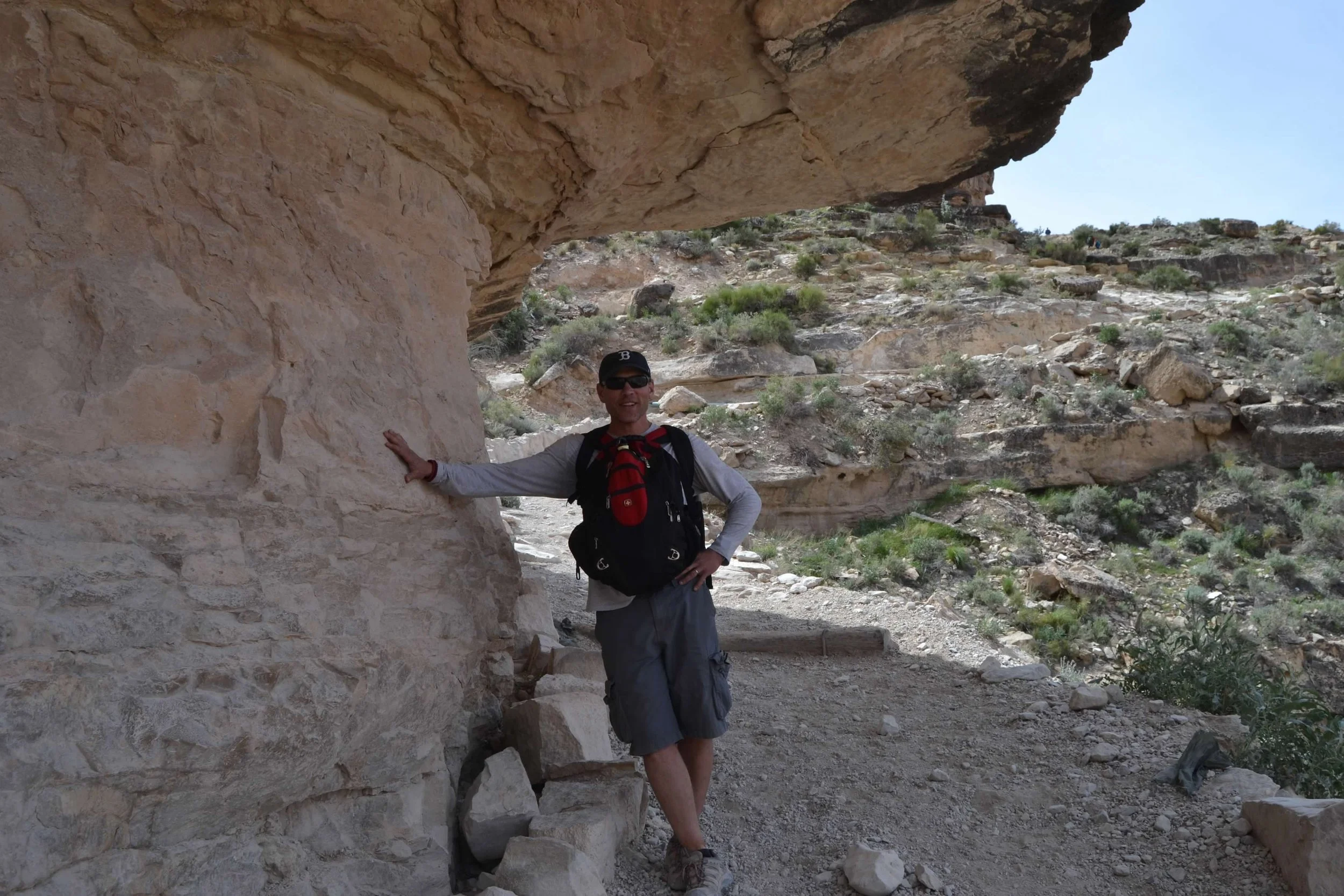
The 10-mile hike back out started flat, but the true test waited at the very end. The final mile up the switchbacks to the canyon rim is incredibly steep and difficult. Pushing through the exhaustion, our crew made it back to the top together, completing an unforgettable desert trek.
Havasupai Hike Information Summary
Distance: 20 miles round-trip to the campground, plus an additional 6 miles round-trip from camp to Beaver Falls.
Difficulty: Strenuous, particularly the final mile climb out and the semi-vertical ladder descent at Mooney Falls.
Permits: Strictly required in advance through the Havasupai Tribe reservation system (secured up to a year early).
Key Highlights: Staying in the isolated Supai village, witnessing iconic travertine formations, and swimming beneath Havasu, Mooney, and Beaver Falls.

People of the blue-green water