
The Narrows - Zion National Park - Springdale, Utah
“Perhaps some detours aren’t detours at all. Perhaps they are actually the path.” - Katherine Wolf
“You can’t be wise and in love at the same time.” - Bob Dylan
“Sometimes you will never know the value of a moment until it becomes a memory.” - Dr. Seuss
Splashing Through the Slot Canyons: A Guide to Hiking The Narrows Bottom-Up
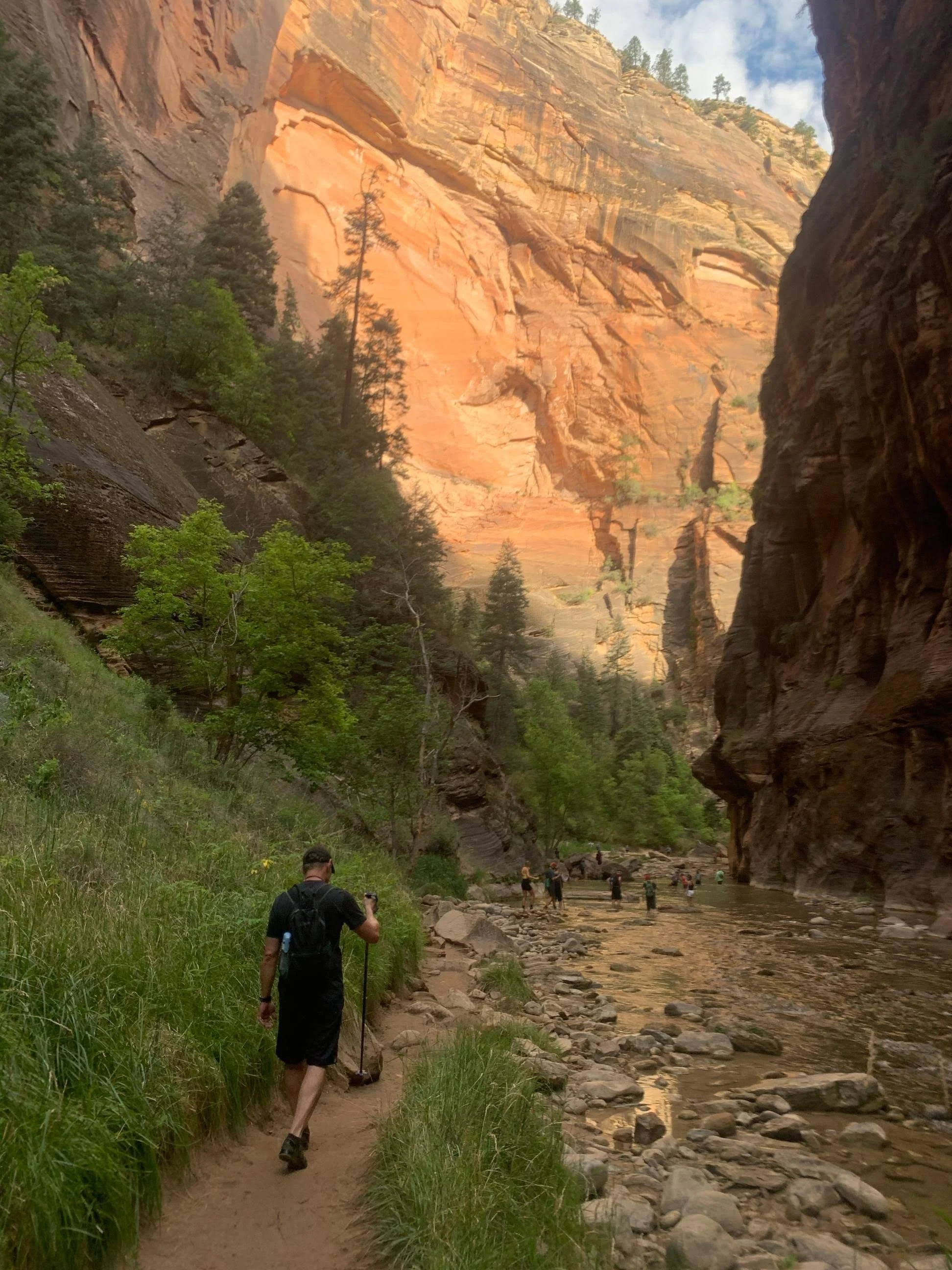
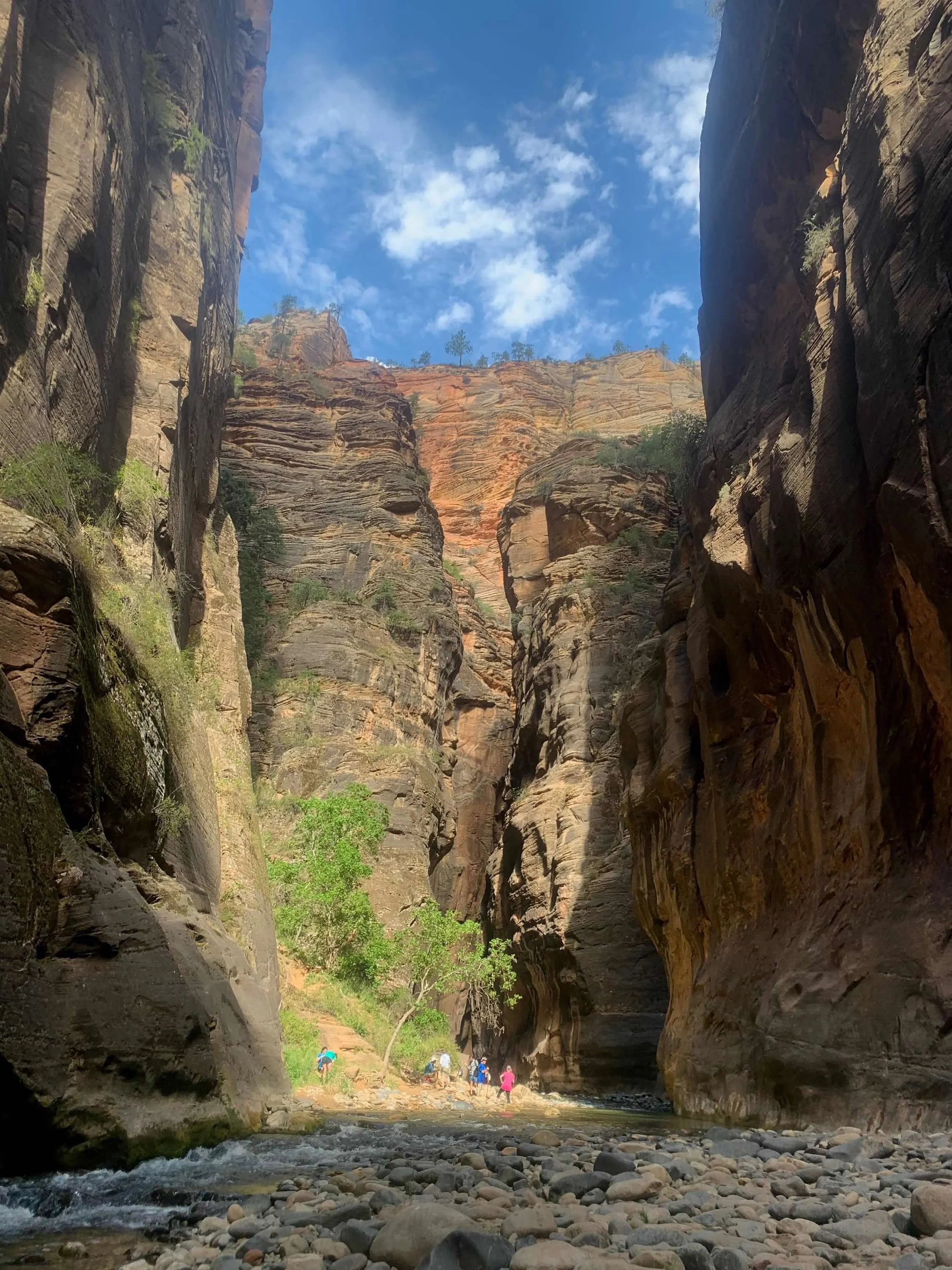
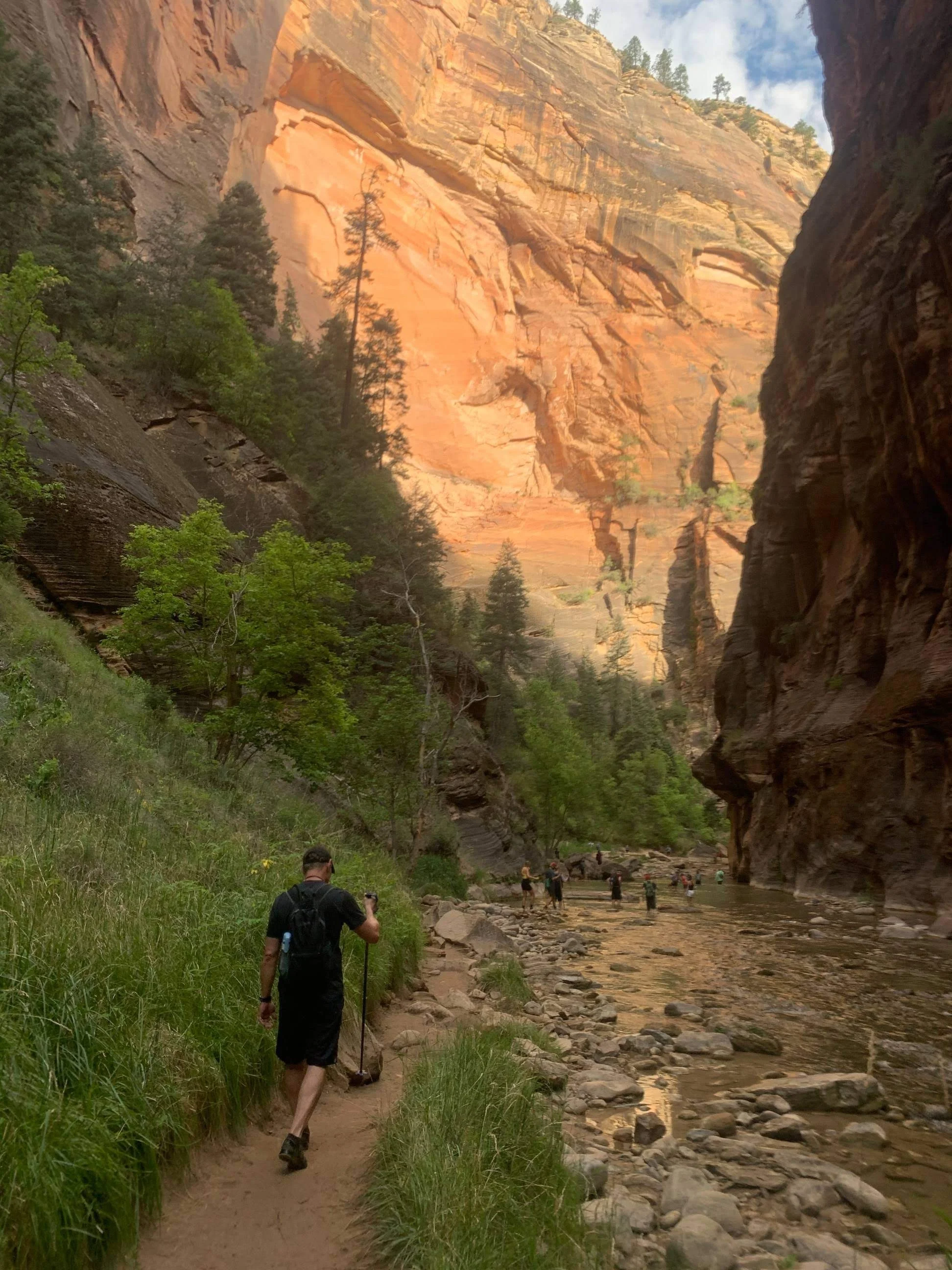
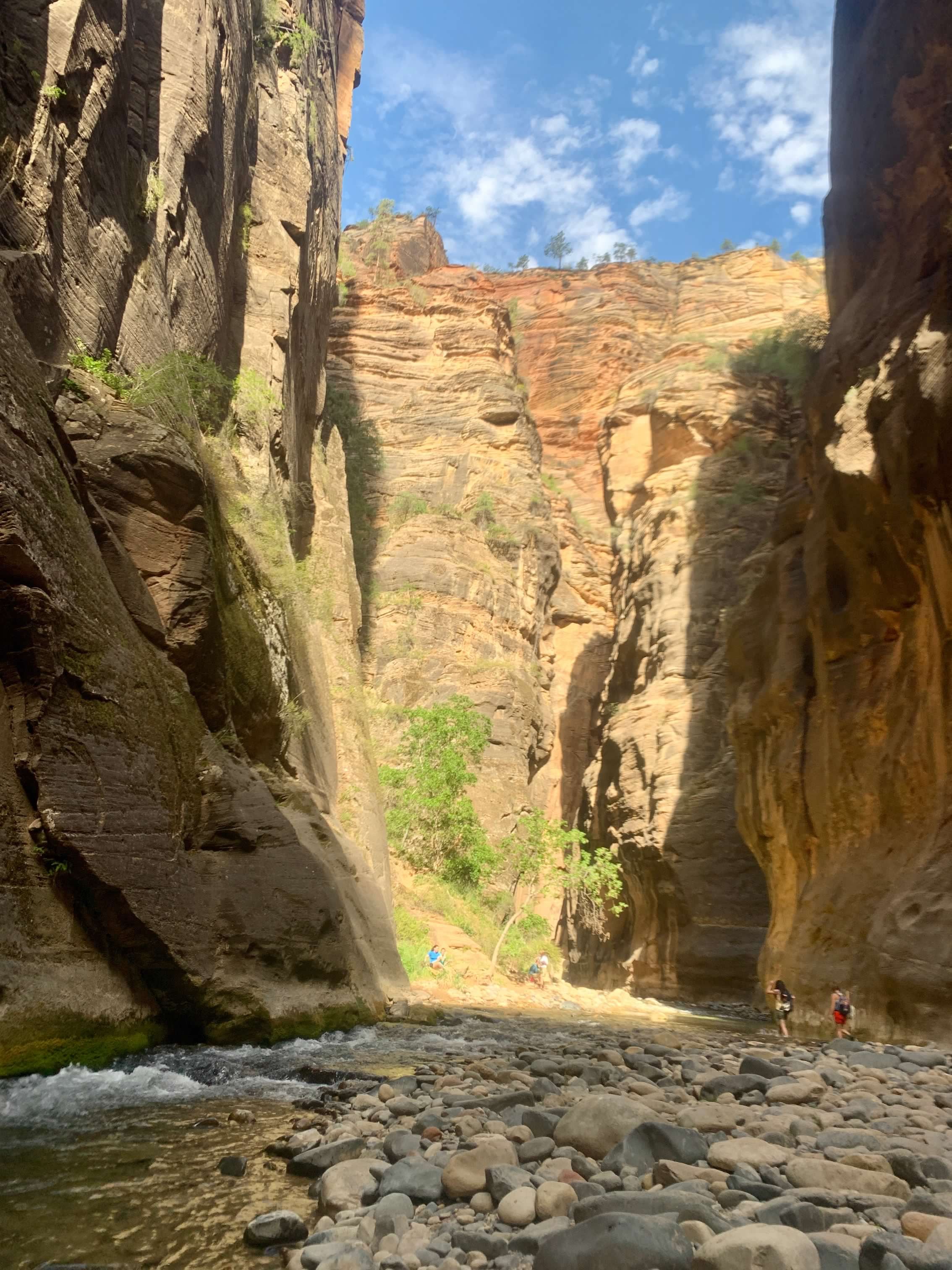
There are some hikes that completely redefine your sense of scale, and trekking through The Narrows in Zion National Park is absolutely one of them. Carved over millennia by the relentless flow of the Virgin River, this massive slot canyon features towering rock walls stretching 2,000 feet overhead, tapering down to a mere 20 to 30 feet wide in its tightest sections.
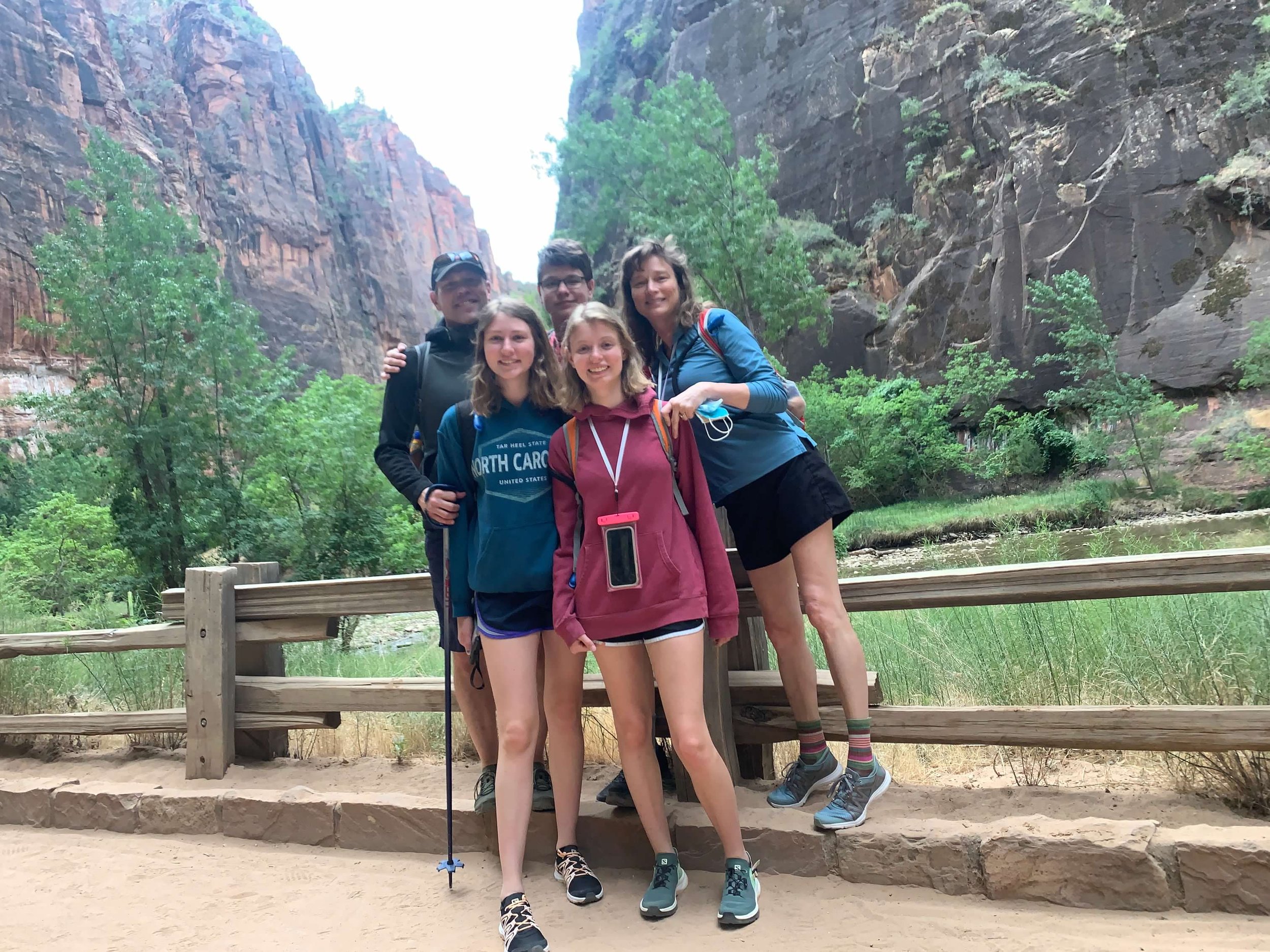
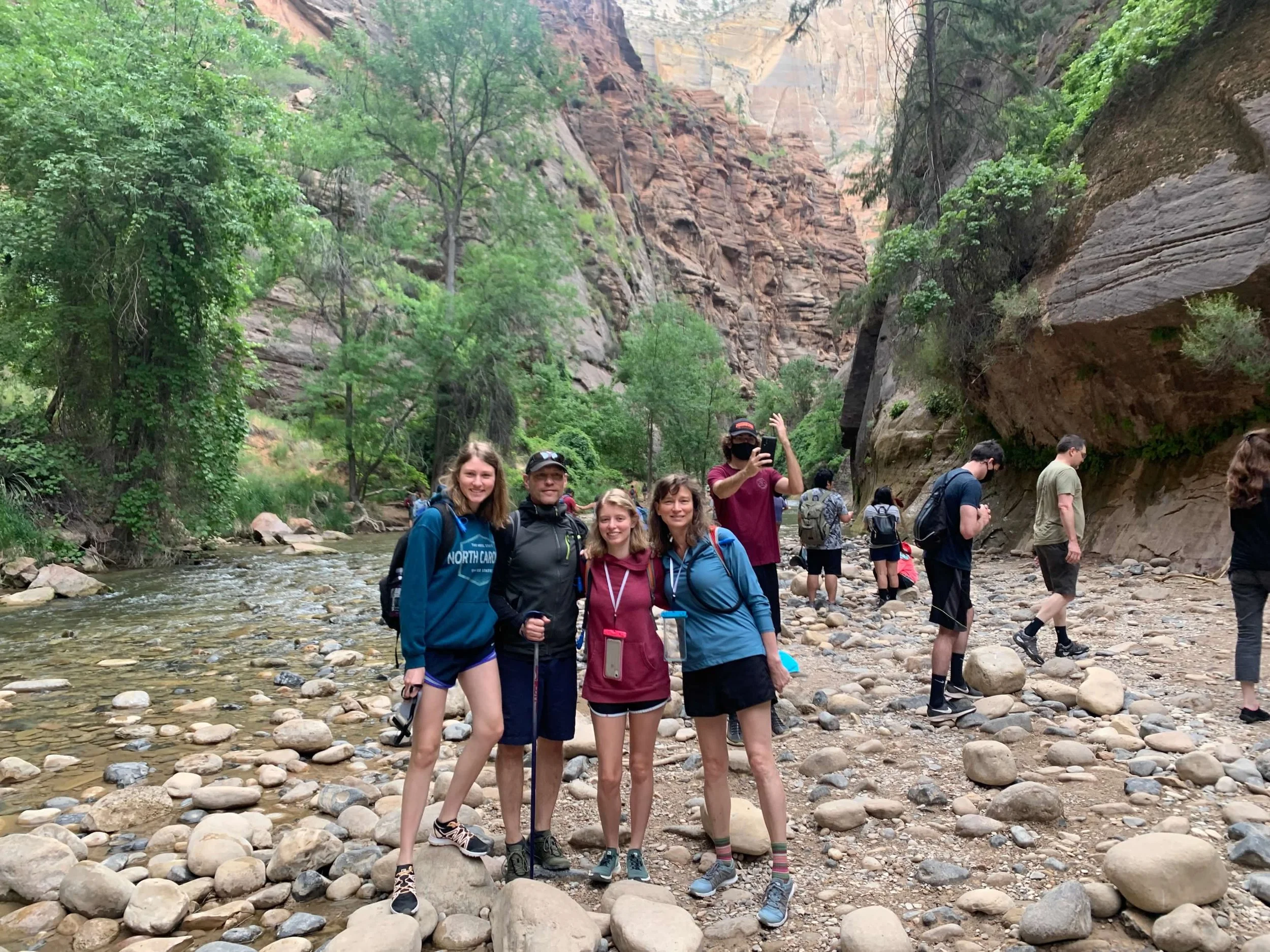
For this bucket-list adventure, Ginger, Maria, Amelia, Alex, and I tackled the popular Bottom-Up route—an unforgettable 11-mile journey spent wading right through the heart of the canyon. If you're planning your own trek, here is exactly what it's like to trade traditional trail boots for water shoes, bathing suits, and a heavy-duty walking stick.
Gear Rental vs. Buying in Advance
When it comes to tackling a riverbed for 11 miles, your regular running shoes or open-toed hiking sandals just won't cut it. You absolutely need dedicated footwear that can handle slippery, submerged boulders while protecting your toes.
While there are plenty of outfitter shops in Springdale right outside the park entrance that will rent you a wet-hiking package for a fee, we highly recommend purchasing your water shoes in advance. We bought all of our water shoes ahead of time and brought them with us. Having your own gear means you don't have to spend valuable time in rental lines before your hike, and you get to ensure a perfect, blister-free fit well before stepping into the canyon. Good water shoes are a non-negotiable for this trek!
Crucial Safety: Flash Flood Monitoring
Because you are hiking at the bottom of a tight slot canyon with zero cellular service, safety requires proactive planning. Flash floods are a real and potentially deadly hazard in The Narrows, where water levels can rise several feet in mere minutes.
Before you ever set foot in the river, you must do two things:
Check the Flow Rate: Zion closes the trail if the Virgin River's flow rate exceeds 150 cubic feet per second (CFS).
Check the Flash Flood Potential Rating: Stop by the Zion Visitor Center to talk to park rangers and look at the daily NOAA forecast. Even under perfectly clear blue skies inside the canyon, a rainstorm miles upstream can send a wall of water rushing down toward you.
While you are on the trail, maintain total situational awareness. Turn around immediately if you notice any of these warning signs:
Clear river water suddenly turning muddy or tea-colored.
An influx of floating debris like twigs and branches.
A distant, deep roaring sound echoing from up-canyon.
If a flood does occur, drop your heavy gear and scramble to the highest ground or boulder pile possible—getting high up beats saving gear every single time.
Beating the Crowds: A 7:00 AM Start
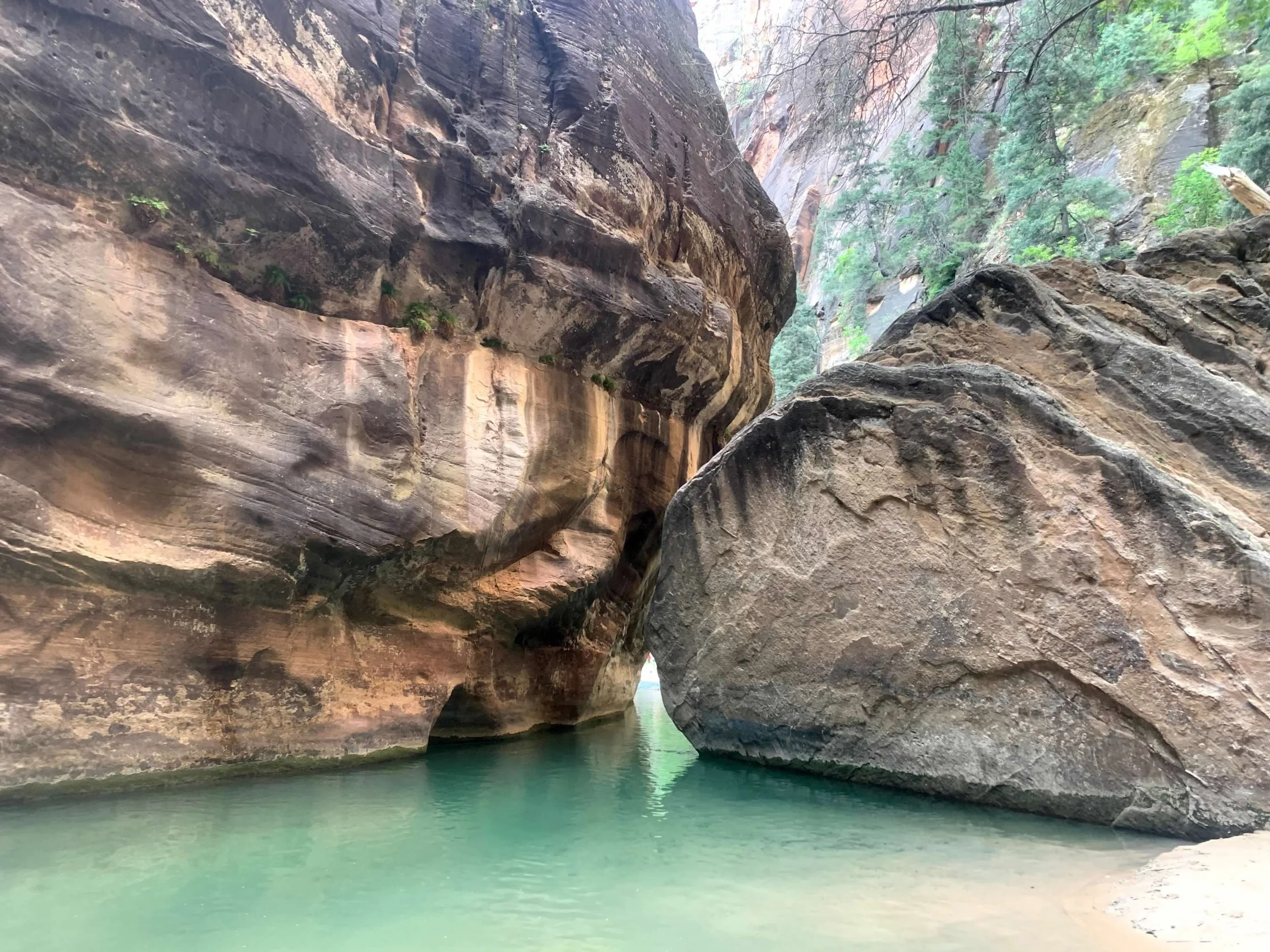
The golden rule for hiking The Narrows is to start early, so our alarm clocks went off well before dawn. We arrived at Zion National Park right at 7:00 AM and took the 7:00 AM shuttle to the Temple of Sinawava—the official gateway where the riverside walk ends and the canyon trek begins. Stepping off the shuttle into the canyon, the morning air was crisp, and the trail felt wonderfully quiet before the heavy daytime crowds arrived.
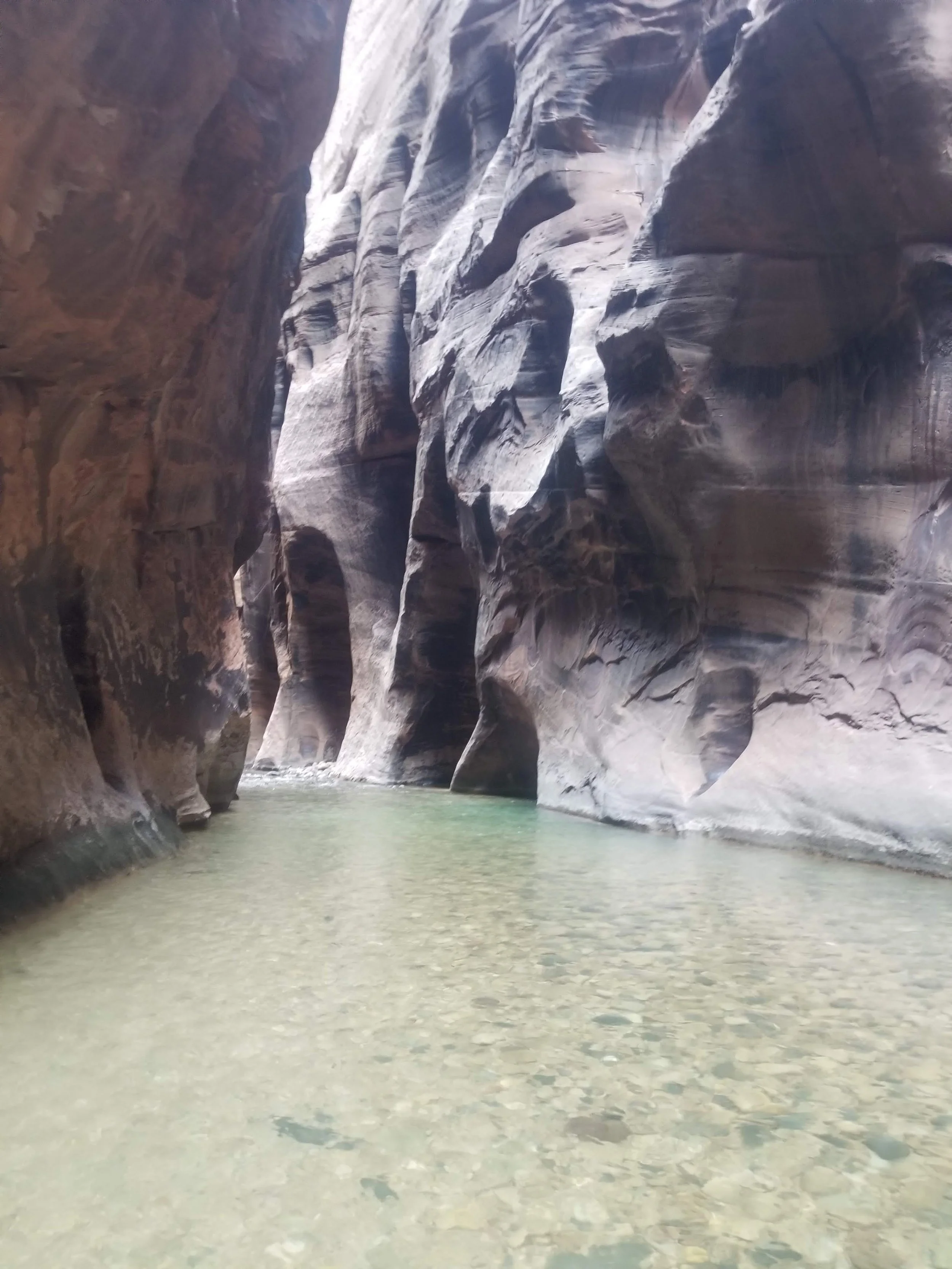
Wading Into the Virgin River & The Completionist Mindset
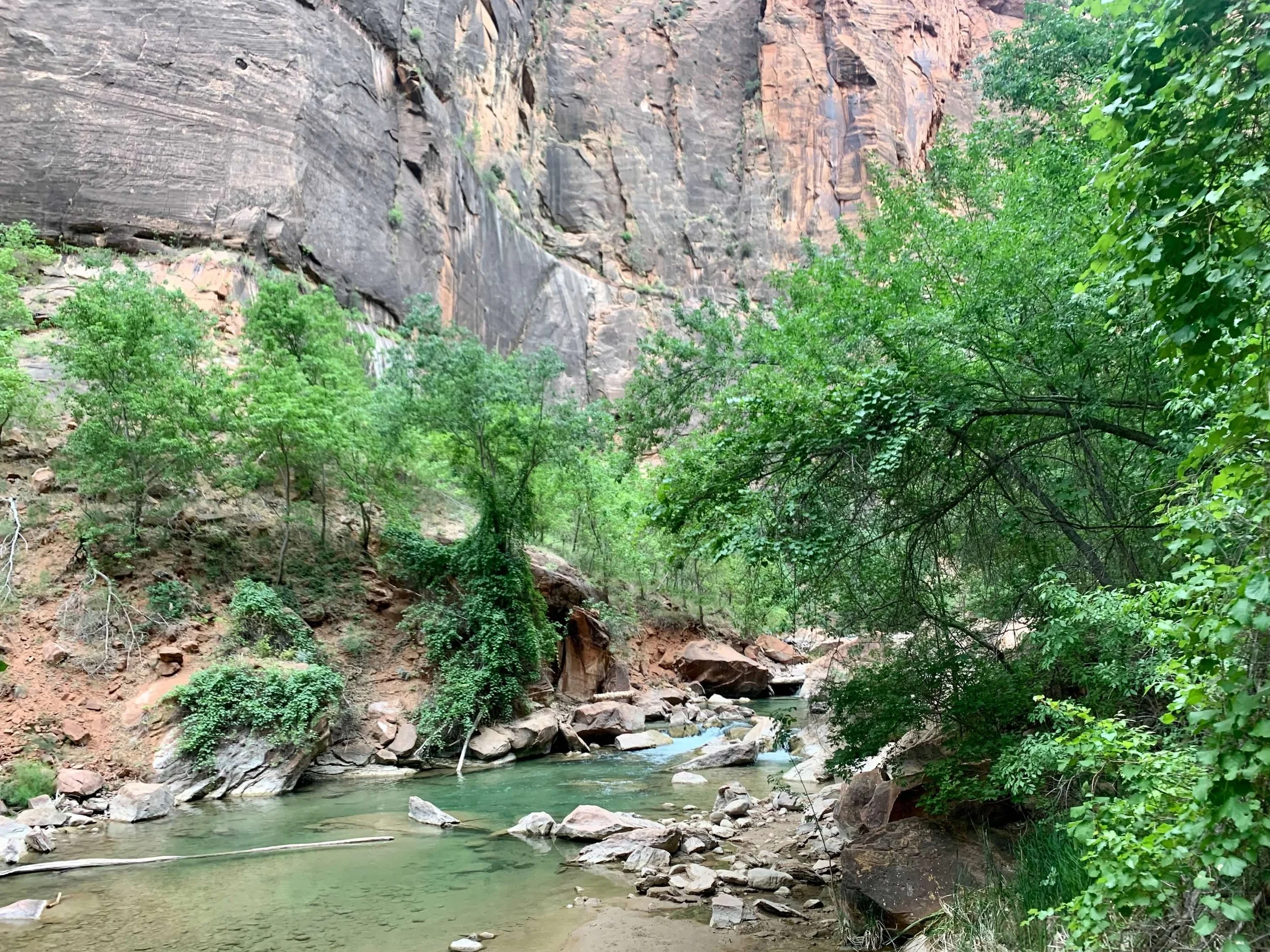
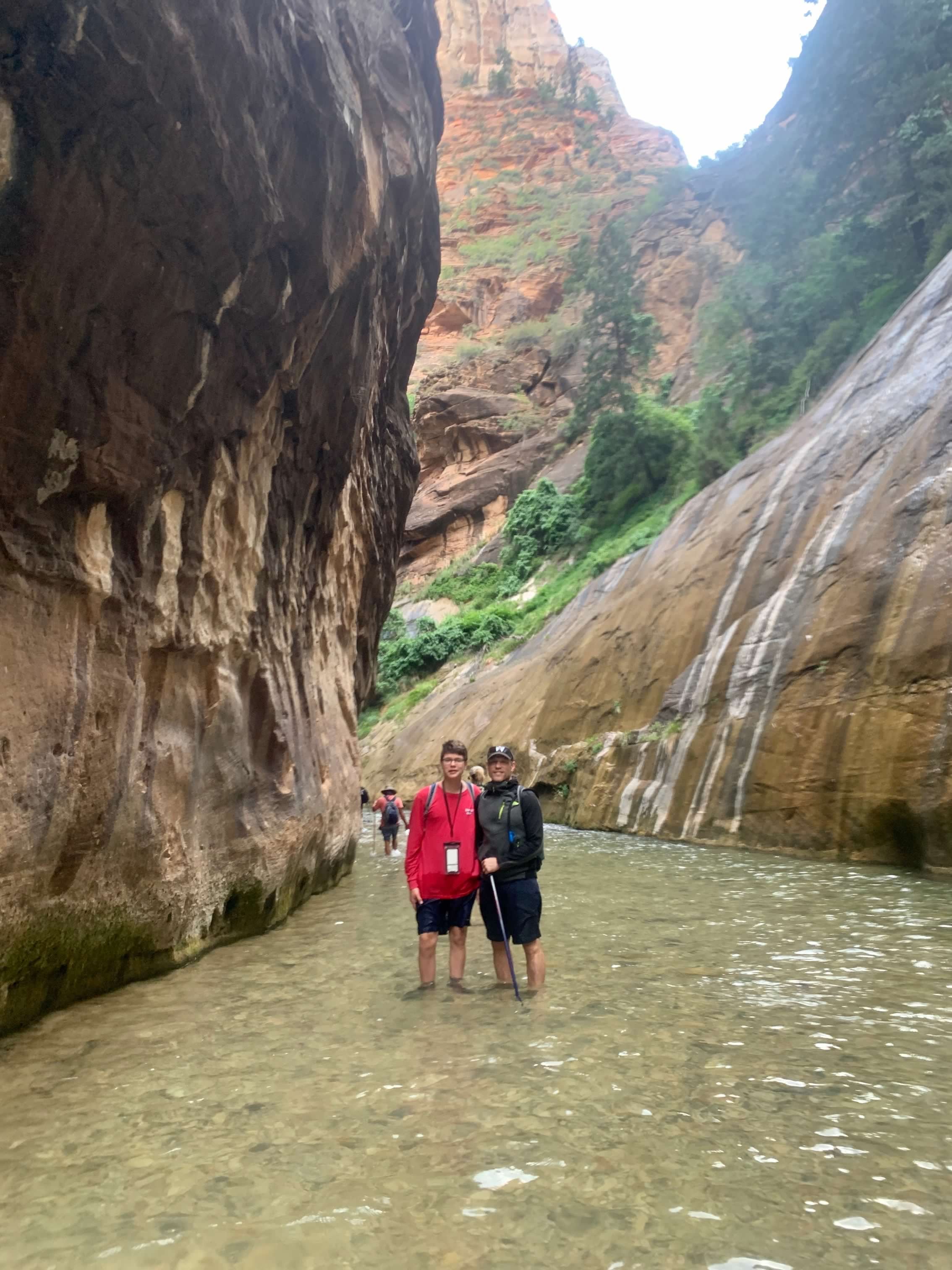
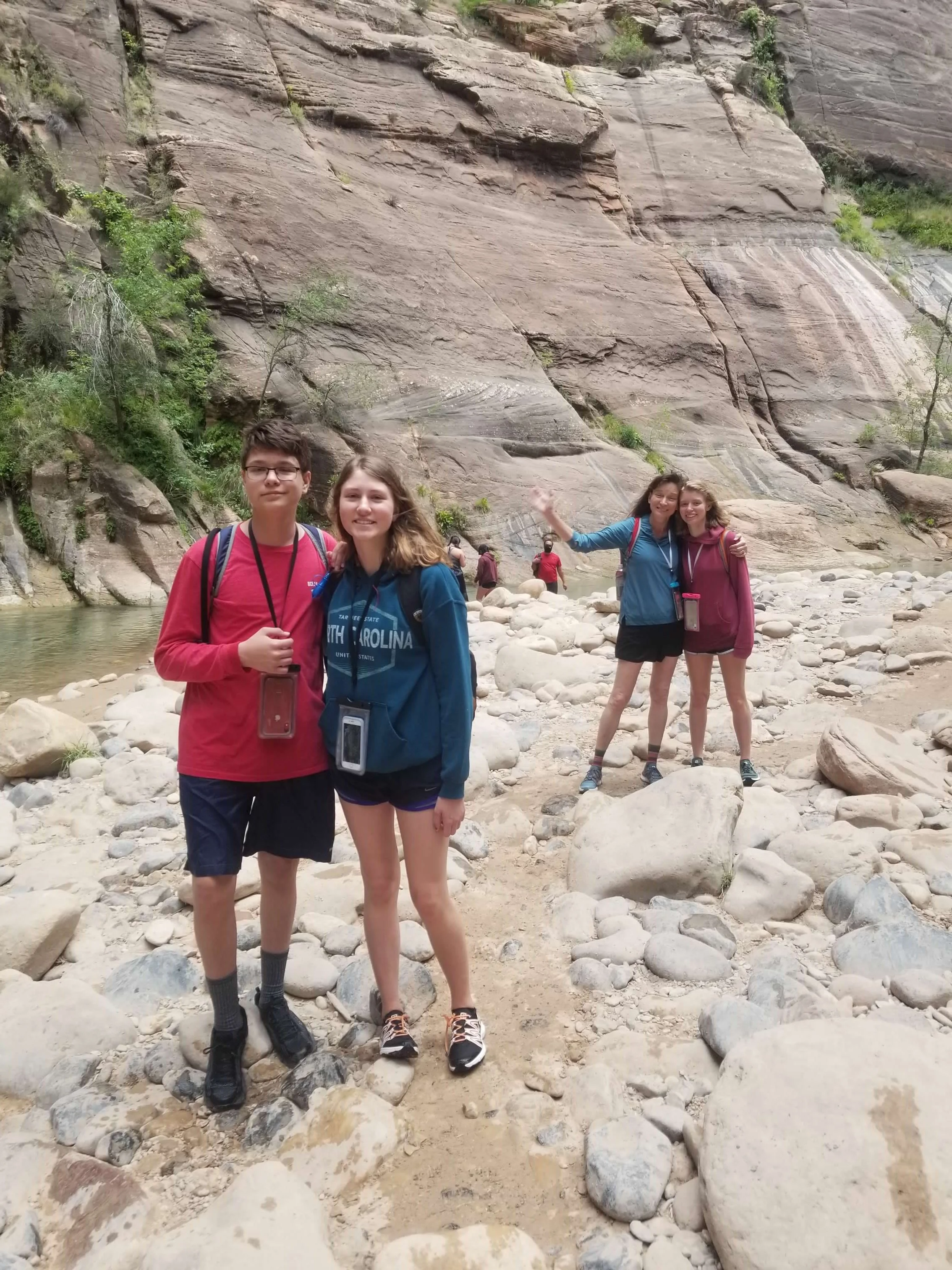
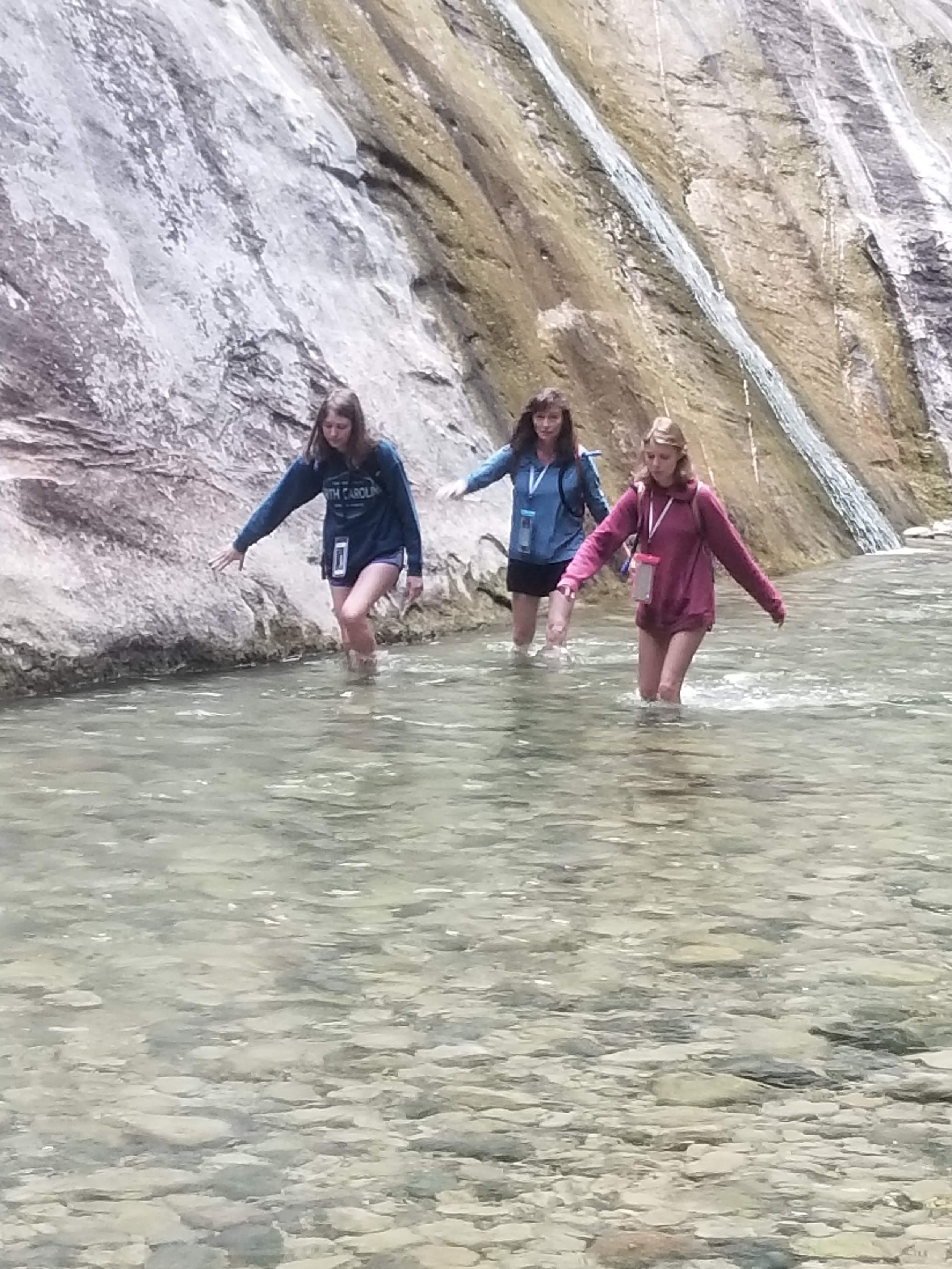
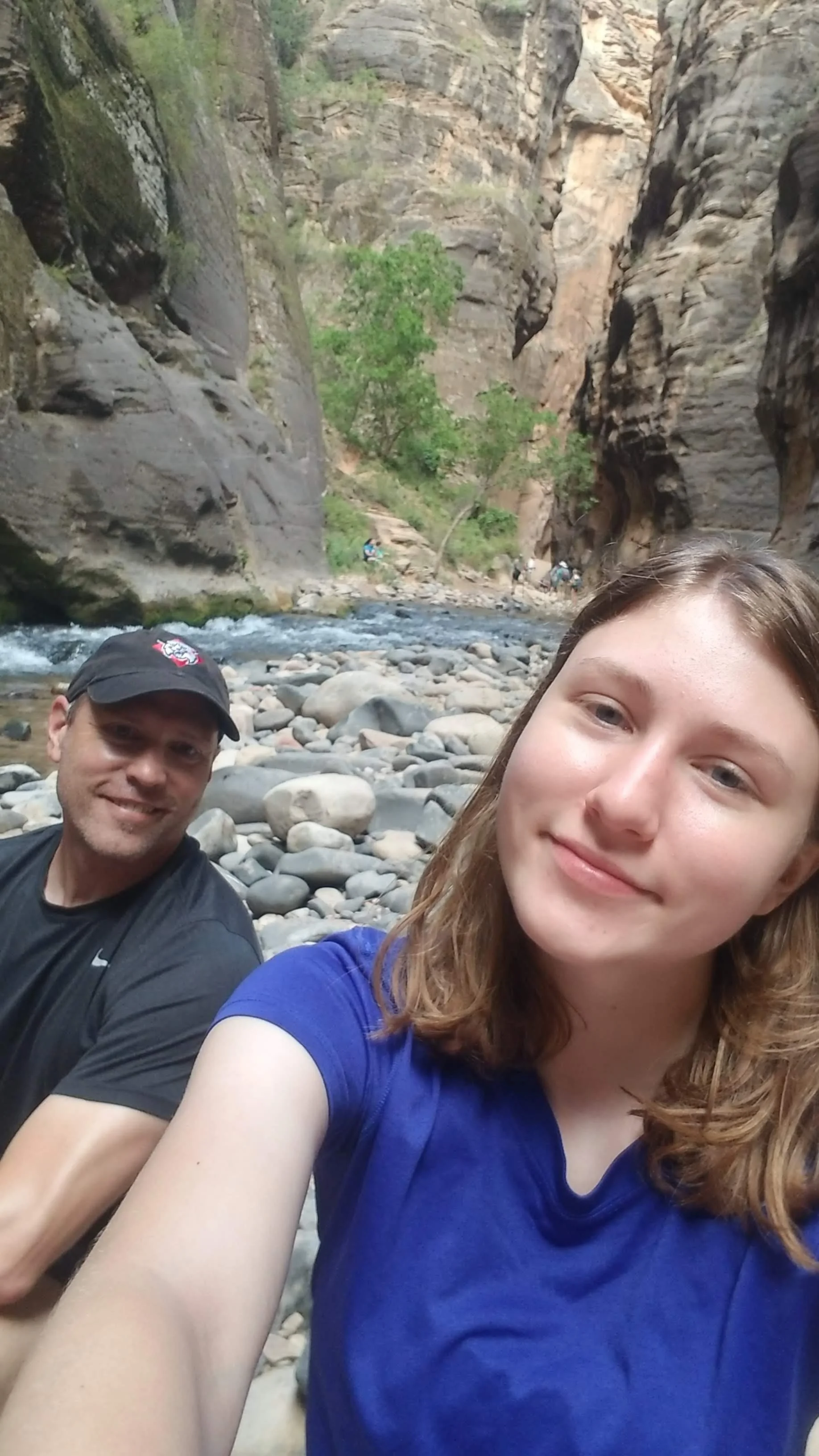
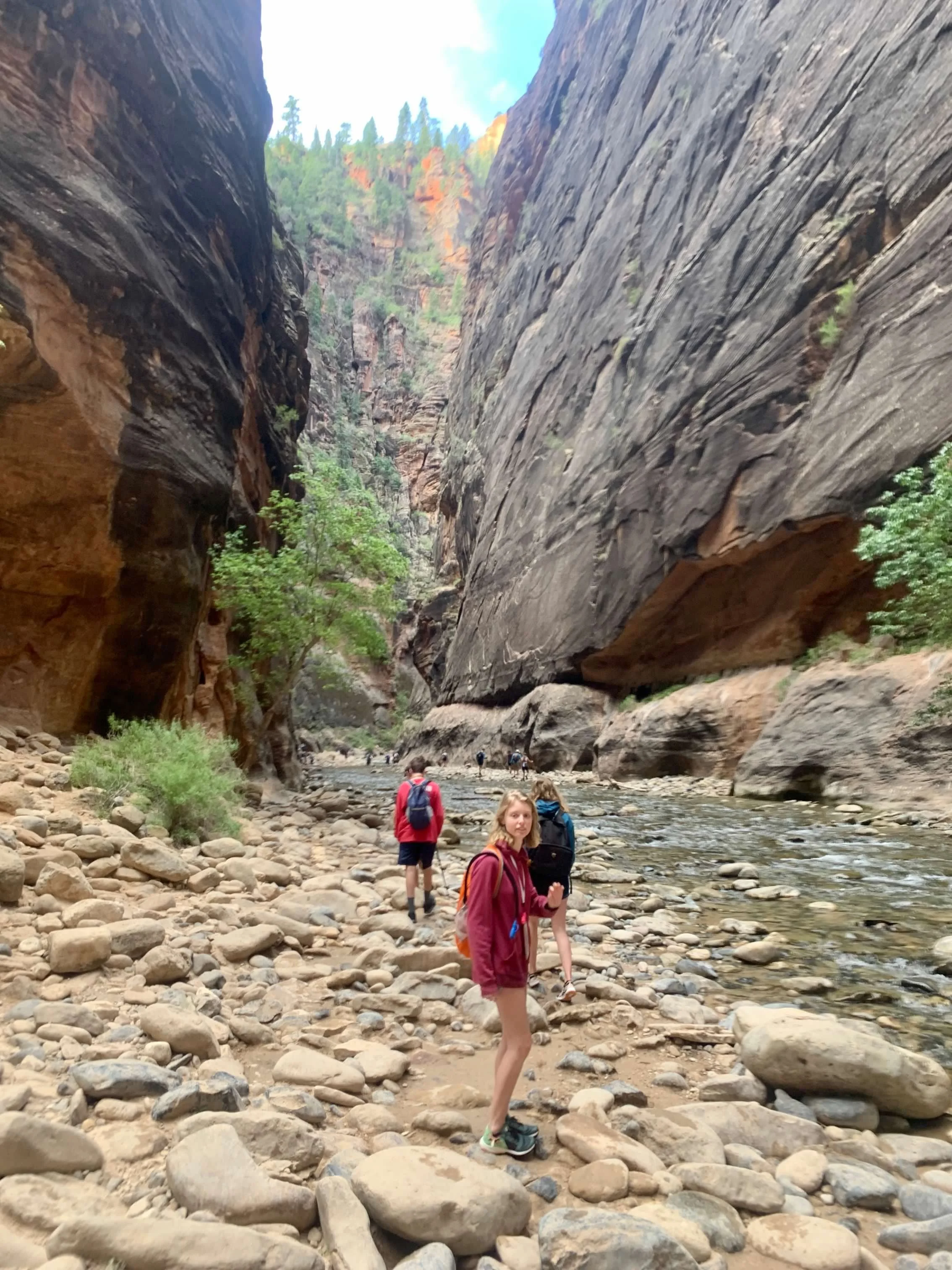
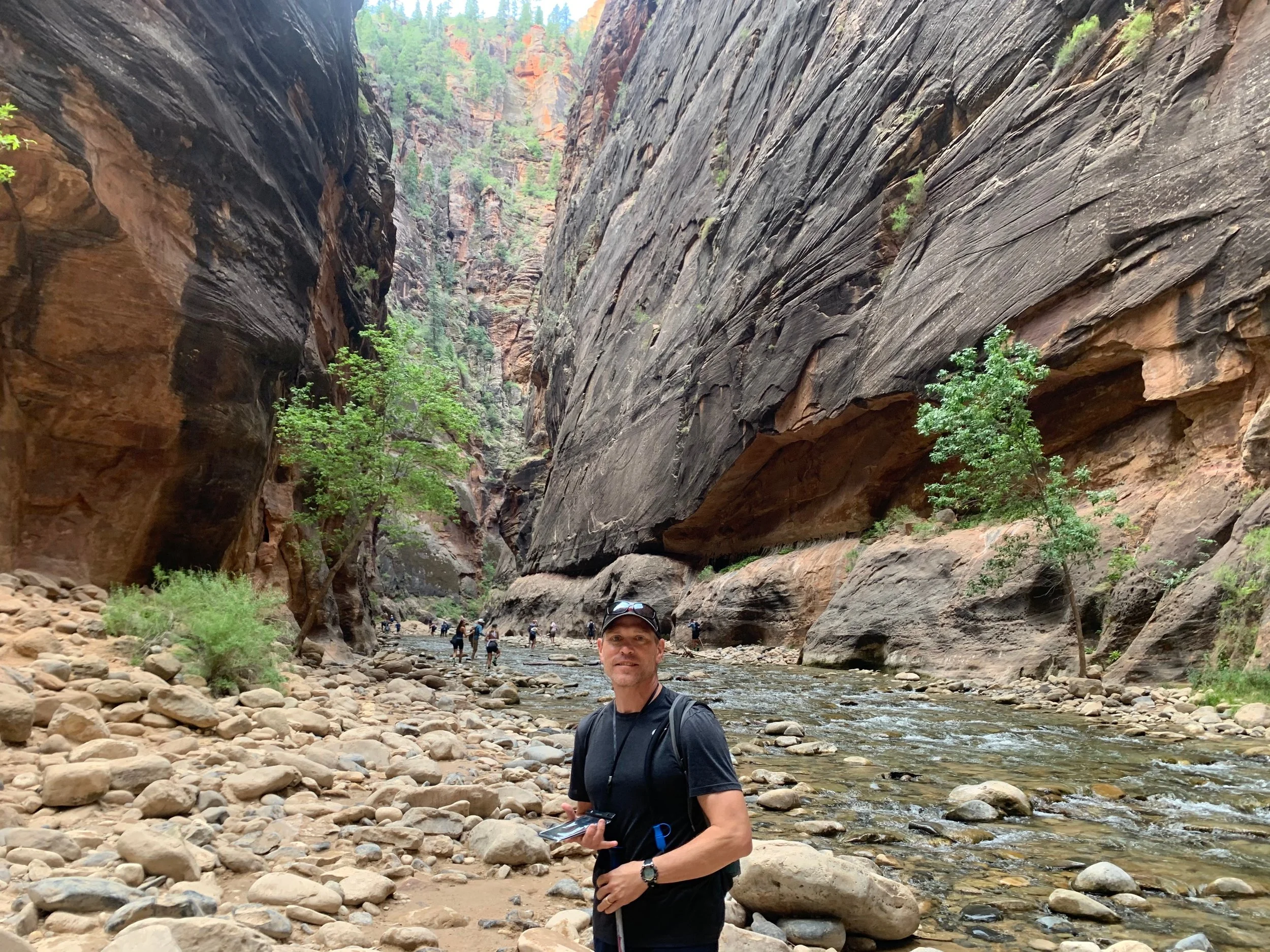
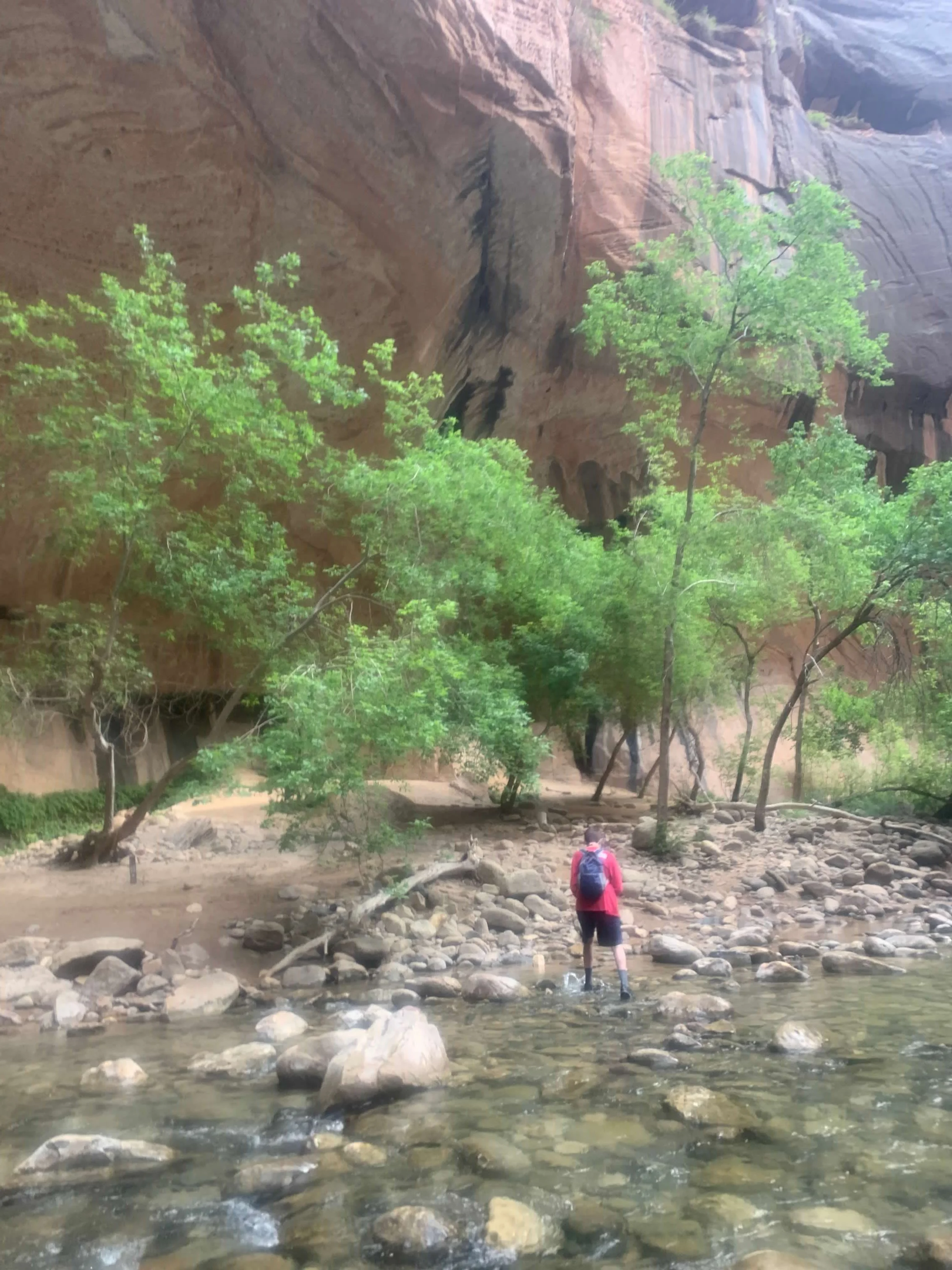
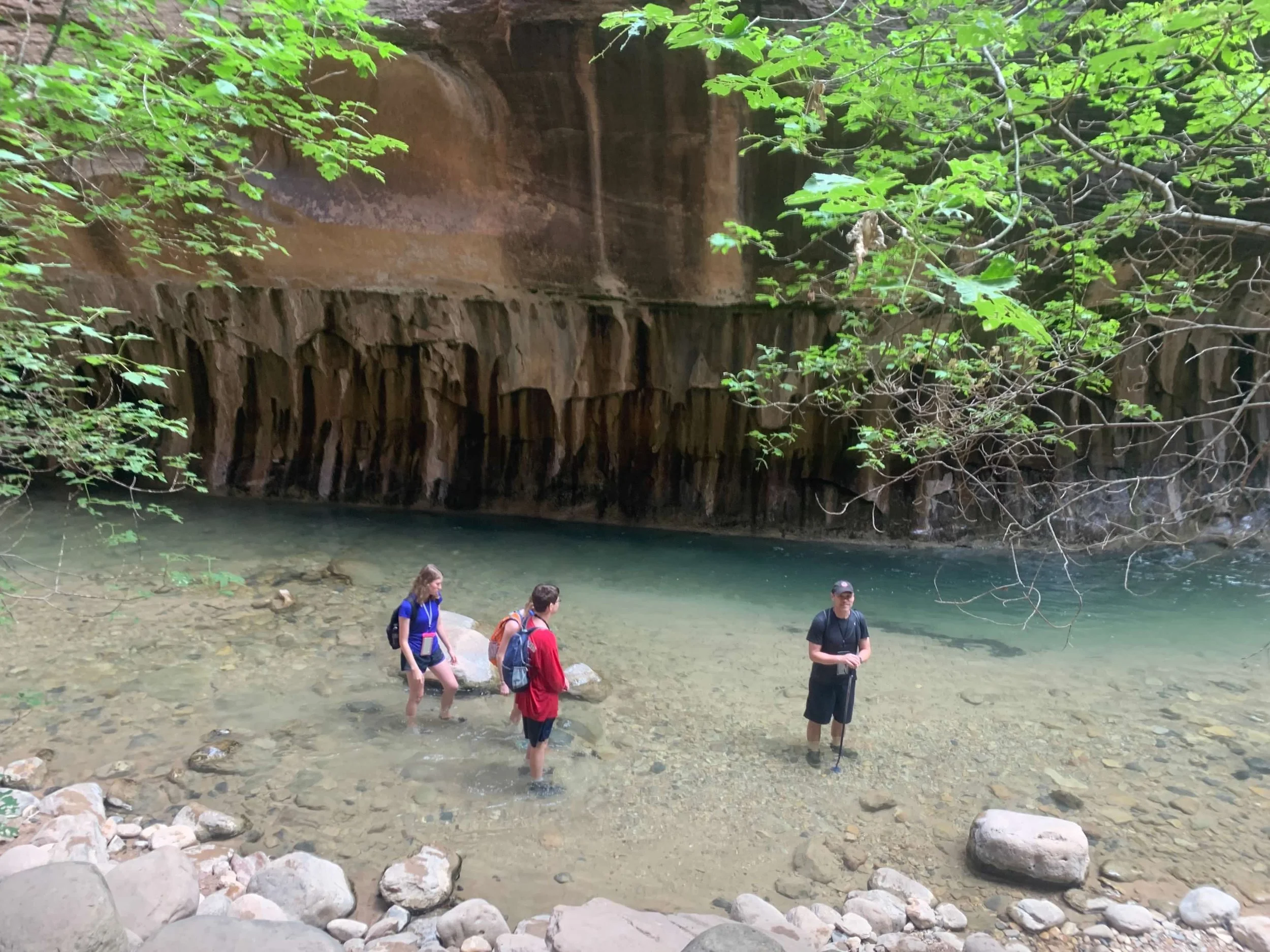
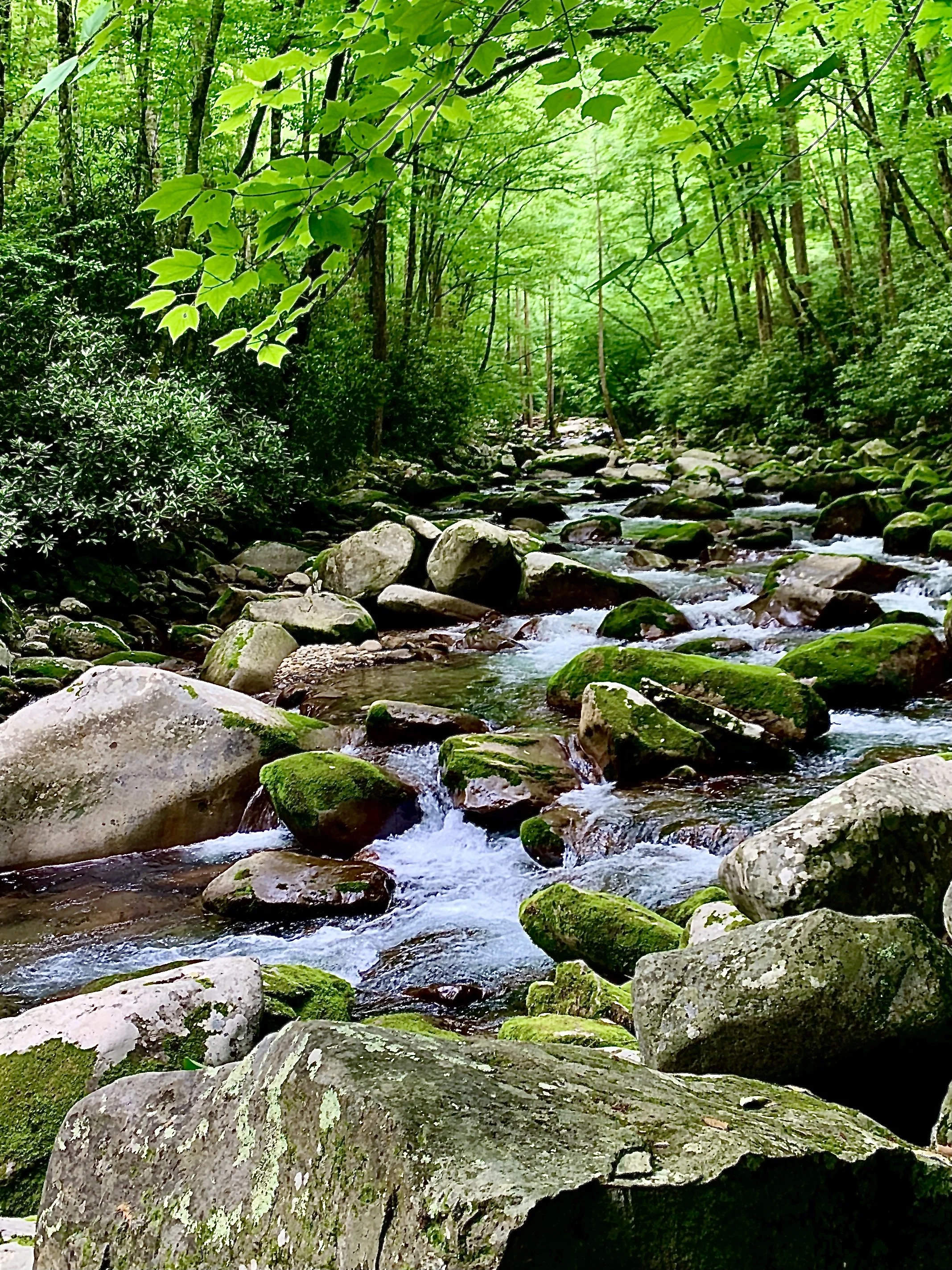
Almost immediately, the trail disappears and the river itself becomes your path. The terrain changes with every bend. At times, we found ourselves walking along wide, rocky sandbars and sandy, beach-like shores. In other sections, it became a strategic game of rock hopping over smooth, underwater boulders. (Which, as we were warned, were indeed wet and slippery.)
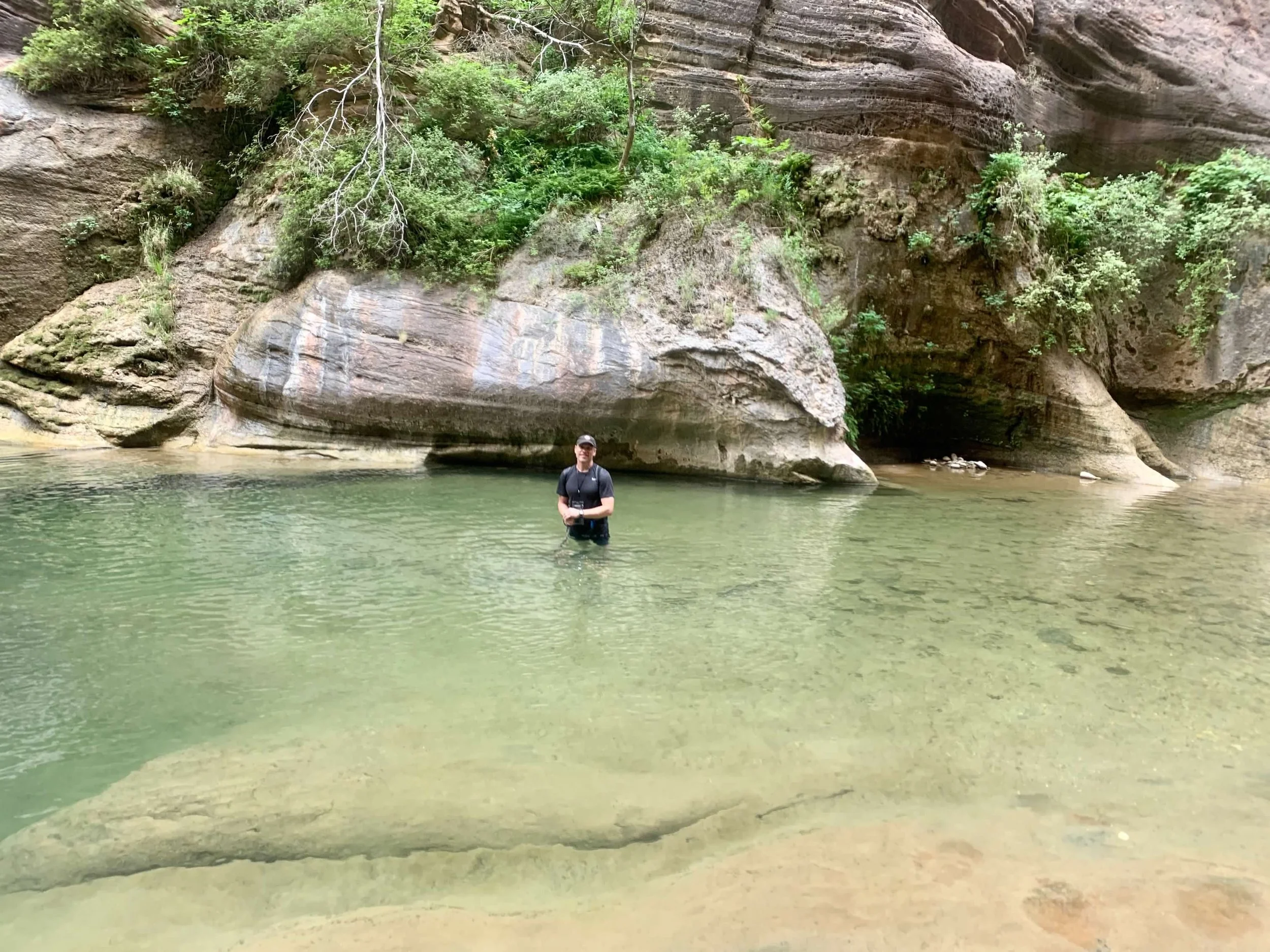
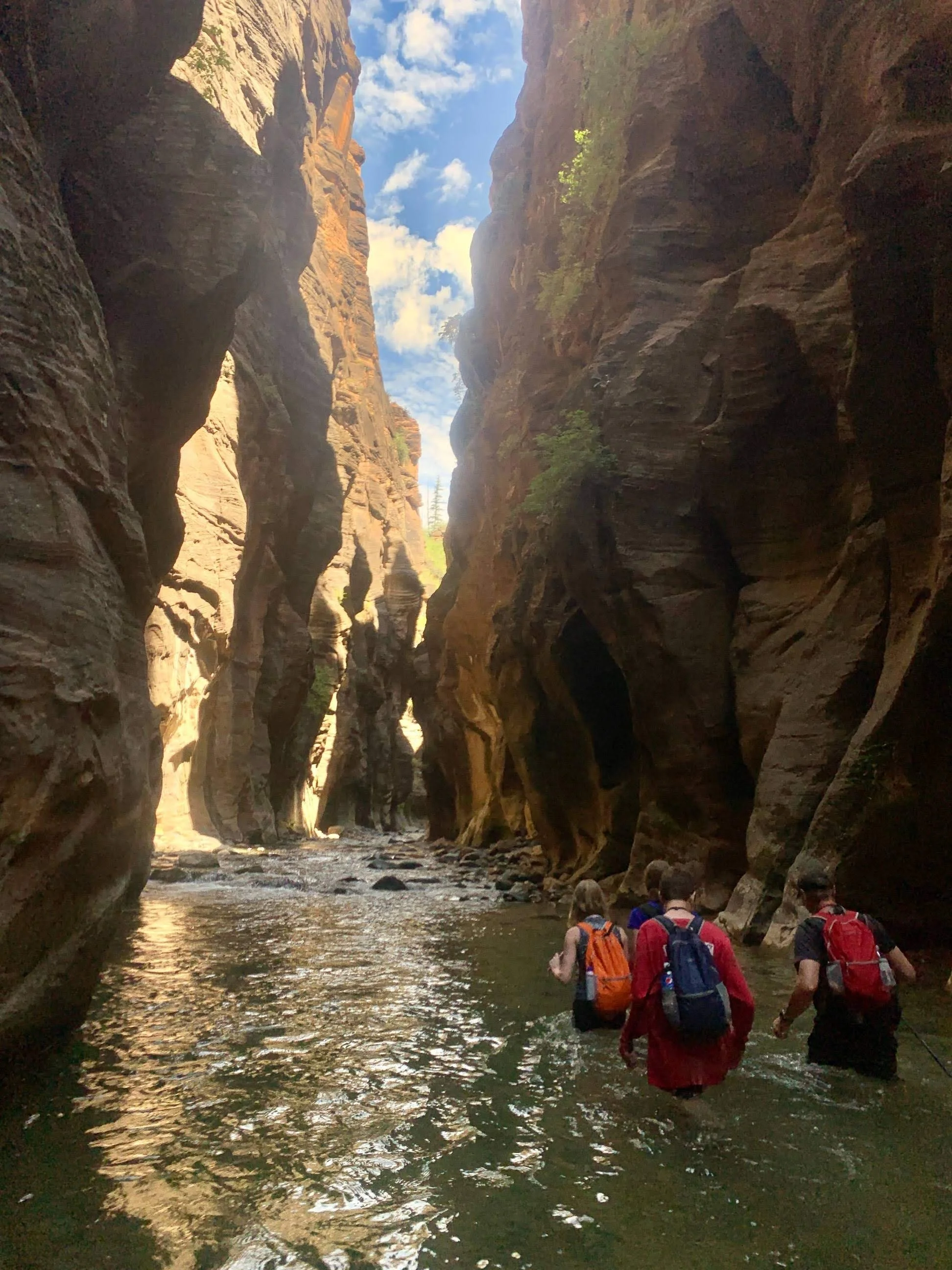
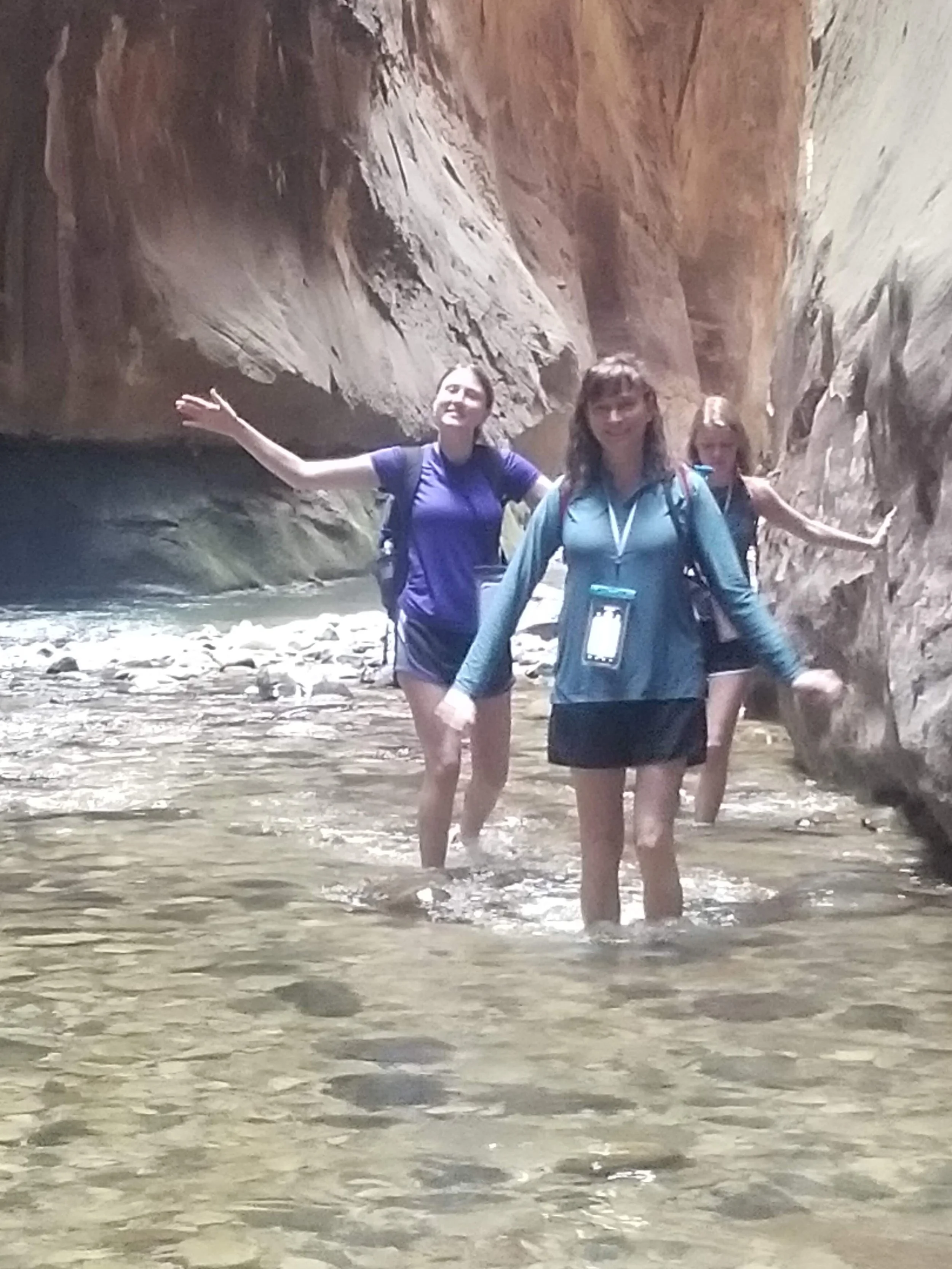
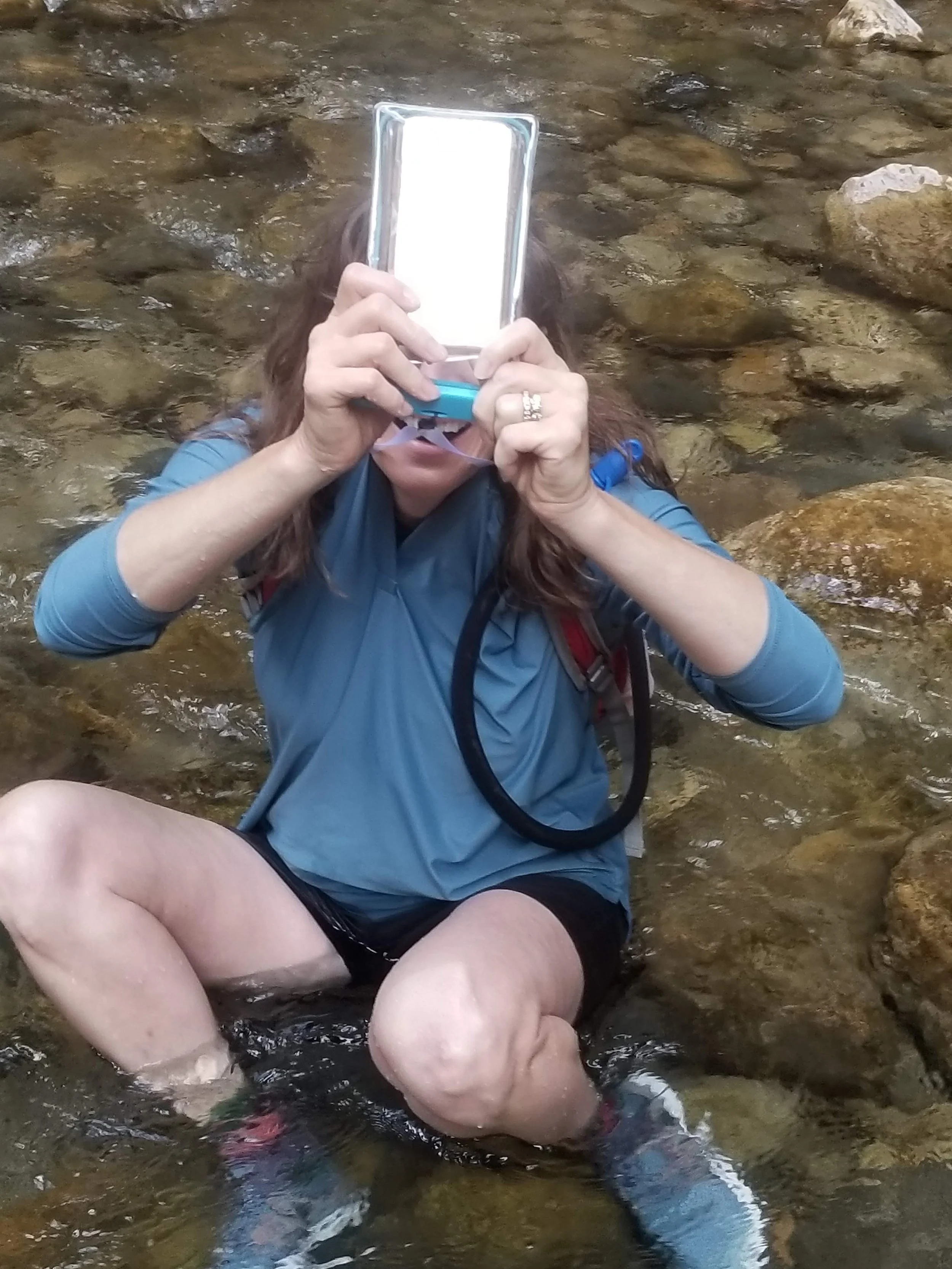
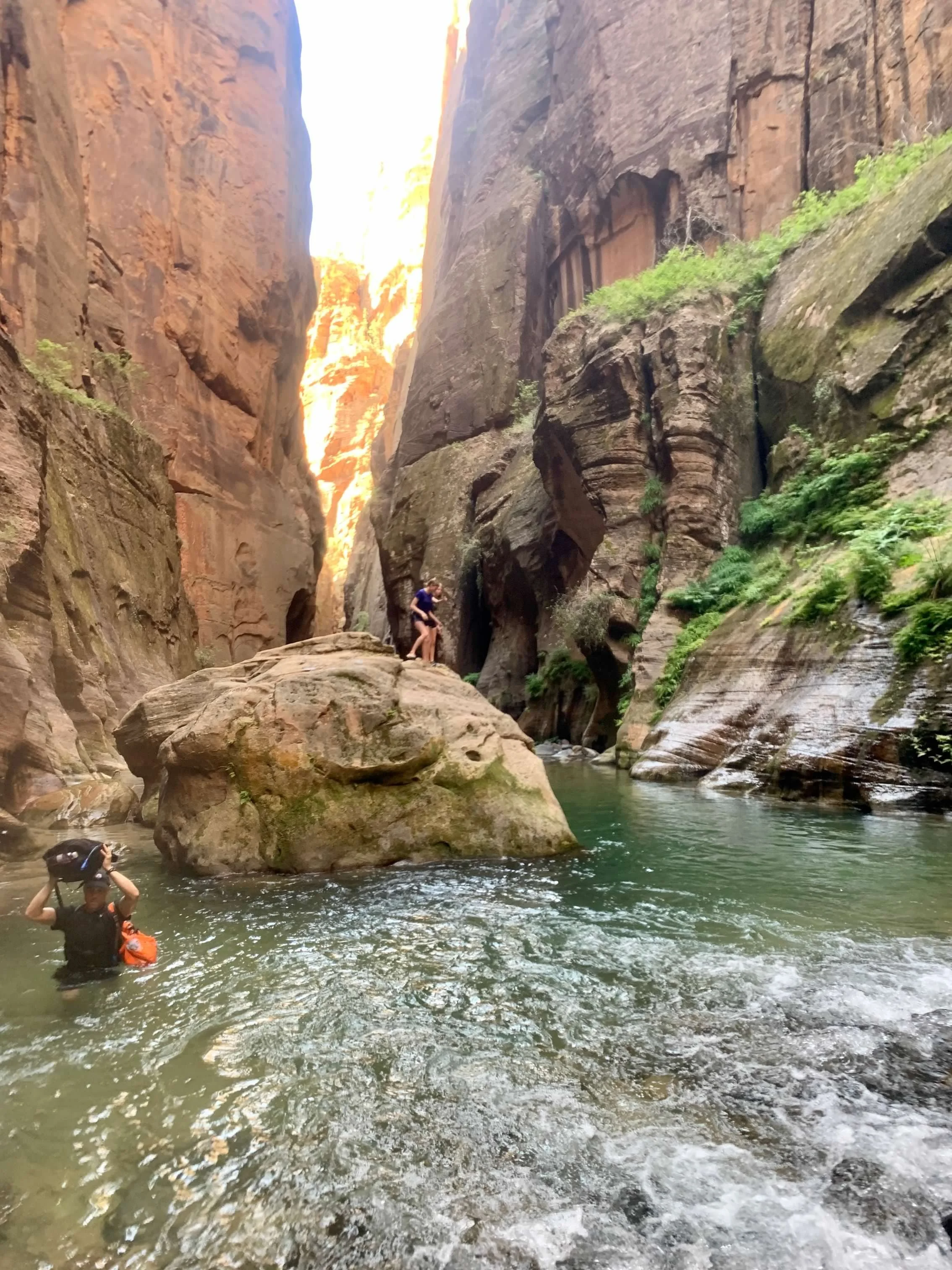
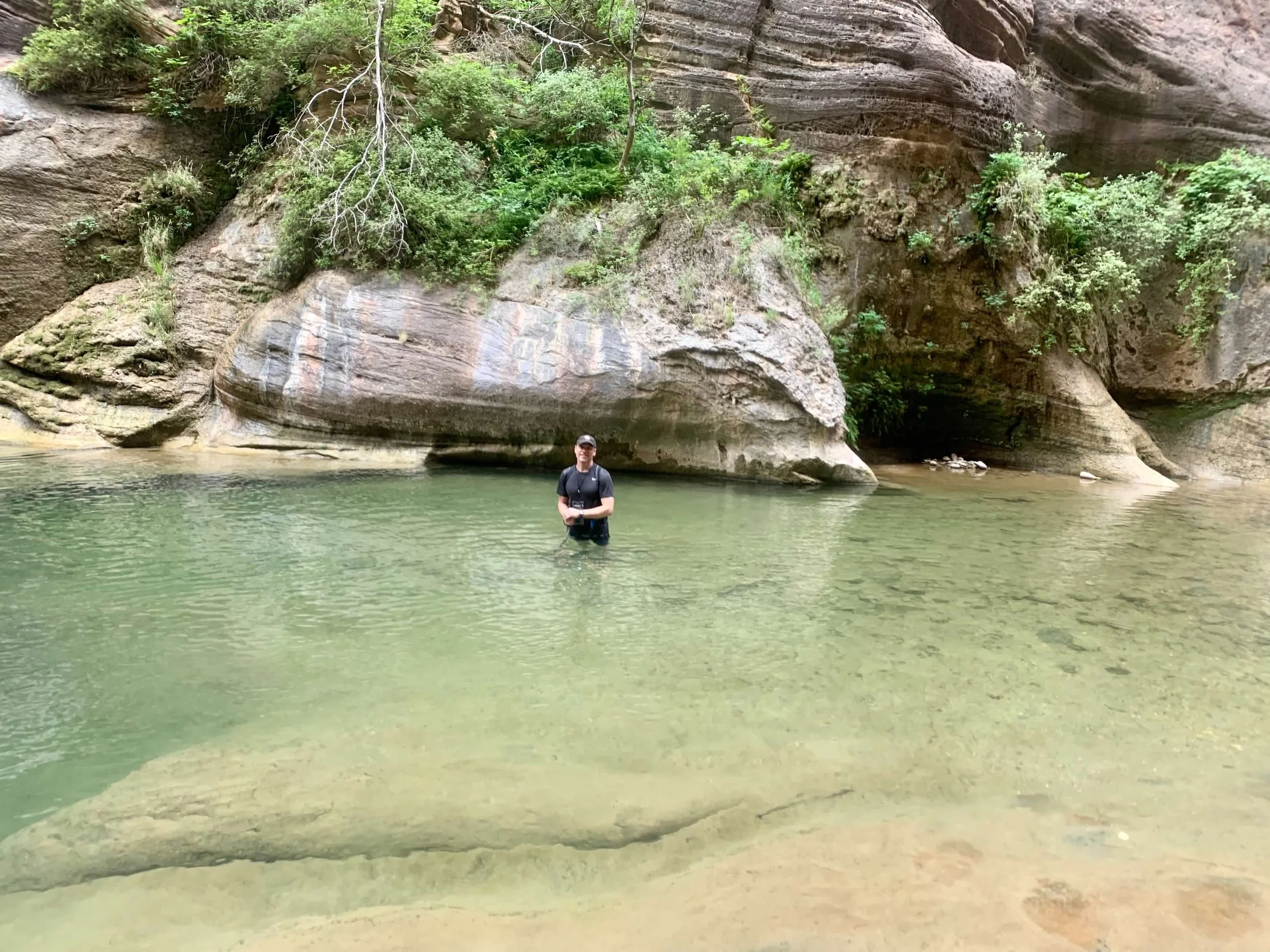
The water depth is an ever-shifting puzzle. We waded through long stretches that were only ankle-to-knee deep, but as the canyon squeezed tighter, the water rose. Before we knew it, we were navigating sections that reached all the way to chest-high water, forcing us to hoist our backpacks completely over our heads to keep our lunches and gear dry!
IT was strenuous, heavy work against the current, which is exactly why most people call it quits and turn around after about two miles. But turning back early wasn't an option for us. We have a running joke in our family that we are strict completionists. Once we start a task or set foot on a trail, we will strive to finish it, no matter how hard or grueling it gets. While other hikers were throwing in the towel, our collective stubbornness drove us forward, pushing us well past the two-mile mark and deeper into the canyon.
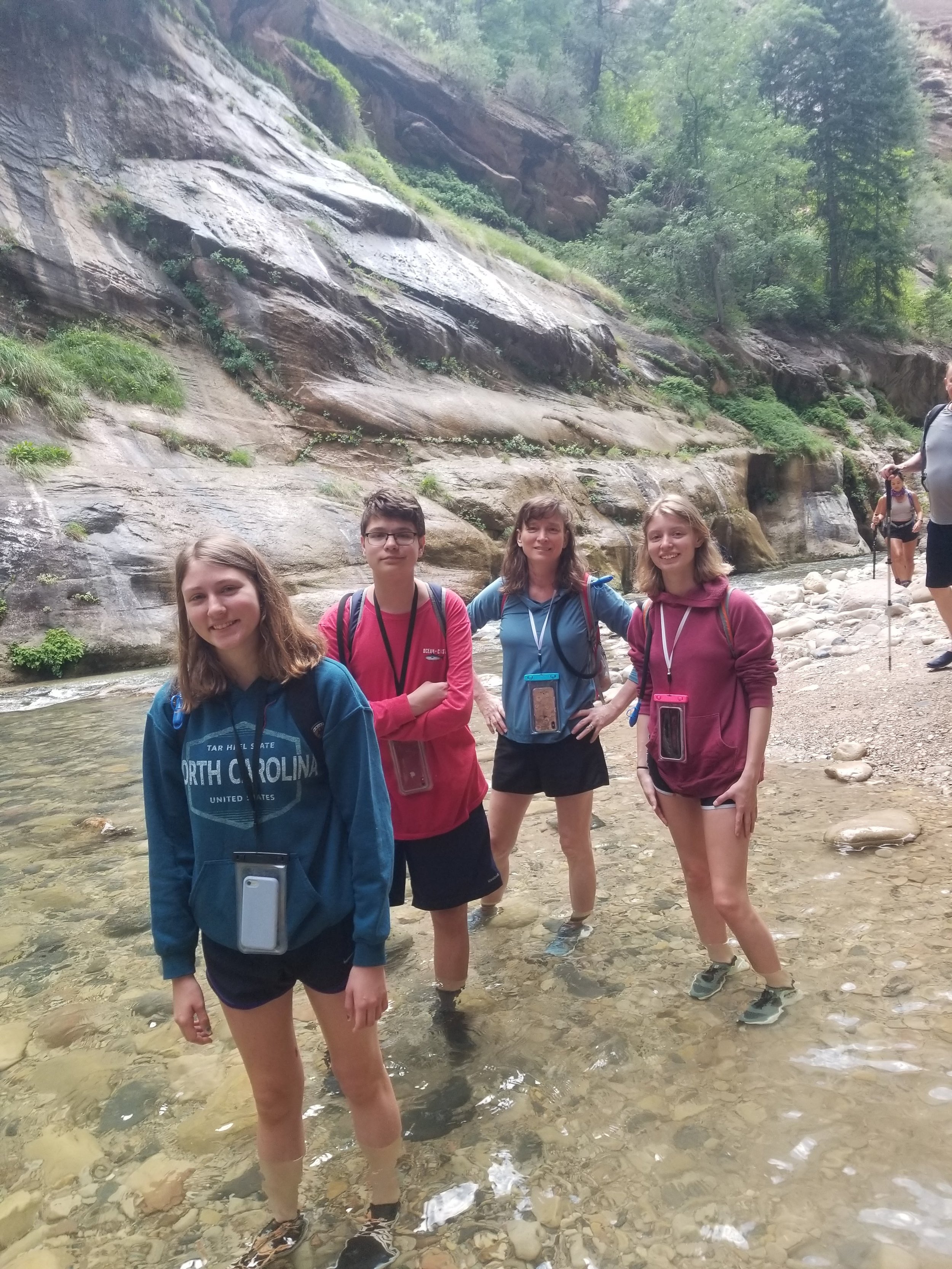
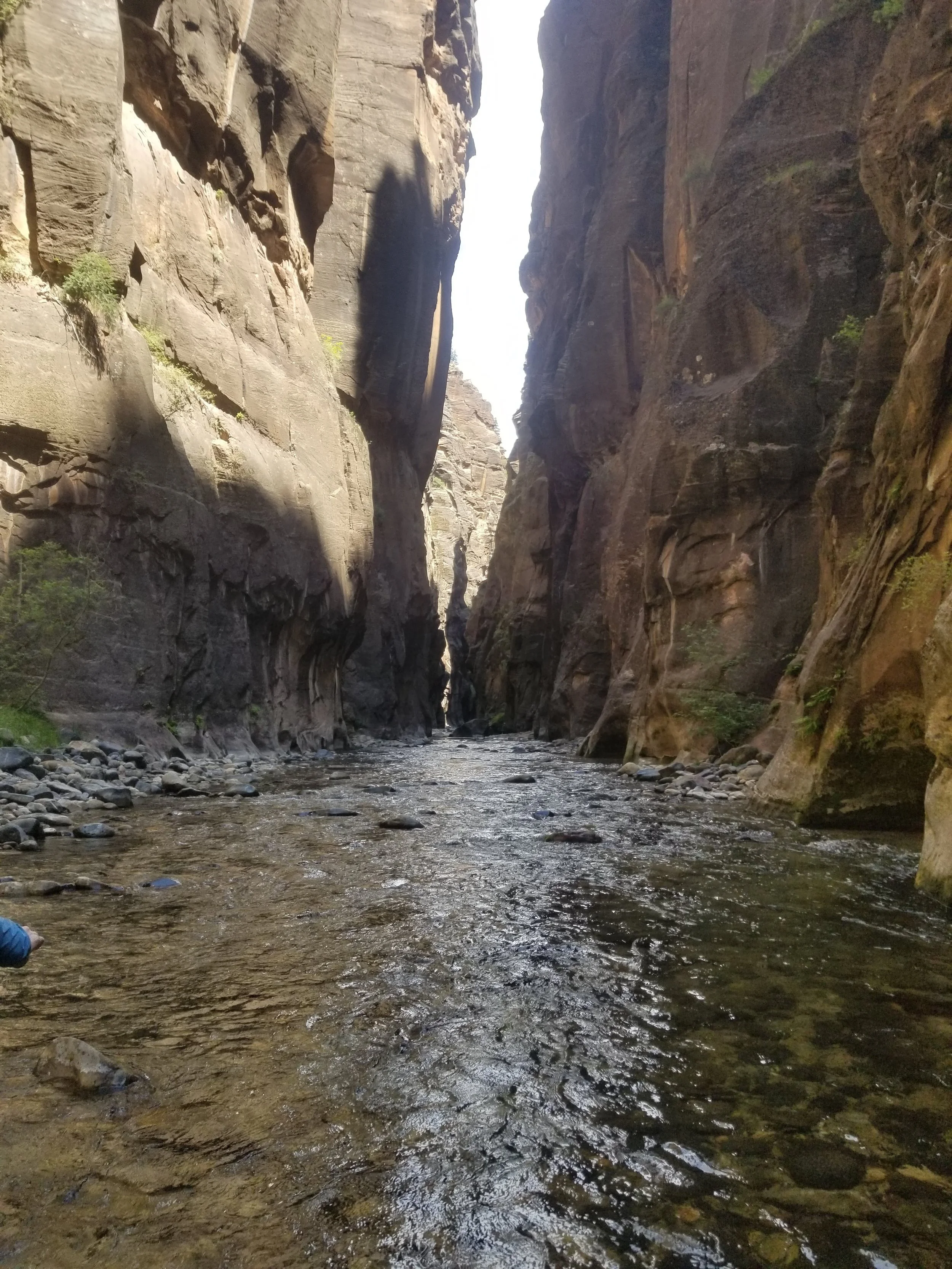
Passing Mystery Falls to the Deep Squeezes
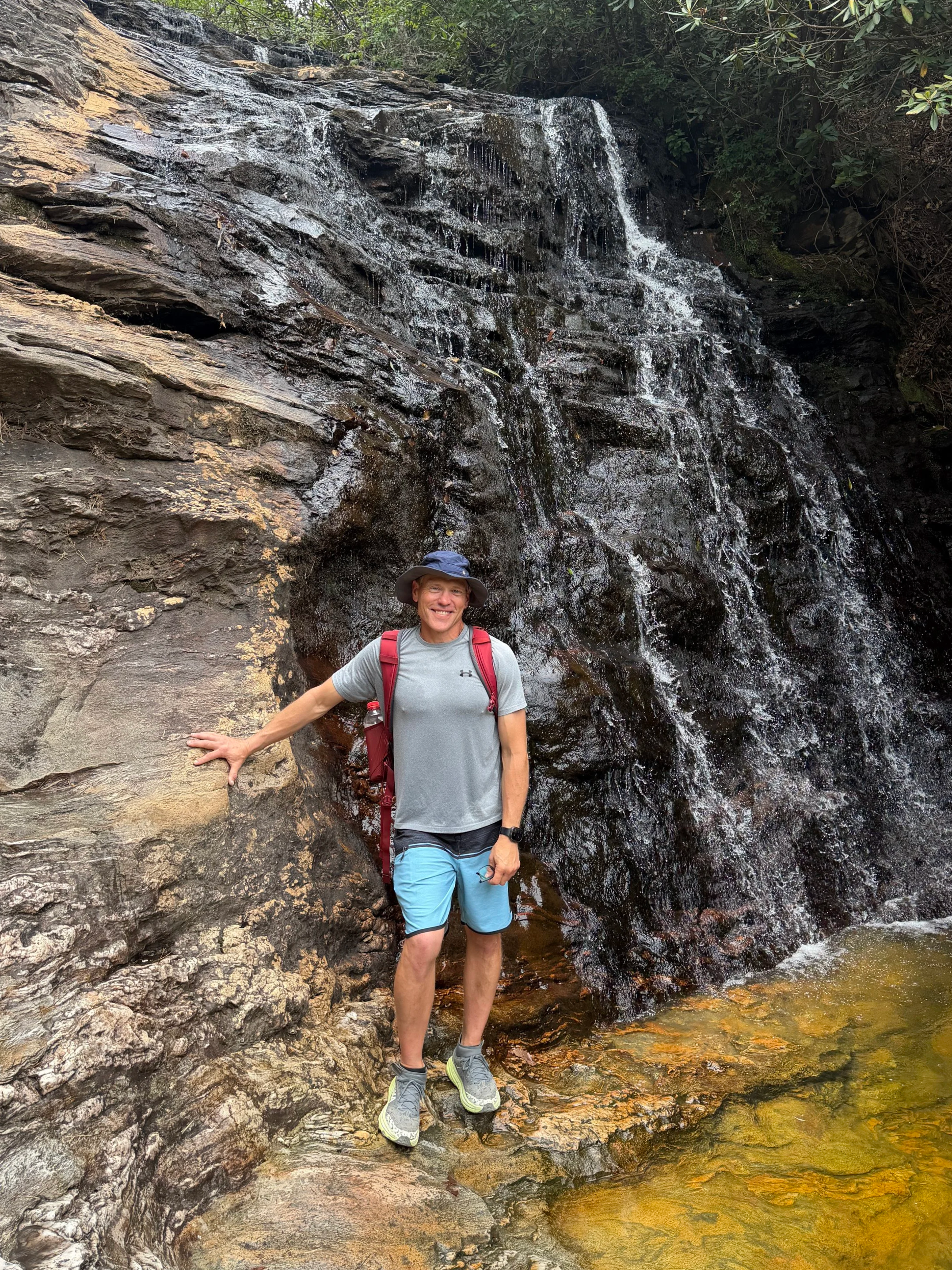
Early into our trek, we passed by Mystery Falls. On our visit, it wasn't flowing much—just a delicate, shimmering trickle weeping down the slick canyon walls.
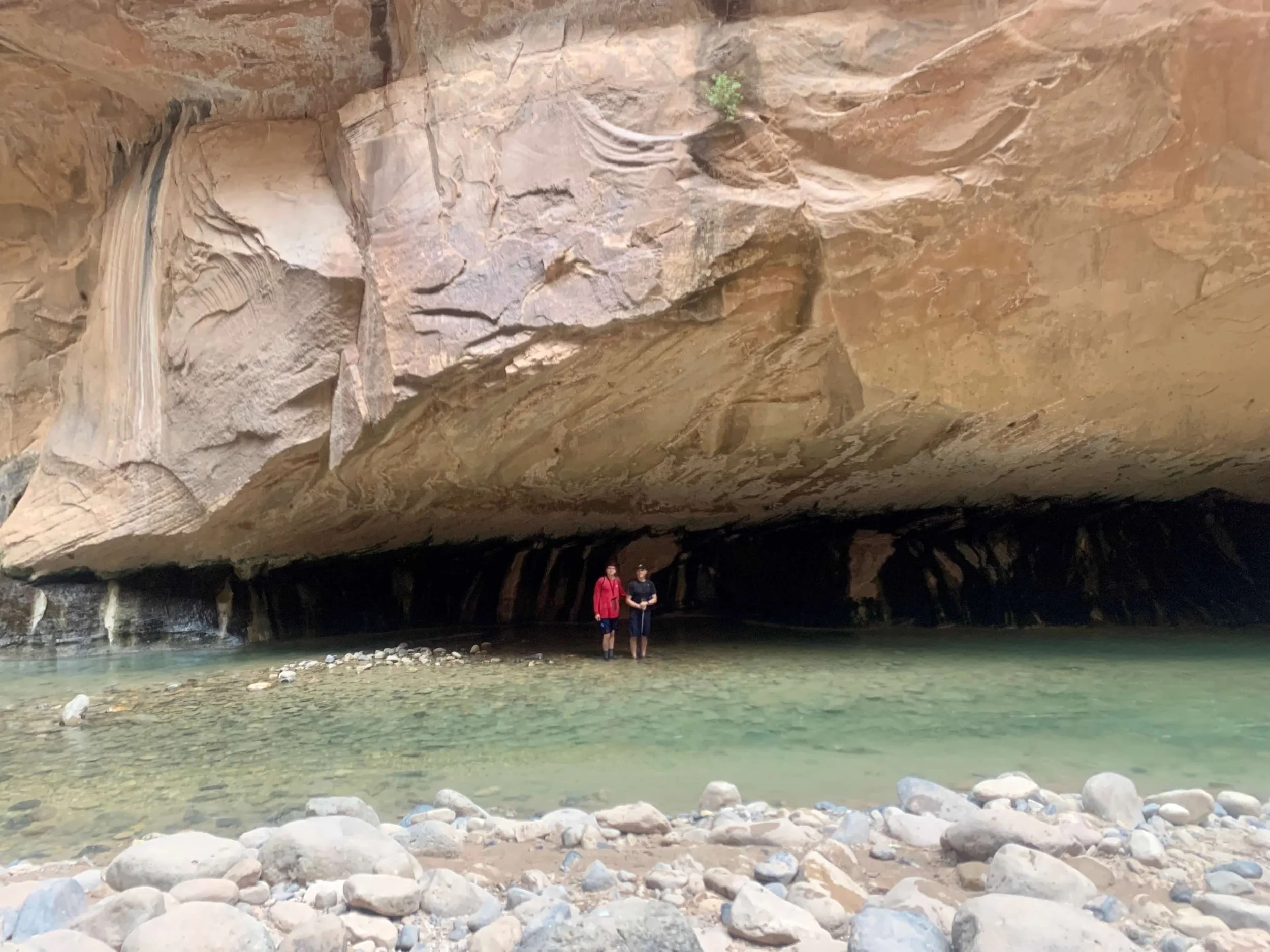
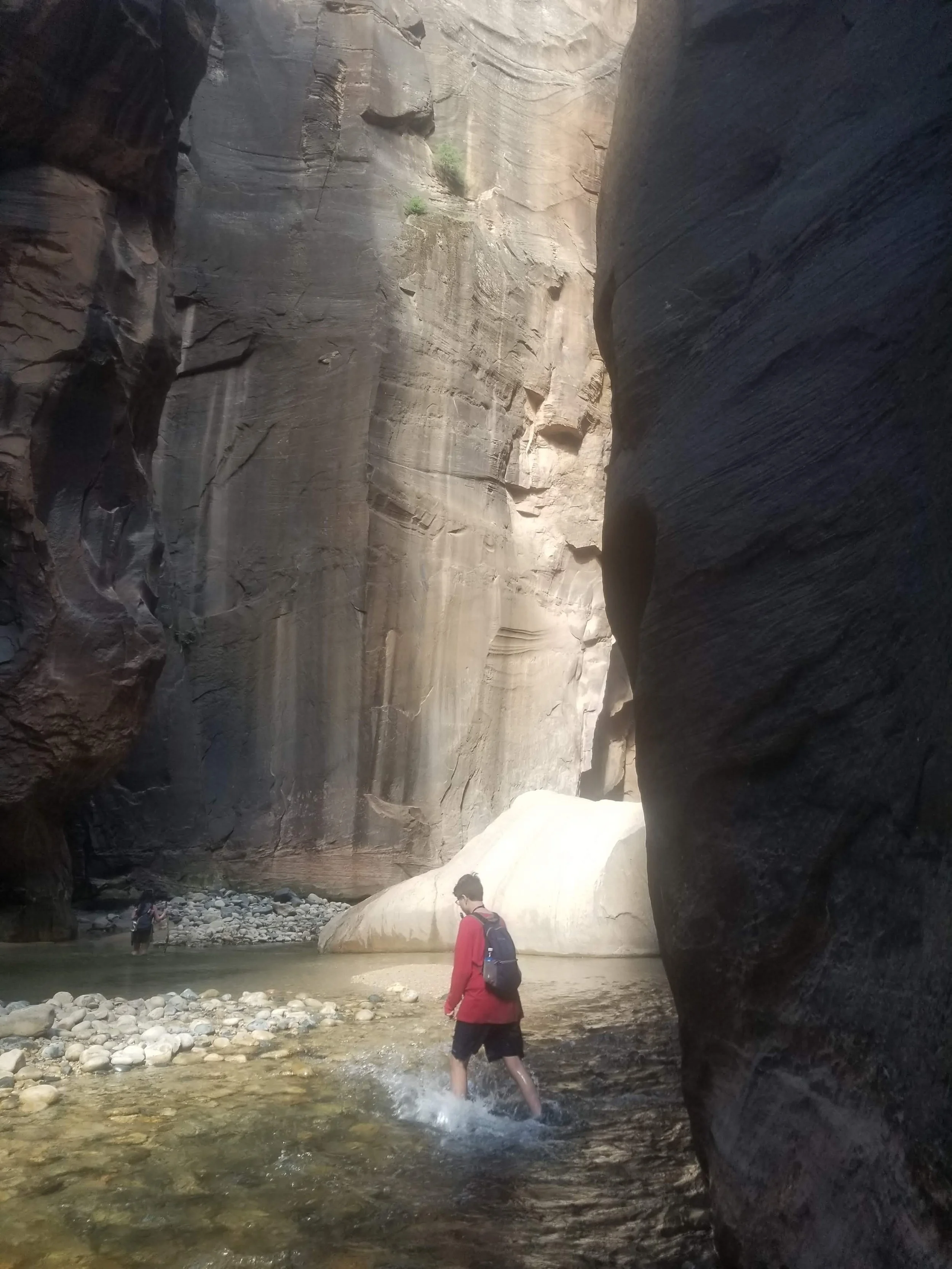
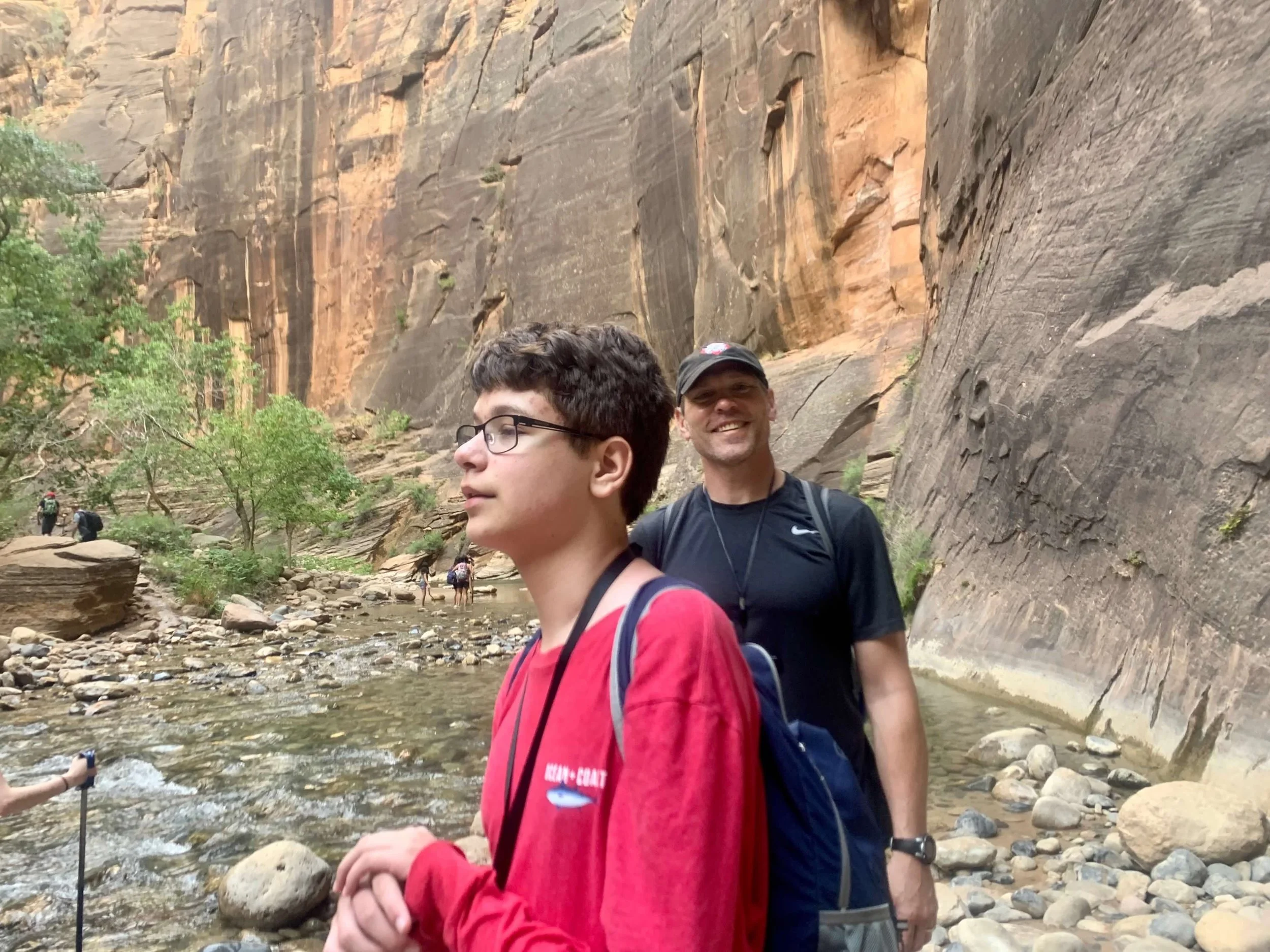
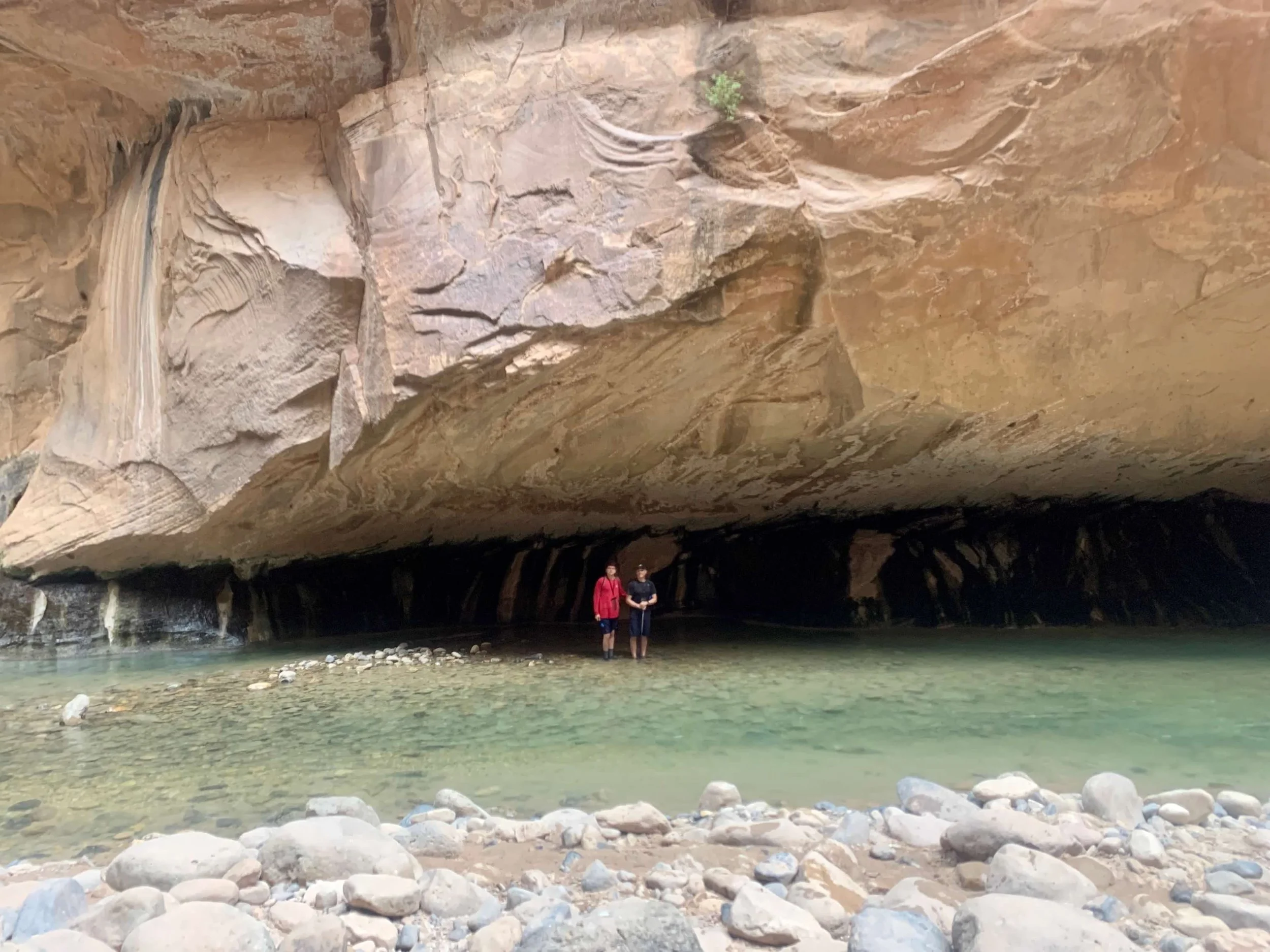
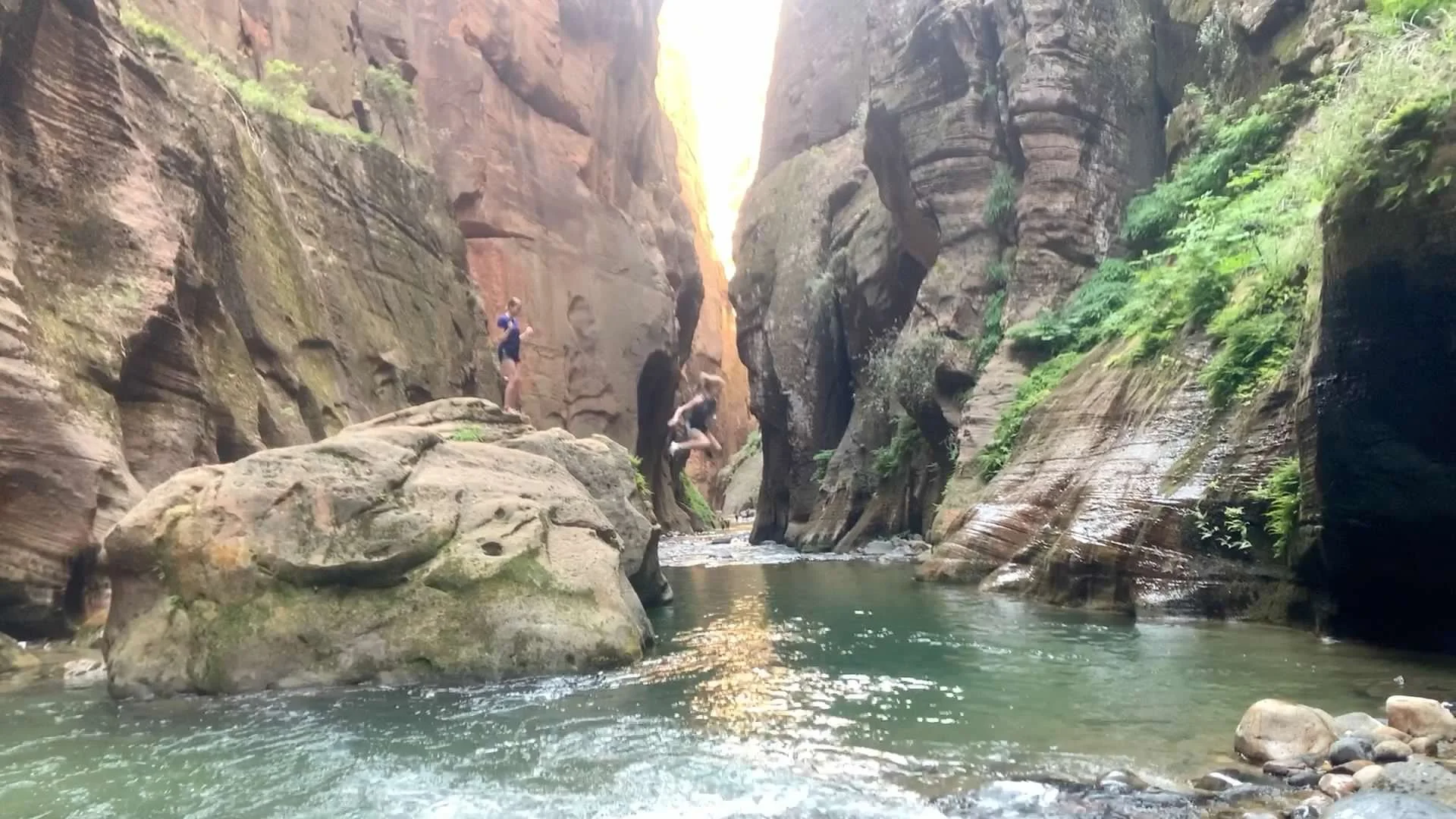
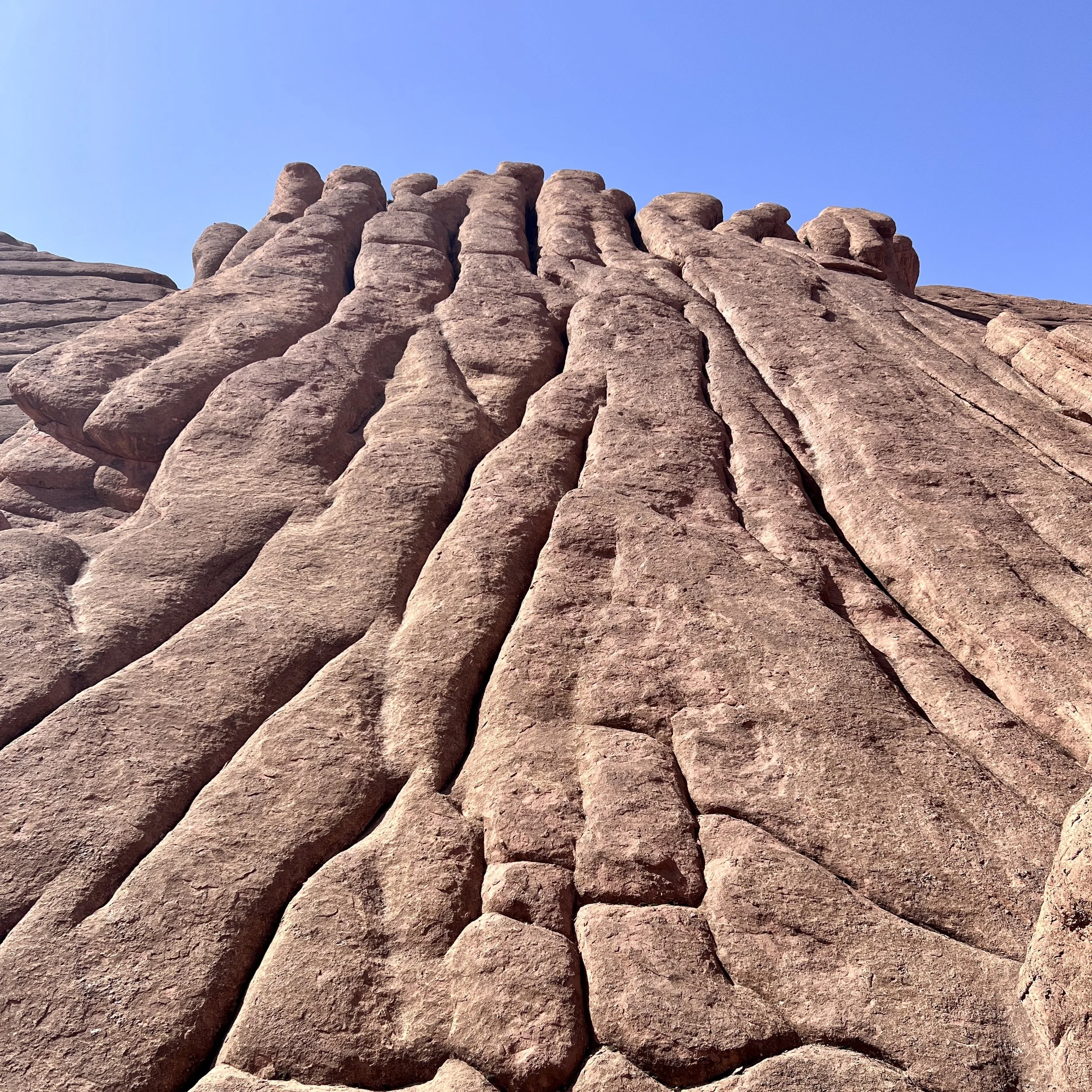
As we pressed deeper past the intersection of Orderville Canyon, the visual magic reached a whole new level. In many spots, the flowing water was as wide as the rock walls themselves, offering no dry ground to stand on. The massive slot canyon walls loomed so close that we could almost reach out our arms and touch both sides at the exact same time. The filtered sunlight hitting the red Navajo sandstone created a mesmerizing orange glow above us.
The One Thing We’d Do Differently: Slow Down for the Side Canyons
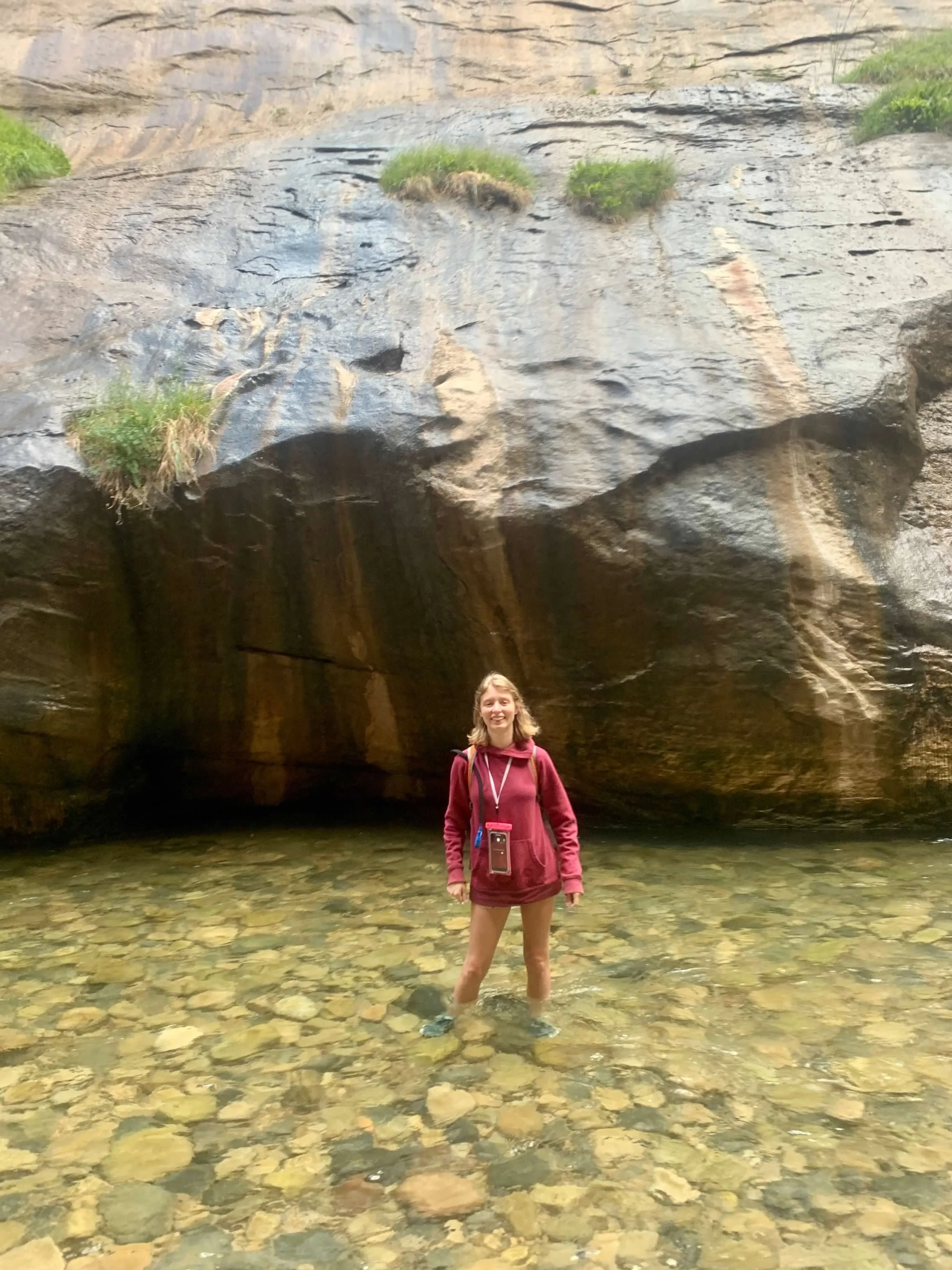
If we have one regret from the day, it's a side effect of that very same completionist mindset. Because we were so hyper-focused on the finish line and reaching the ultimate end of the trail, we didn't fully explore two incredible areas that veered off from the main Narrows.
We did wander into them for a little bit, but looking back, we really wish we had let go of our race to the finish and spent more time exploring those hidden offshoots. The Narrows is full of secret side canyons that offer a completely different view of the rock formations, and they are well worth the extra time if you can pull your eyes away from the destination.
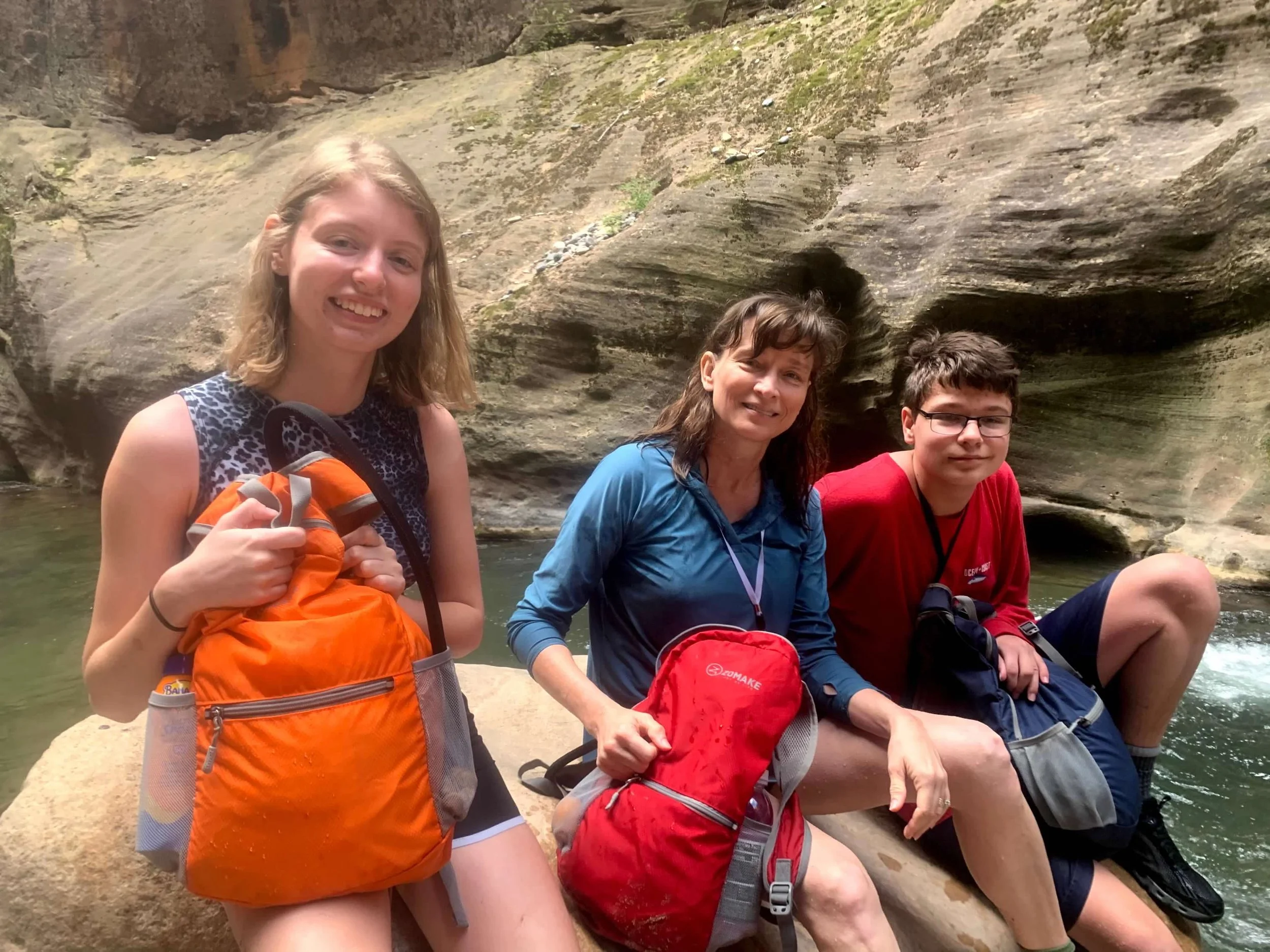
Rock Jumping at Boulder Pair & Swimming at Big Springs
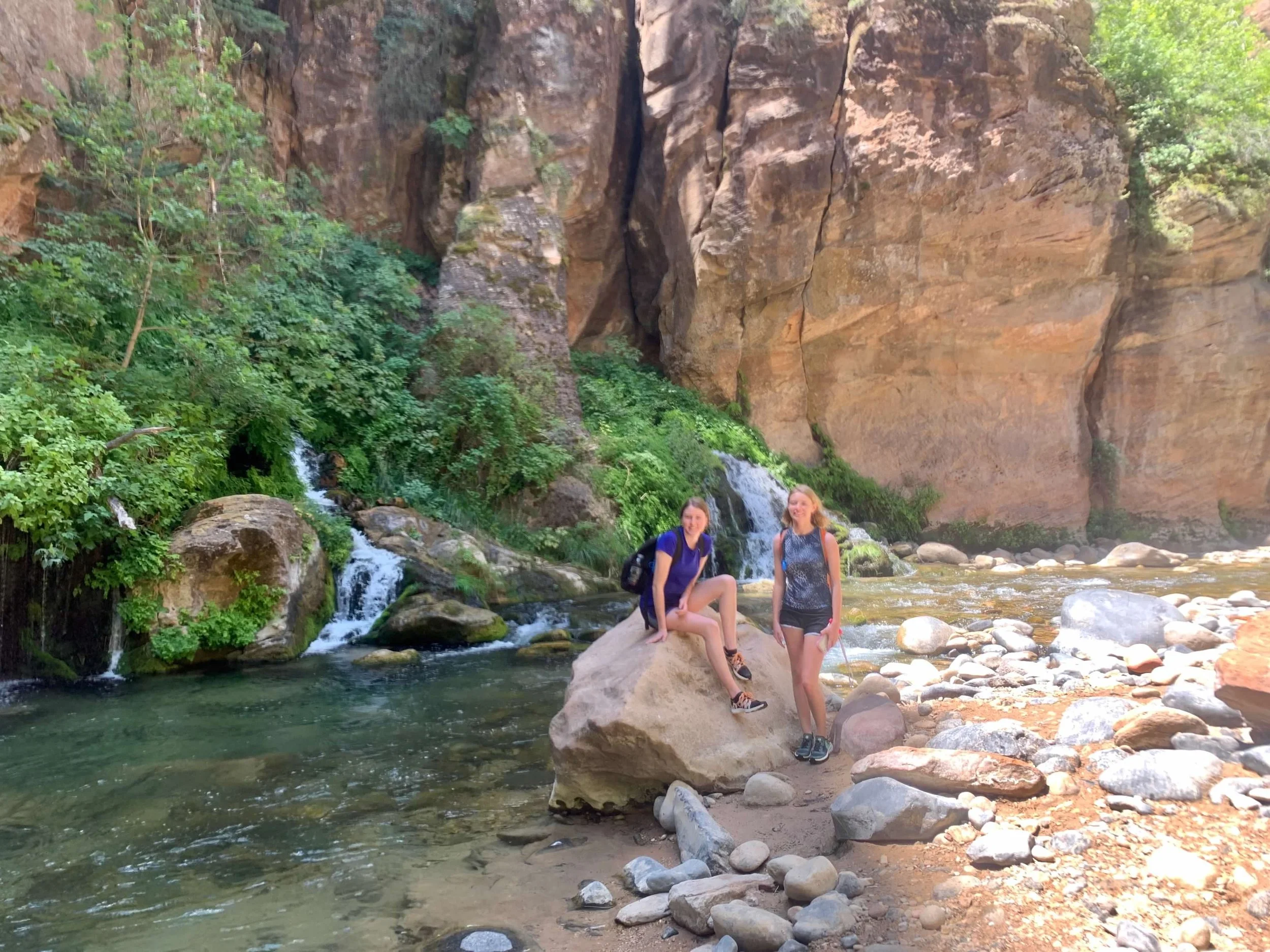
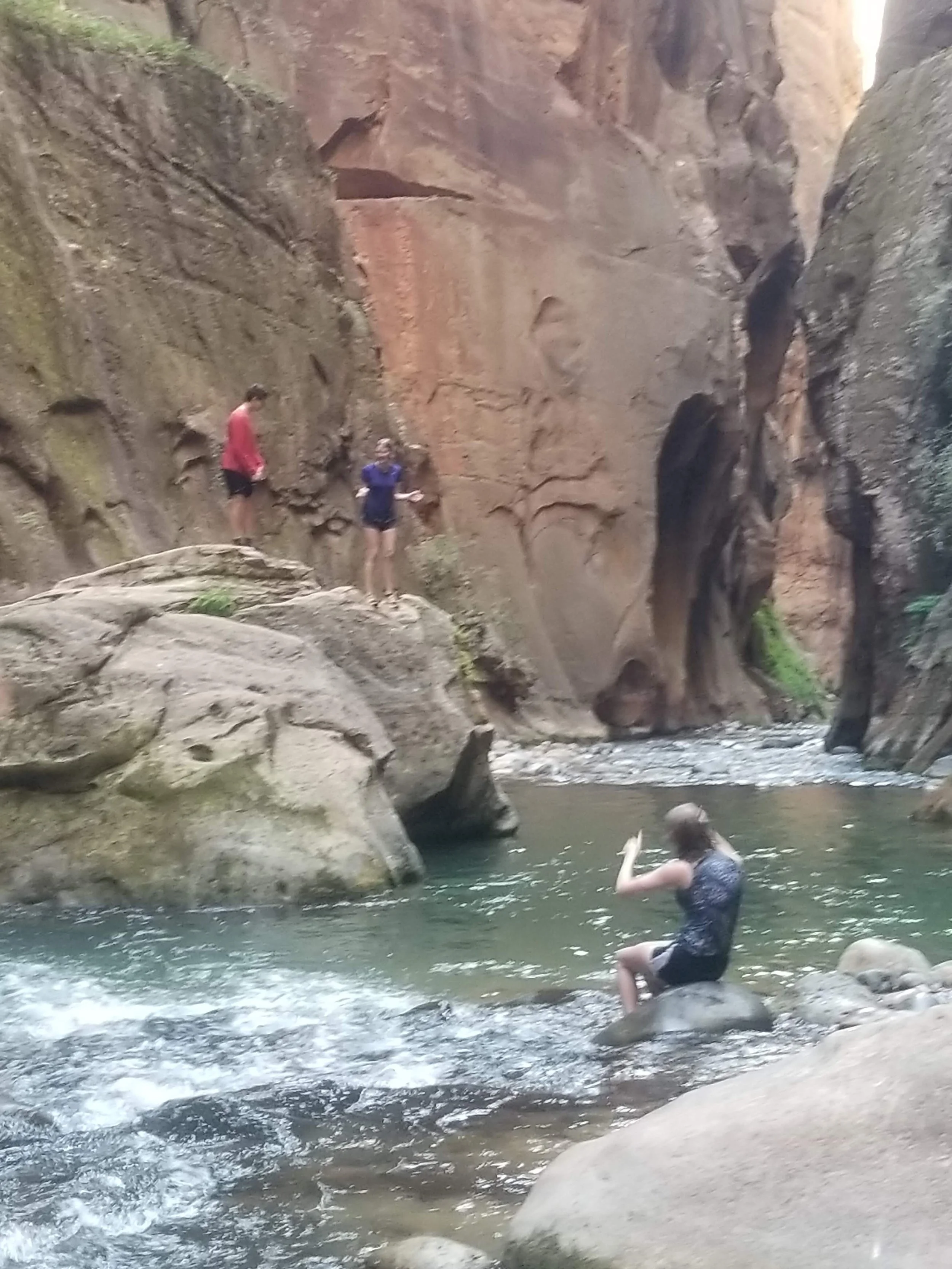
Half the fun of a river hike is leaning into the water features. When our group reached Boulder Pair, we couldn't resist the deep, clear pools. We all took turns scaling the massive rocks and jumping off into the deep water to cool down.
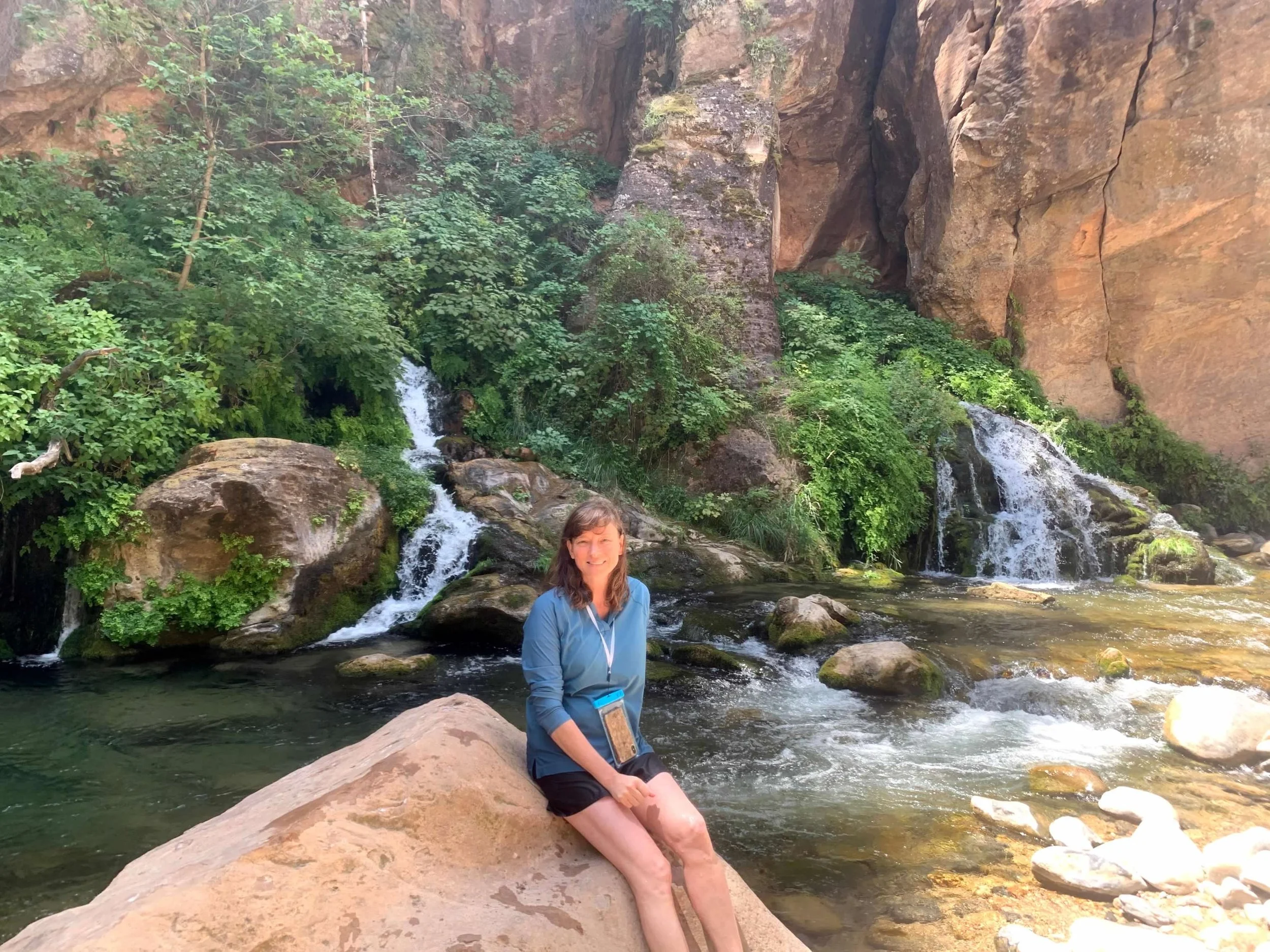
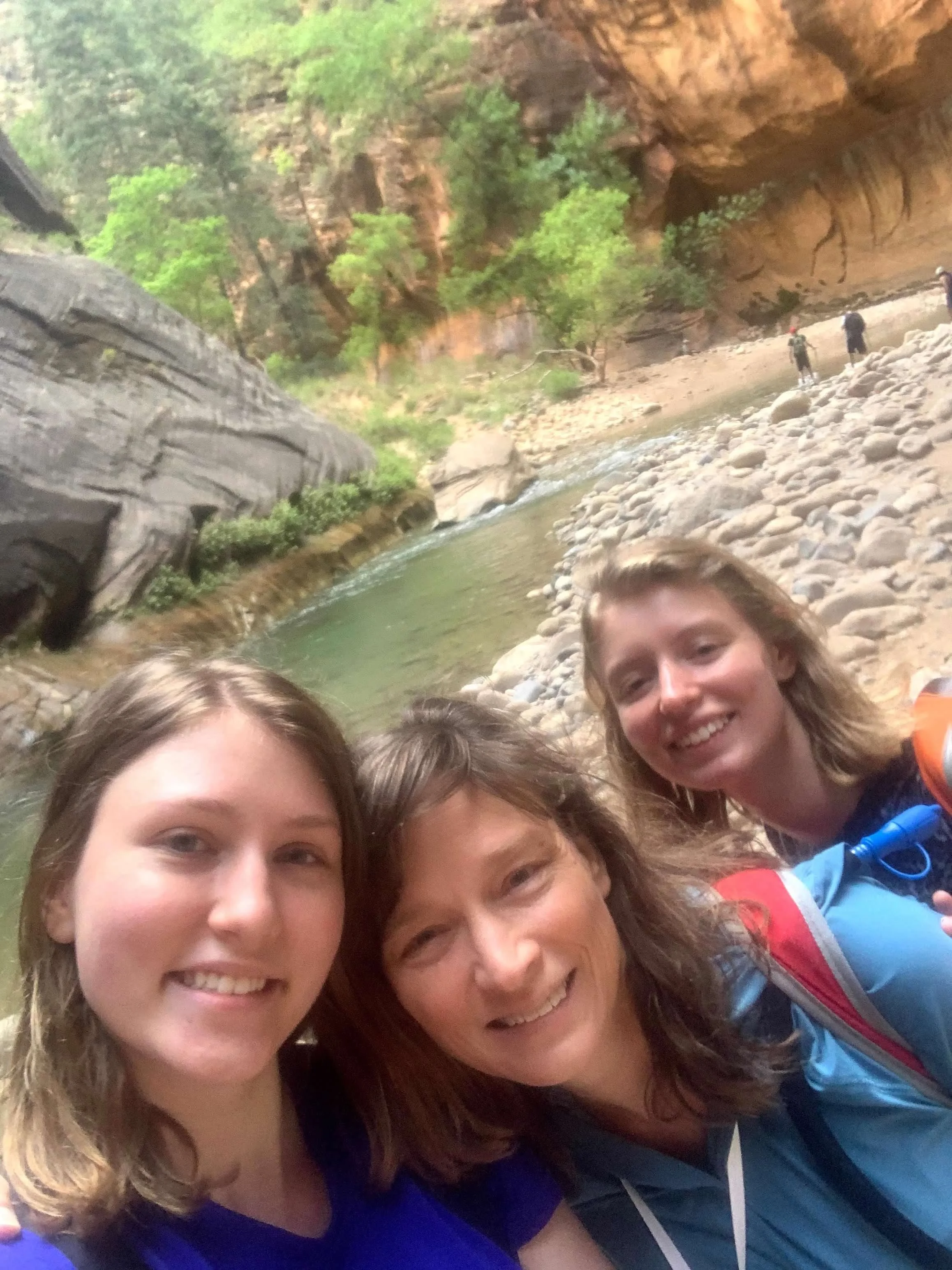
True to our completionist goals, we didn't stop until we reached Big Springs—our ultimate turnaround point. Making it all the way here felt like a true badge of honor, especially knowing how few day-hikers actually see it. This gorgeous oasis marks the furthest limit you can hike without a special top-down permit. We claimed a spot near the rushing rapids and bubbling waterfalls, unpacked our lunches, and spent an hour swimming in the natural currents. It was the perfect reward before turning around to retrace our 5.5-mile trek back through the water to where it all began.
Post-Hike Comfort: What to Leave in the Car
When you spend five or more hours completely submerged in a river canyon, the temperature can fluctuate wildly. Even on warm days, the deep, sunless chasms of the slot canyon can leave you feeling pretty chilled by the time you wrap things up.
If there is one absolute pro-tip we can offer for your return, it is to pack a complete change of clothes and plenty of dry towels to leave back in your vehicle. There is truly nothing better than peeling off wet bathing suits and water shoes at the end of an 11-mile river trek and wrapping up in a warm, dry towel before the ride back to town. Trust us, your future self will thank you immensely for planning ahead!
Quick Hike Summary: Zion Narrows Bottom-Up
Total Distance: 11 miles round-trip
Route Type: Out-and-back (Bottom-Up)
Starting Point: Temple of Sinawava
Turnaround Point: Big Springs
Essential Gear: Sturdy water shoes (bought in advance!), swimwear, a heavy-duty hiking pole, a waterproof dry bag, a complete change of clothes and towels (left in the car!), and zero cotton.

Slippery when wet